Organismal and Evolutionary Biology Research Programme, University of Helsinki, Helsinki, Finland.
BMC Ecol Evol. 2024 Nov 19;24(1):143. doi: 10.1186/s12862-024-02330-2.
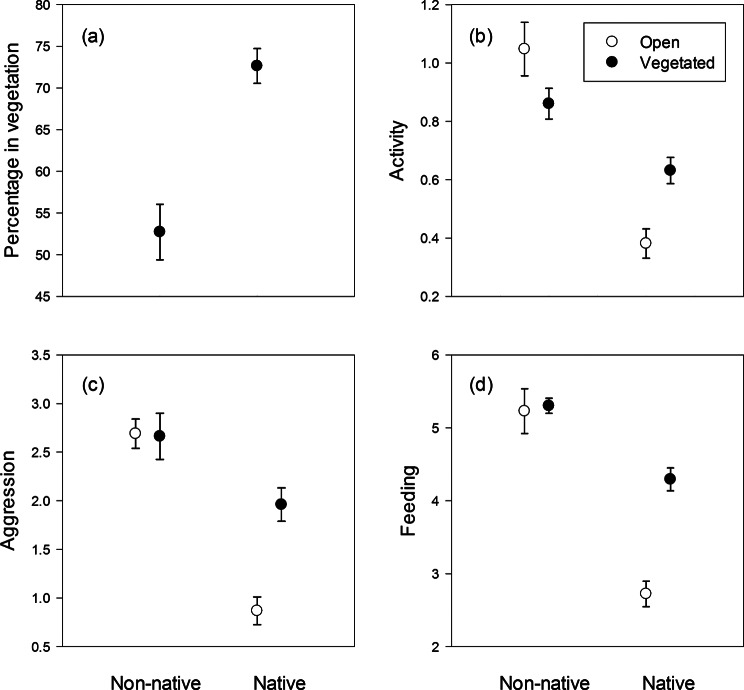
The invasion of non-native species into ecosystems is a growing human-induced problem. To control their spread and population growth, knowledge is needed on the factors that facilitate or impede their invasions. In animals, traits often associated with invasion success are high activity, boldness, and aggression. However, these traits also make individuals susceptible to predation, which could curb population growth. We investigated if a recent invader into the Baltic Sea, the shrimp Palaemon elegans, differs in risk-taking from a native shrimp, P. adspersus. We recorded activity, habitat choice, and response to perceived predation threat of both species.
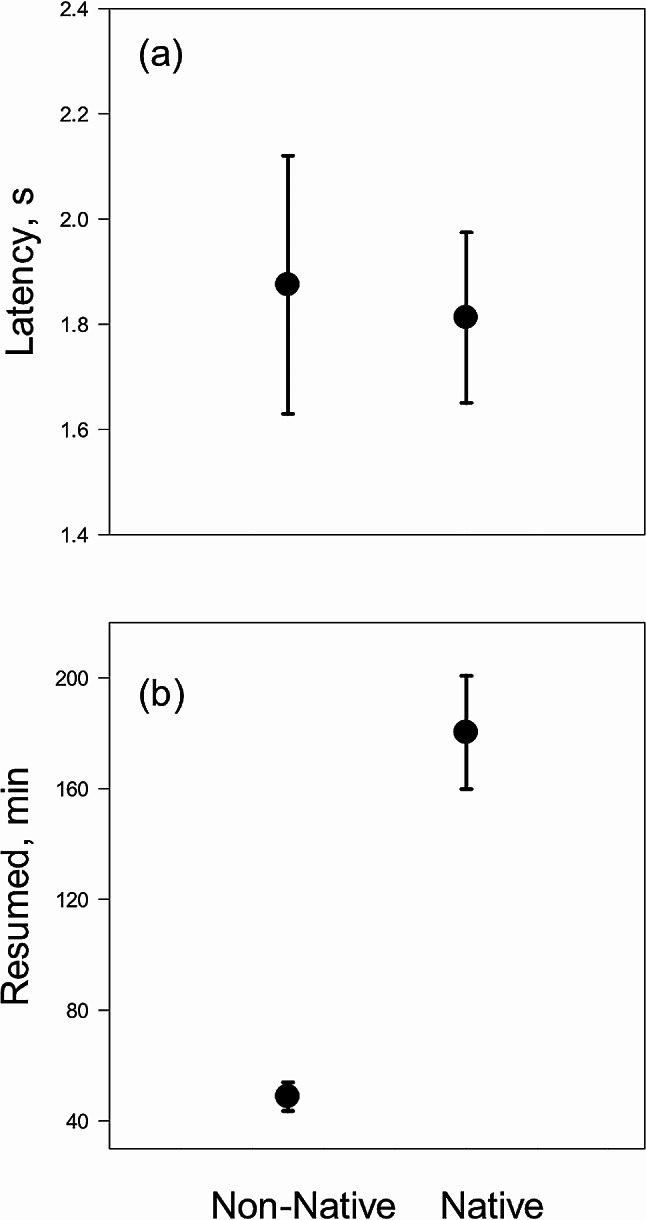
We found the invading shrimp to take greater risks than the native one; while the native shrimp adjusted its behaviour to habitat structure and exposure to a perceived predator, the non-native shrimp did not, and it resumed normal activity sooner after a perceived predation threat. Despite the greater risk taking by the non-native shrimp, its population has grown rapidly during the last two decades in the investigated area and is now larger than that of the native shrimp.
We discuss plausible explanations for the population growth of the invader, including the recent decline in predatory fishes that could have reduced the cost of risk-taking, and anthropogenic eutrophication that has increased food abundance could have allowed the population growth. These results stress the need to assess the optimality of the behaviours of both native and non-native species when investigating the factors that influence invasion success in human-disturbed environments.
非本地物种入侵生态系统是一个日益严重的人为问题。为了控制它们的传播和种群增长,需要了解促进或阻碍它们入侵的因素。在动物中,与入侵成功相关的特征通常是高活动性、大胆和攻击性。然而,这些特征也使个体容易受到捕食的影响,这可能会抑制种群的增长。我们调查了最近入侵波罗的海的虾类 Palaemon elegans 是否与本地虾 Palaemon adspersus 在冒险行为上有所不同。我们记录了这两个物种的活动、栖息地选择和对感知捕食威胁的反应。
我们发现入侵虾比本地虾更愿意冒险;尽管本地虾会根据栖息地结构和对感知到的捕食者的暴露情况来调整行为,但非本地虾不会,而且在感知到捕食威胁后很快就会恢复正常活动。尽管非本地虾的冒险行为更大,但在过去的二十年里,它在调查区域的种群迅速增长,现在已经超过了本地虾的种群。
我们讨论了入侵物种种群增长的可能解释,包括捕食性鱼类的近期减少可能降低了冒险的成本,以及人为富营养化增加了食物丰度,这可能允许了种群的增长。这些结果强调了在研究人类干扰环境中影响入侵成功的因素时,需要评估本地和非本地物种行为的最优性。