• 文献检索
  • 文档翻译
  • 深度研究
  • 学术资讯
  • Suppr Zotero 插件Zotero 插件
  • 邀请有礼
  • 套餐&价格
  • 历史记录
应用&插件
Suppr Zotero 插件Zotero 插件浏览器插件Mac 客户端Windows 客户端微信小程序
定价
高级版会员购买积分包购买API积分包
服务
文献检索文档翻译深度研究API 文档MCP 服务
关于我们
关于 Suppr公司介绍联系我们用户协议隐私条款
关注我们

Suppr 超能文献

核心技术专利:CN118964589B侵权必究
粤ICP备2023148730 号-1Suppr @ 2026

文献检索

告别复杂PubMed语法,用中文像聊天一样搜索,搜遍4000万医学文献。AI智能推荐,让科研检索更轻松。

立即免费搜索

文件翻译

保留排版,准确专业,支持PDF/Word/PPT等文件格式,支持 12+语言互译。

免费翻译文档

深度研究

AI帮你快速写综述,25分钟生成高质量综述,智能提取关键信息,辅助科研写作。

立即免费体验

新型基于智能手机的应用程序监测举重中杠铃速度的同时效度。

Concurrent validity of novel smartphone-based apps monitoring barbell velocity in powerlifting exercises.

机构信息

Department of Biomechanics, Kinesiology and Computer Science in Sport, Centre for Sport Science and University Sports, University of Vienna, Vienna, Austria.

Research Group for Industrial Software (INSO), Vienna University of Technology, Vienna, Austria.

出版信息

PLoS One. 2024 Nov 19;19(11):e0313919. doi: 10.1371/journal.pone.0313919. eCollection 2024.

DOI:10.1371/journal.pone.0313919
PMID:39561127
原文链接:https://pmc.ncbi.nlm.nih.gov/articles/PMC11575817/
Abstract

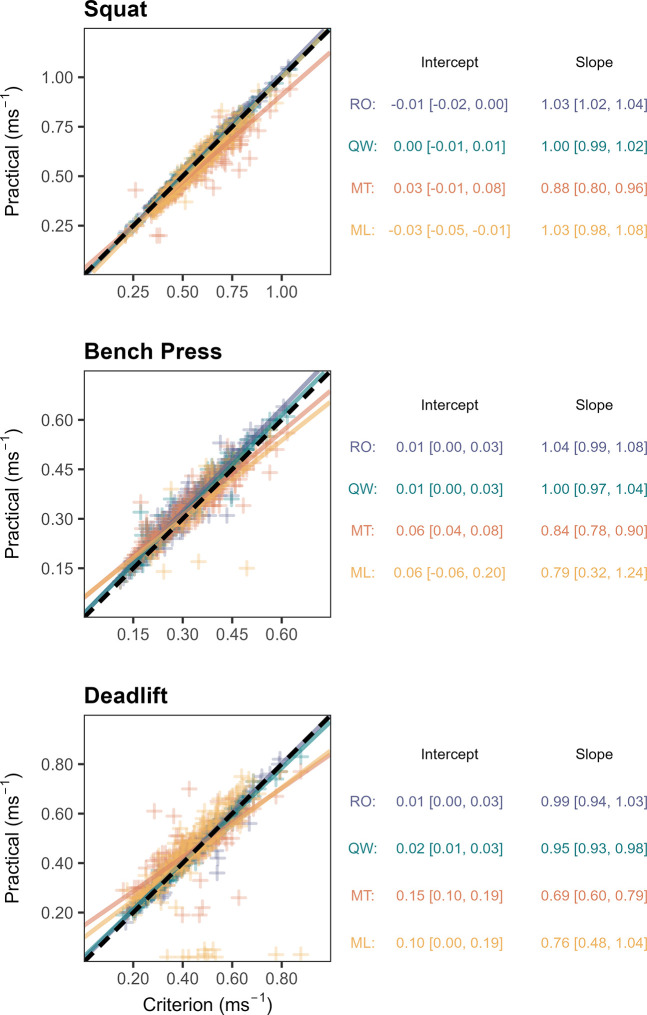
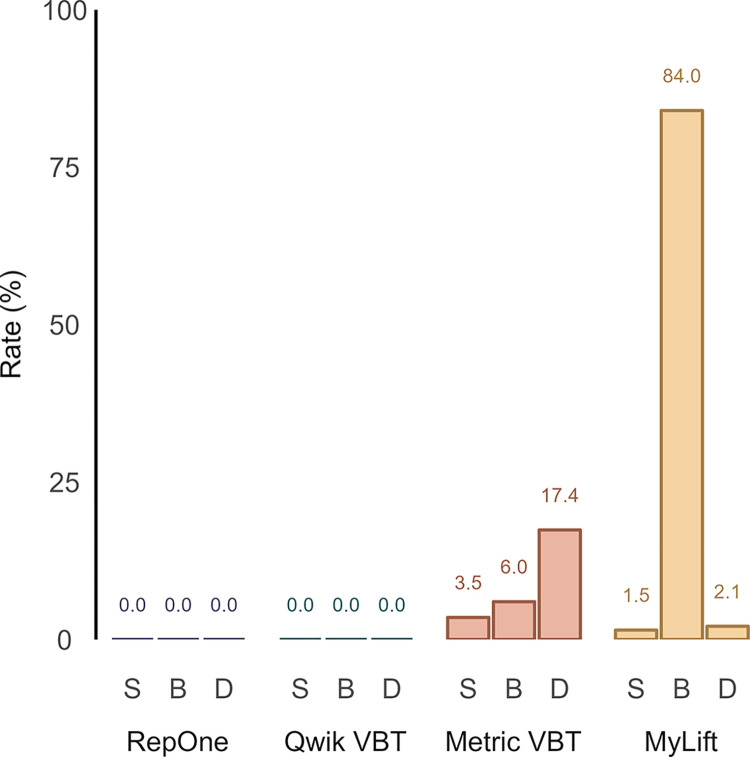
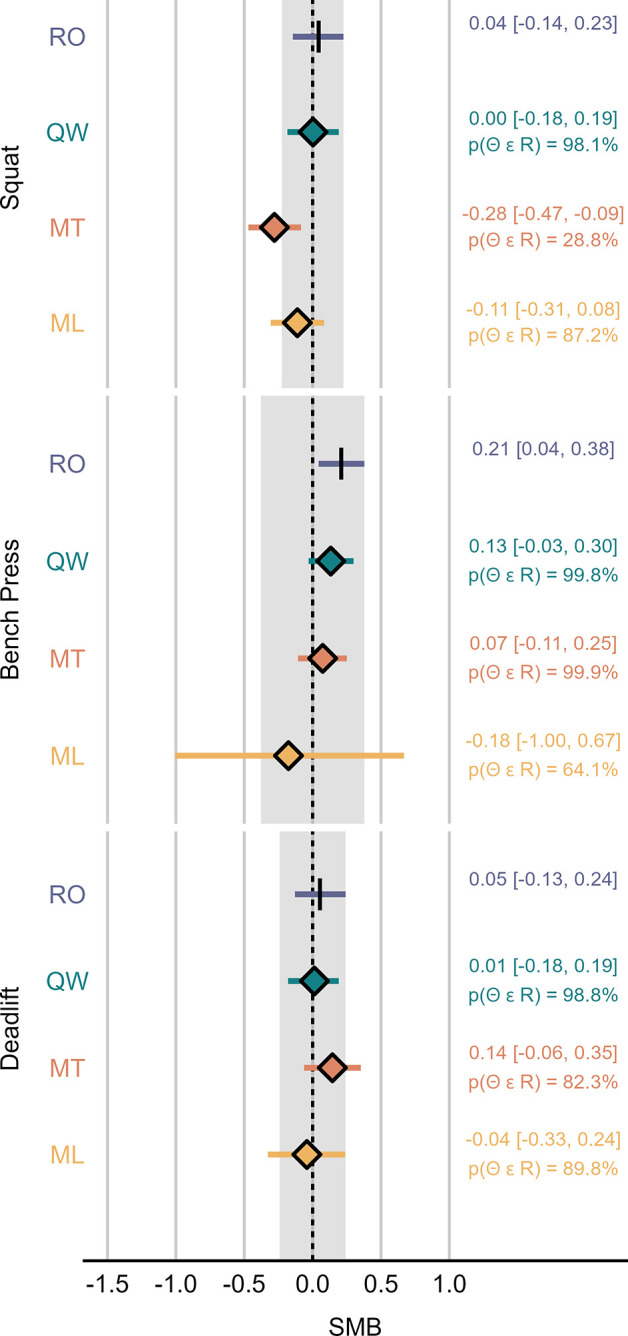
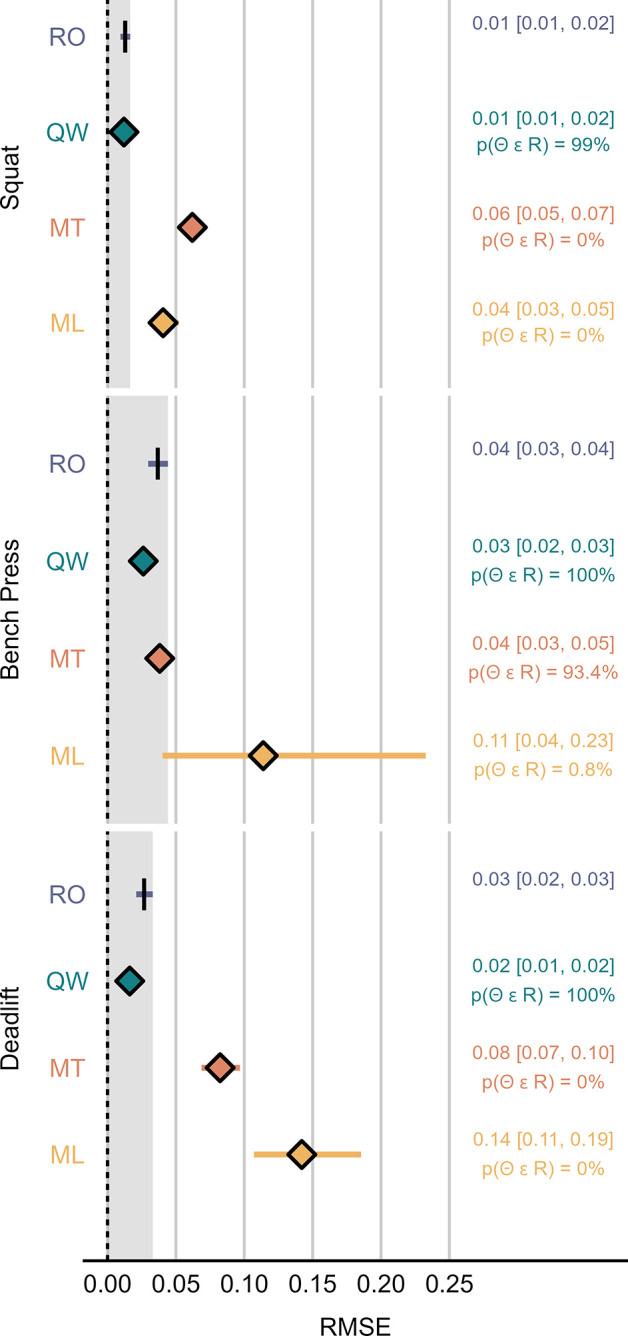
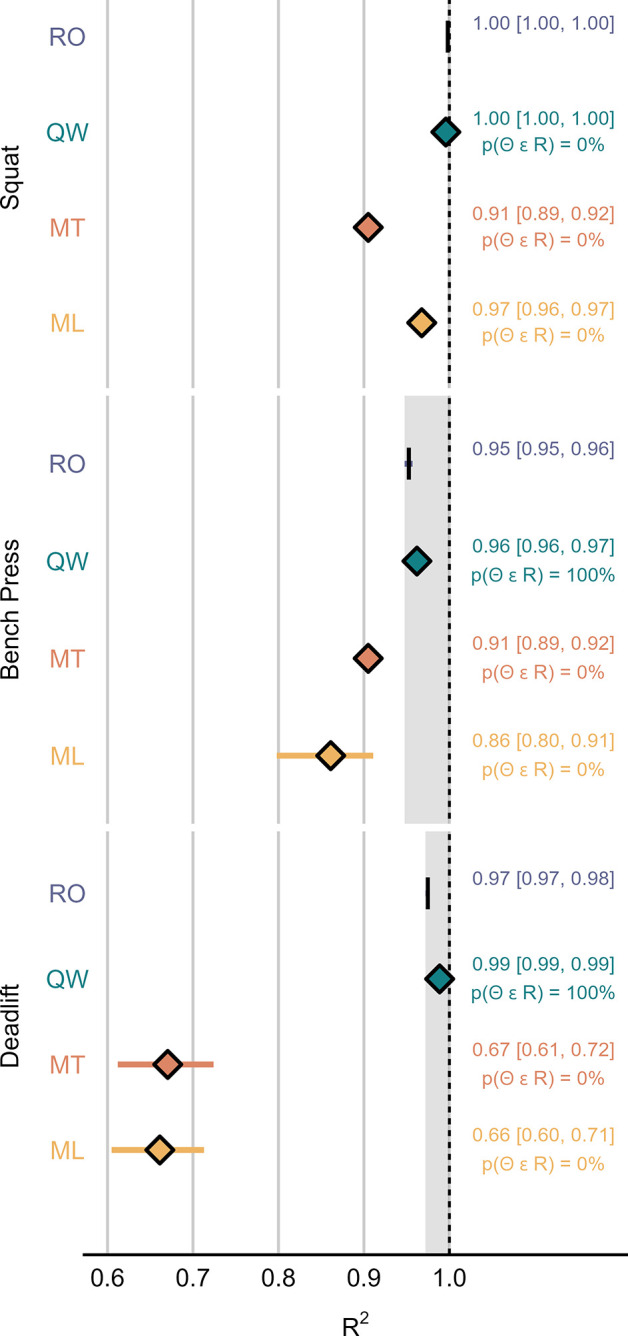
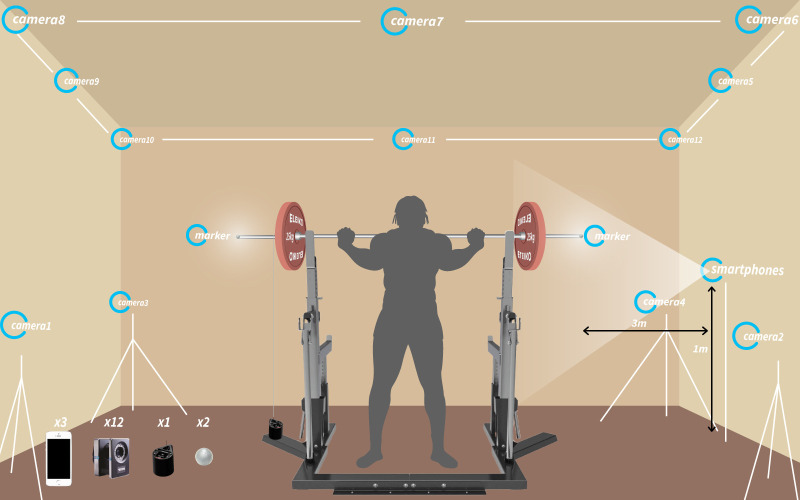
The aim of this study was to determine the validity of three smartphone applications measuring barbell movement velocity in resistance training and comparing them to a commercially available linear transducer. Twenty competitive powerlifters (14 male and 6 female) completed a progressive loading protocol in the squat, bench press and deadlift (sumo or conventional) until reaching 90% of the highest load they had achieved in a recent competition. Mean velocity was concurrently recorded with three smartphone applications: Qwik VBT (QW), Metric VBT (MT), MyLift (ML), and one linear transducer: RepOne (RO). 3D motion capturing (Vicon) was used to calculate specific gold standard trajectory references for the different systems. A total of 589 repetitions were recorded with a mean velocity of (mean ± standard deviation [min-max]) 0.44 ± 0.17 [0.11-1.04] m·s-1, of which MT and ML failed to identify 52 and 175 repetitions, respectively. When compared to Vicon, RO and QW consistently delivered valid measurements (standardized mean bias [SMB] = 0 to 0.21, root mean squared error [RMSE] = 0.01 to 0.04m·s-1). MT and ML failed to deliver a level of validity comparable to RO (SMB = -0.28 to 0.14, RMSE = 0.04-0.14m·s-1), except for MT in the bench press (SMB = 0.07, RMSE = 0.04m·s-1). In conclusion, smartphone applications can be as valid as a linear transducer when assessing mean concentric barbell velocity. Out of the smartphone applications included in this investigation, QW delivered the best results.

摘要

本研究旨在确定三种智能手机应用程序在阻力训练中测量杠铃运动速度的有效性,并将其与市售的线性传感器进行比较。20 名竞技力量举重运动员(14 名男性和 6 名女性)完成了一项渐进式加载方案,包括深蹲、卧推和硬拉(相扑或传统),直到达到他们最近一次比赛中达到的最高负荷的 90%。三种智能手机应用程序(Qwik VBT[QW]、Metric VBT[MT]和 MyLift[ML])和一个线性传感器(RepOne[RO])同时记录平均速度。使用 3D 运动捕捉(Vicon)为不同系统计算特定的黄金标准轨迹参考。共记录了 589 次重复,平均速度为(平均值±标准差[最小值-最大值])0.44±0.17[0.11-1.04]m·s-1,其中 MT 和 ML 分别未能识别 52 次和 175 次重复。与 Vicon 相比,RO 和 QW 始终提供有效的测量值(标准化平均偏差[SMB]为 0 至 0.21,均方根误差[RMSE]为 0.01 至 0.04m·s-1)。MT 和 ML 未能提供与 RO 相媲美的有效性水平(SMB=-0.28 至 0.14,RMSE=0.04-0.14m·s-1),除了 MT 在卧推中的表现(SMB=0.07,RMSE=0.04m·s-1)。总之,当评估平均向心杠铃速度时,智能手机应用程序可以与线性传感器一样有效。在本研究中包含的智能手机应用程序中,QW 提供了最佳的结果。
https://cdn.ncbi.nlm.nih.gov/pmc/blobs/0015/11575817/81e43b508c31/pone.0313919.g006.jpg
https://cdn.ncbi.nlm.nih.gov/pmc/blobs/0015/11575817/1df69fd02049/pone.0313919.g001.jpg
https://cdn.ncbi.nlm.nih.gov/pmc/blobs/0015/11575817/d6a157115b06/pone.0313919.g002.jpg
https://cdn.ncbi.nlm.nih.gov/pmc/blobs/0015/11575817/c9c47cbe0323/pone.0313919.g003.jpg
https://cdn.ncbi.nlm.nih.gov/pmc/blobs/0015/11575817/5f89274de28b/pone.0313919.g004.jpg
https://cdn.ncbi.nlm.nih.gov/pmc/blobs/0015/11575817/06afa92cb4c5/pone.0313919.g005.jpg
https://cdn.ncbi.nlm.nih.gov/pmc/blobs/0015/11575817/81e43b508c31/pone.0313919.g006.jpg
https://cdn.ncbi.nlm.nih.gov/pmc/blobs/0015/11575817/1df69fd02049/pone.0313919.g001.jpg
https://cdn.ncbi.nlm.nih.gov/pmc/blobs/0015/11575817/d6a157115b06/pone.0313919.g002.jpg
https://cdn.ncbi.nlm.nih.gov/pmc/blobs/0015/11575817/c9c47cbe0323/pone.0313919.g003.jpg
https://cdn.ncbi.nlm.nih.gov/pmc/blobs/0015/11575817/5f89274de28b/pone.0313919.g004.jpg
https://cdn.ncbi.nlm.nih.gov/pmc/blobs/0015/11575817/06afa92cb4c5/pone.0313919.g005.jpg
https://cdn.ncbi.nlm.nih.gov/pmc/blobs/0015/11575817/81e43b508c31/pone.0313919.g006.jpg

相似文献

1
Concurrent validity of novel smartphone-based apps monitoring barbell velocity in powerlifting exercises.新型基于智能手机的应用程序监测举重中杠铃速度的同时效度。
PLoS One. 2024 Nov 19;19(11):e0313919. doi: 10.1371/journal.pone.0313919. eCollection 2024.
2
Concurrent Validity of Field-Based Diagnostic Technology Monitoring Movement Velocity in Powerlifting Exercises.基于场地的诊断技术监测举重运动速度的同时效度。
J Strength Cond Res. 2021 Aug 1;35(8):2170-2178. doi: 10.1519/JSC.0000000000003143.
3
Validation of a commercially available mobile application for velocity-based resistance training.验证一种商用的基于速度的抗阻训练移动应用程序的有效性。
PeerJ. 2024 Jul 24;12:e17789. doi: 10.7717/peerj.17789. eCollection 2024.
4
Validity and reliability of a novel iPhone app for the measurement of barbell velocity and 1RM on the bench-press exercise.一款用于测量卧推运动中杠铃速度和1RM的新型iPhone应用程序的有效性和可靠性。
J Sports Sci. 2018 Jan;36(1):64-70. doi: 10.1080/02640414.2017.1280610. Epub 2017 Jan 18.
5
Influence of the "Slingshot" Bench Press Training Aid on Bench Press Kinematics and Neuromuscular Activity in Competitive Powerlifters.“弹弓”卧推训练辅助器对竞技力量举运动员卧推运动学和神经肌肉活动的影响。
J Strength Cond Res. 2019 Feb;33(2):327-336. doi: 10.1519/JSC.0000000000001853.
6
Validity of a Smartphone App Using Artificial Intelligence for the Real-Time Measurement of Barbell Velocity in the Bench Press Exercise.利用人工智能的智能手机应用程序实时测量卧推练习中杠铃速度的有效性。
J Strength Cond Res. 2023 Dec 1;37(12):e640-e645. doi: 10.1519/JSC.0000000000004593.
7
Factors Related to Average Concentric Velocity of Four Barbell Exercises at Various Loads.与不同负荷下四种杠铃练习的平均向心速度相关的因素。
J Strength Cond Res. 2019 Mar;33(3):597-605. doi: 10.1519/JSC.0000000000003043.
8
Reliability and Concurrent Validity of Seven Commercially Available Devices for the Assessment of Movement Velocity at Different Intensities During the Bench Press.卧推时不同强度下评估运动速度的七种市售设备的可靠性和同时效度。
J Strength Cond Res. 2019 May;33(5):1258-1265. doi: 10.1519/JSC.0000000000003118.
9
Criterion Validity, and Interunit and Between-Day Reliability of the FLEX for Measuring Barbell Velocity During Commonly Used Resistance Training Exercises.FLEX 在常用抗阻训练中测量杠铃速度的效标效度、单元间和日间可靠性。
J Strength Cond Res. 2020 Jun;34(6):1519-1524. doi: 10.1519/JSC.0000000000003592.
10
Video-Based System for Automatic Measurement of Barbell Velocity in Back Squat.基于视频的背蹲杠铃速度自动测量系统。
Sensors (Basel). 2021 Jan 30;21(3):925. doi: 10.3390/s21030925.

本文引用的文献

1
Velocity-Based Strength Training: The Validity and Personal Monitoring of Barbell Velocity with the Apple Watch.基于速度的力量训练:使用苹果手表对杠铃速度进行有效性评估及个人监测
Sports (Basel). 2023 Jun 23;11(7):125. doi: 10.3390/sports11070125.
2
Validity and Reliability of Mobile Applications for Assessing Strength, Power, Velocity, and Change-of-Direction: A Systematic Review.移动应用程序评估力量、功率、速度和变向能力的有效性和可靠性:系统评价。
Sensors (Basel). 2021 Apr 8;21(8):2623. doi: 10.3390/s21082623.
3
The Validity and Reliability of Commercially Available Resistance Training Monitoring Devices: A Systematic Review.
市售抗阻训练监测设备的有效性和可靠性:一项系统评价。
Sports Med. 2021 Mar;51(3):443-502. doi: 10.1007/s40279-020-01382-w. Epub 2021 Jan 21.
4
The Role of Velocity Based Training in the Strength Periodization for Modern Athletes.基于速度的训练在现代运动员力量周期化训练中的作用。
J Funct Morphol Kinesiol. 2018 Nov 16;3(4):55. doi: 10.3390/jfmk3040055.
5
Correction: Reliability of technologies to measure the barbell velocity: Implications for monitoring resistance training.更正:测量杠铃速度技术的可靠性:对监测阻力训练的启示
PLoS One. 2020 Jul 9;15(7):e0236073. doi: 10.1371/journal.pone.0236073. eCollection 2020.
6
The Reliability and Validity of Current Technologies for Measuring Barbell Velocity in the Free-Weight Back Squat and Power Clean.当前用于测量自由重量后深蹲和高翻中杠铃速度的技术的可靠性和有效性
Sports (Basel). 2020 Jun 30;8(7):94. doi: 10.3390/sports8070094.
7
A comparison of currently available optoelectronic motion capture systems.当前可用的光电运动捕捉系统的比较。
J Biomech. 2020 Jun 9;106:109820. doi: 10.1016/j.jbiomech.2020.109820. Epub 2020 Apr 25.
8
Kinematic Differences Between the Front and Back Squat and Conventional and Sumo Deadlift.前蹲和后蹲、传统硬拉与相扑硬拉的运动学差异。
J Strength Cond Res. 2019 Dec;33(12):3213-3219. doi: 10.1519/JSC.0000000000003377.
9
Validity and reliability assessment of 3-D camera-based capture barbell velocity tracking device.基于 3D 相机的捕捉杠铃速度跟踪装置的有效性和可靠性评估。
J Sci Med Sport. 2020 Jan;23(1):7-14. doi: 10.1016/j.jsams.2019.07.014. Epub 2019 Aug 7.
10
Reliability and validity of different methods of estimating the one-repetition maximum during the free-weight prone bench pull exercise.不同方法评估自由重量俯身卧推练习 1 次最大重复次数的可靠性和有效性。
J Sports Sci. 2019 Oct;37(19):2205-2212. doi: 10.1080/02640414.2019.1626071. Epub 2019 Jun 4.