The Shmunis School of Biomedicine and Cancer Research, George S. Wise Faculty of Life Sciences, Tel Aviv University, Tel Aviv, Israel.
Human Genomics Laboratory, University of Medicine and Pharmacy of Craiova, Craiova, Romania; Regional Centre of Medical Genetics Dolj, County Clinical Emergency Hospital Craiova, Craiova, Romania.
Cell Rep Med. 2024 Nov 19;5(11):101829. doi: 10.1016/j.xcrm.2024.101829.
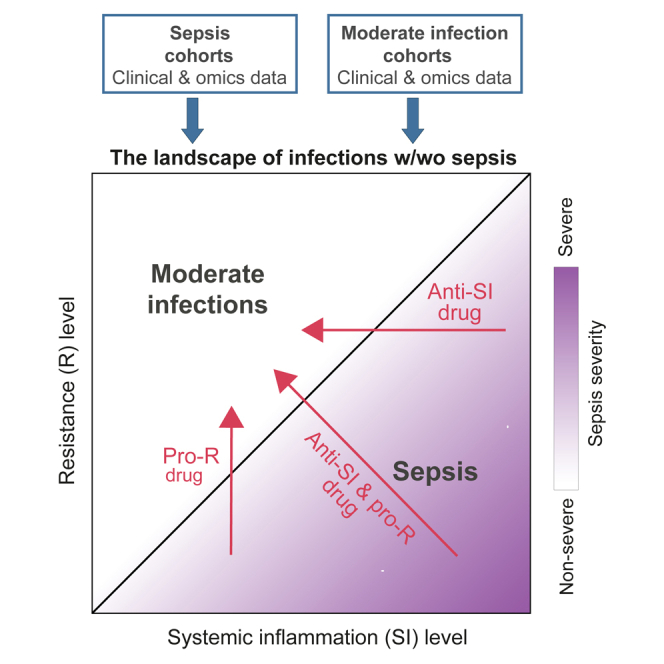
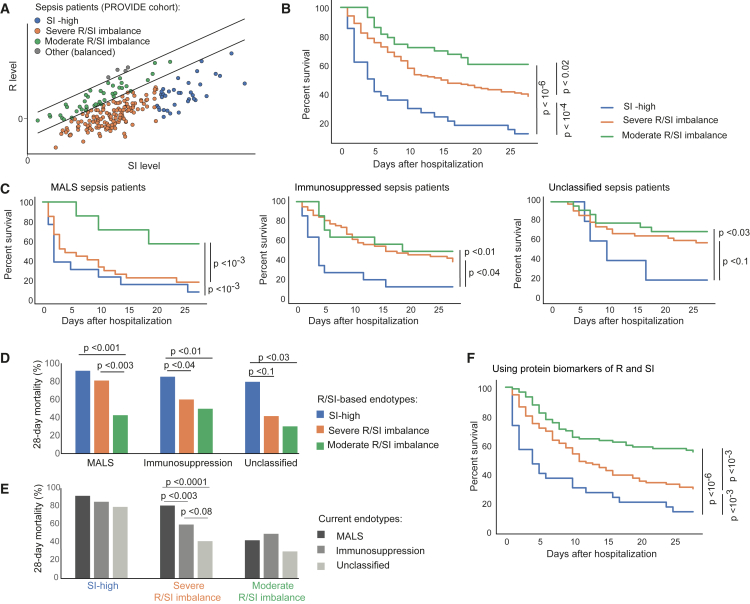
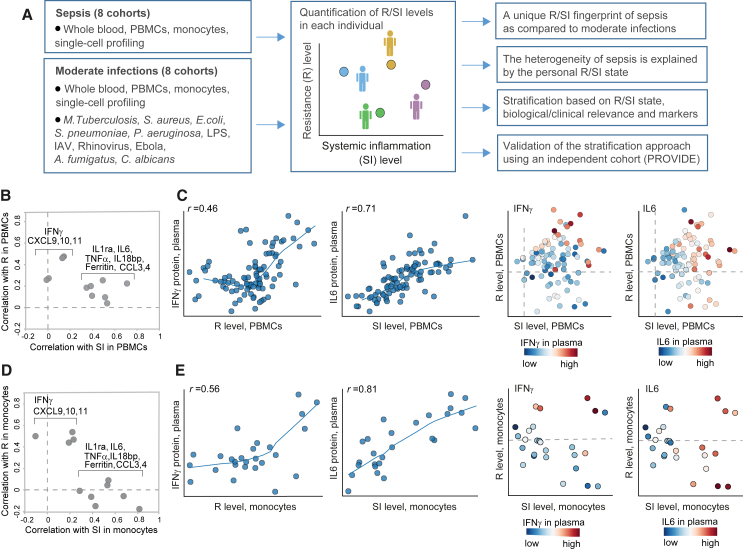
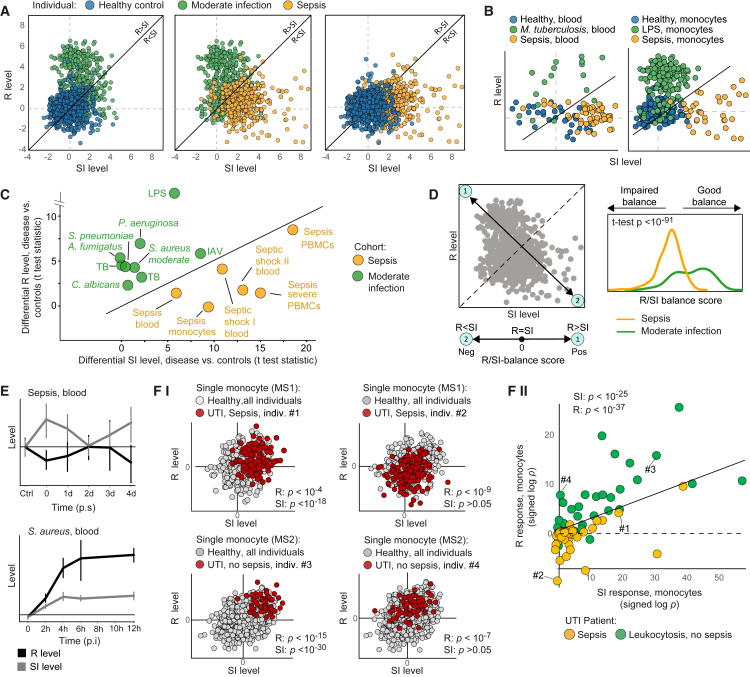
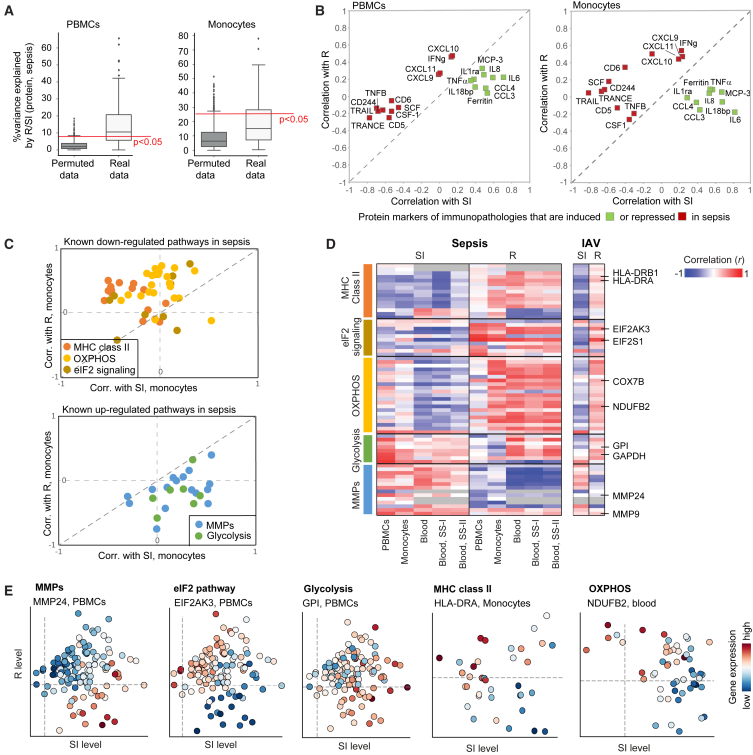
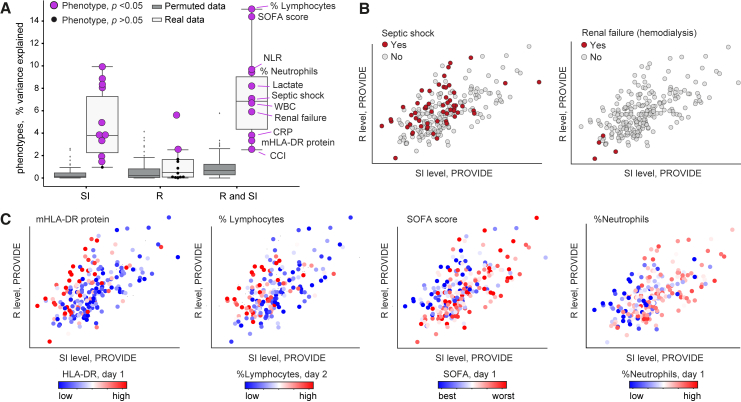
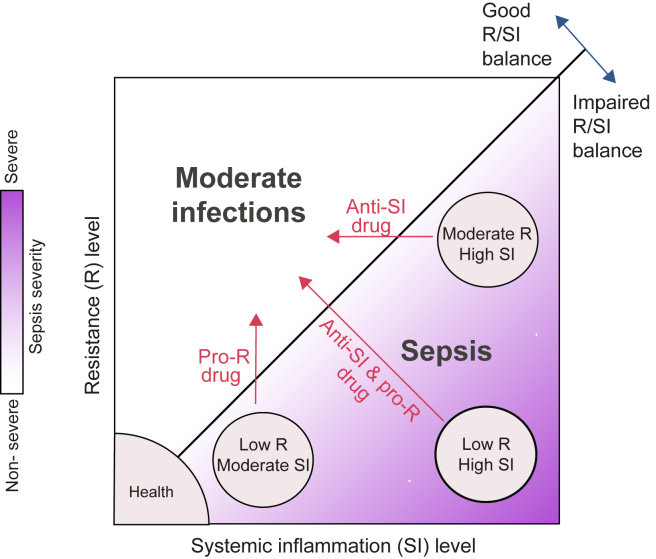
Patients with sepsis differ in their clinical presentations and immune dysregulation in response to infection, but the fundamental processes that determine this heterogeneity remain elusive. Here, we aim to understand which types of immune dysregulation characterize patients with sepsis. To that end, we investigate sepsis pathogenesis in the context of two transcriptional states: one represents the immune response to eliminate pathogens (resistance, R) and the other is associated with systemic inflammation (SI). We find that patients with sepsis share a molecular fingerprint of a low R-to-SI balance-i.e., a low R relative to the level of SI. Differences between patients with sepsis are explained by the wide diversity of R and SI states that fall under this fingerprint, such as patients with high SI, patients with low R, or both. We show how this R/SI framework can be used to guide patient stratification that is relevant to disease prognosis and management, outperforming existing classifications of sepsis.
脓毒症患者在其临床表现和对感染的免疫失调方面存在差异,但决定这种异质性的基本过程仍然难以捉摸。在这里,我们旨在了解哪些类型的免疫失调是脓毒症患者的特征。为此,我们在两种转录状态下研究脓毒症的发病机制:一种代表对病原体的免疫反应(抵抗,R),另一种与全身炎症有关(SI)。我们发现,脓毒症患者具有低 R 与 SI 平衡的分子特征,即相对于 SI 水平,R 较低。脓毒症患者之间的差异可以通过在这个指纹下的 R 和 SI 状态的广泛多样性来解释,例如具有高 SI 的患者、具有低 R 的患者或两者兼有。我们展示了如何使用这个 R/SI 框架来指导与疾病预后和管理相关的患者分层,优于现有的脓毒症分类。