Department of Hepatopancreatobiliary Surgery, The First Affiliated Hospital, Laboratory of Structural Immunology, Hengyang Medical School, University of South China, Hengyang, Hunan 421001, China.
W. M. Keck Laboratory for Structural Biology, University of Maryland Institute for Bioscience and Biotechnology Research, Rockville, MD 20850, USA.
Sci Adv. 2024 Nov 22;10(47):eadq6150. doi: 10.1126/sciadv.adq6150.
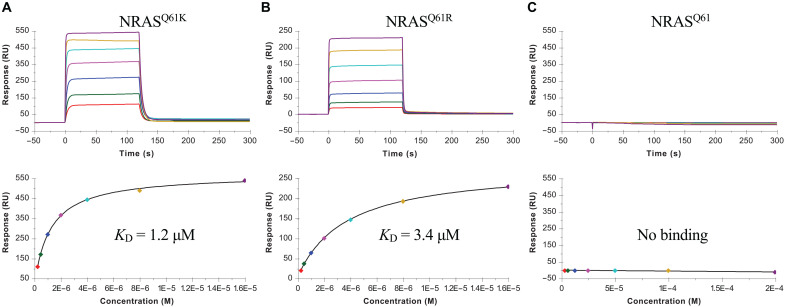
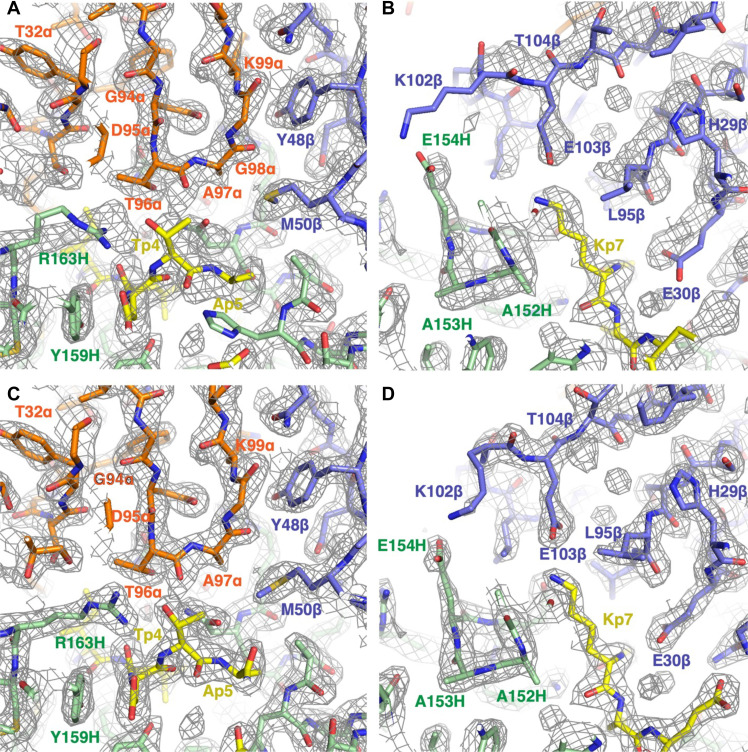
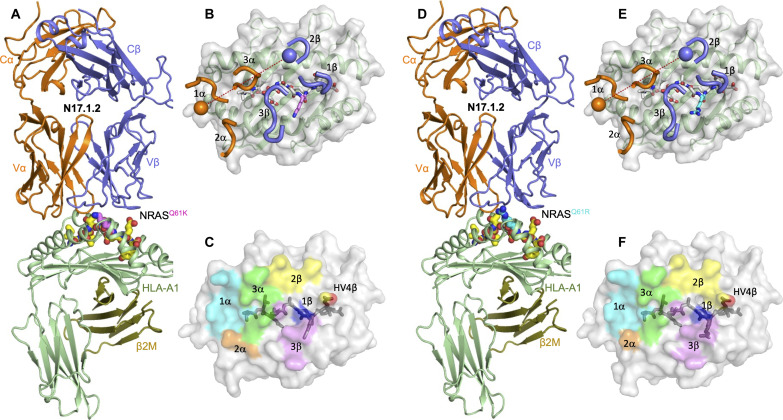
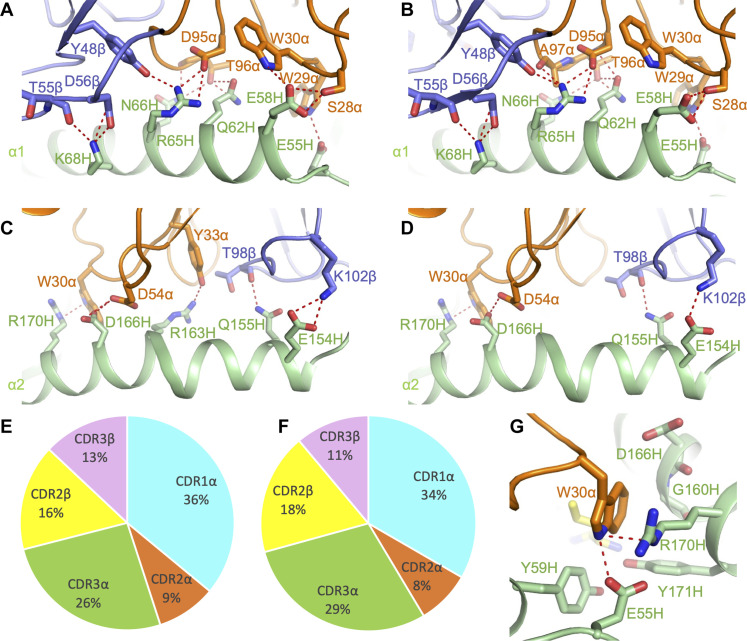
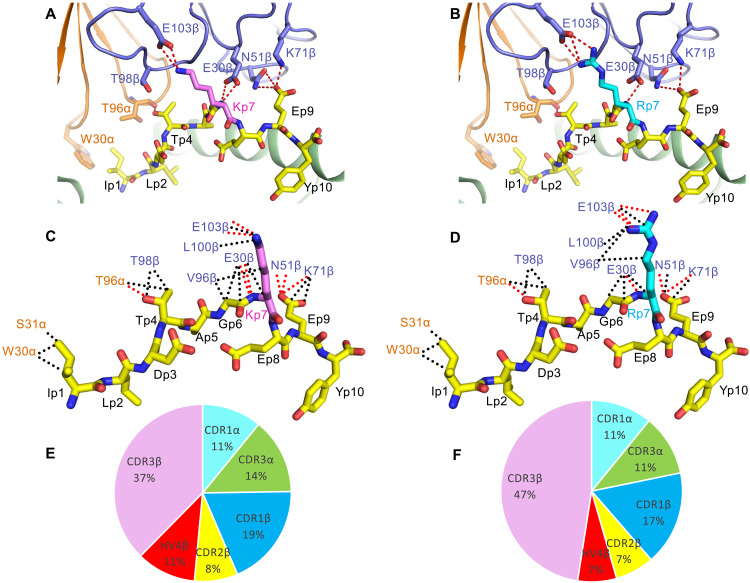
T cell receptors (TCRs) that recognize cancer neoantigens are important for anticancer immune responses and immunotherapy. Understanding the structural basis of TCR recognition of neoantigens provides insights into their exquisite specificity and can enable design of optimized TCRs. We determined crystal structures of a human TCR in complex with NRAS Q61K and Q61R neoantigen peptides and HLA-A1 major histocompatibility complex (MHC), revealing the molecular underpinnings for dual recognition and specificity versus wild-type NRAS peptide. We then used multiple versions of AlphaFold to model the corresponding complex structures, given the challenge of immune recognition for such methods. One implementation of AlphaFold2 (TCRmodel2) with additional sampling was able to generate accurate models of the complexes, while AlphaFold3 also showed strong performance, although success was lower for other complexes. This study provides insights into TCR recognition of a shared cancer neoantigen as well as the utility and practical considerations for using AlphaFold to model TCR-peptide-MHC complexes.
T 细胞受体 (TCRs) 识别肿瘤新生抗原对于抗肿瘤免疫反应和免疫疗法至关重要。了解 TCR 识别新生抗原的结构基础,可以深入了解其高度特异性,并能够设计优化的 TCR。我们确定了与NRAS Q61K 和 Q61R 新生抗原肽和 HLA-A1 主要组织相容性复合体 (MHC) 结合的人类 TCR 的晶体结构,揭示了双重识别和特异性的分子基础,以及与野生型 NRAS 肽的特异性。然后,我们使用多种版本的 AlphaFold 来模拟相应的复合物结构,考虑到此类方法对免疫识别的挑战。一种名为 TCRmodel2 的 AlphaFold2 实现(具有额外采样)能够生成复合物的准确模型,而 AlphaFold3 也表现出很强的性能,尽管其他复合物的成功率较低。这项研究提供了对 TCR 识别共享肿瘤新生抗原的深入了解,以及使用 AlphaFold 来模拟 TCR-肽-MHC 复合物的实用性和实际考虑因素。