Pharmaco- and Device Epidemiology Group, Health Data Sciences, Botnar Research Centre, NDORMS, University of Oxford, Windmill Road, Oxford, OX3 7LD, UK.
Epidemiology & Real-World Data Sciences, MedTech, Johnson & Johnson, New Brunswick, NJ, USA.
BMC Med Res Methodol. 2024 Nov 22;24(1):289. doi: 10.1186/s12874-024-02406-z.
Rapid innovation and new regulations lead to an increased need for post-marketing surveillance of implantable devices. However, complex multi-level confounding related not only to patient-level but also to surgeon or hospital covariates hampers observational studies of risks and benefits. We conducted parametric and plasmode simulations to compare the performance of cardinality matching (CM) vs propensity score matching (PSM) to reduce confounding bias in the presence of cluster-level confounding.
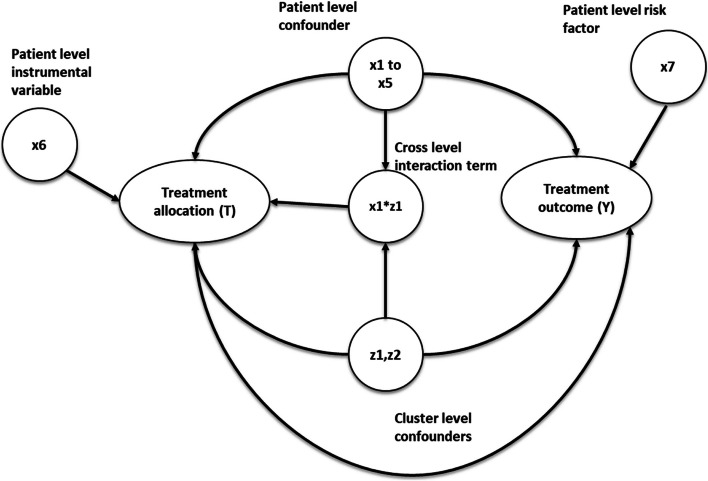
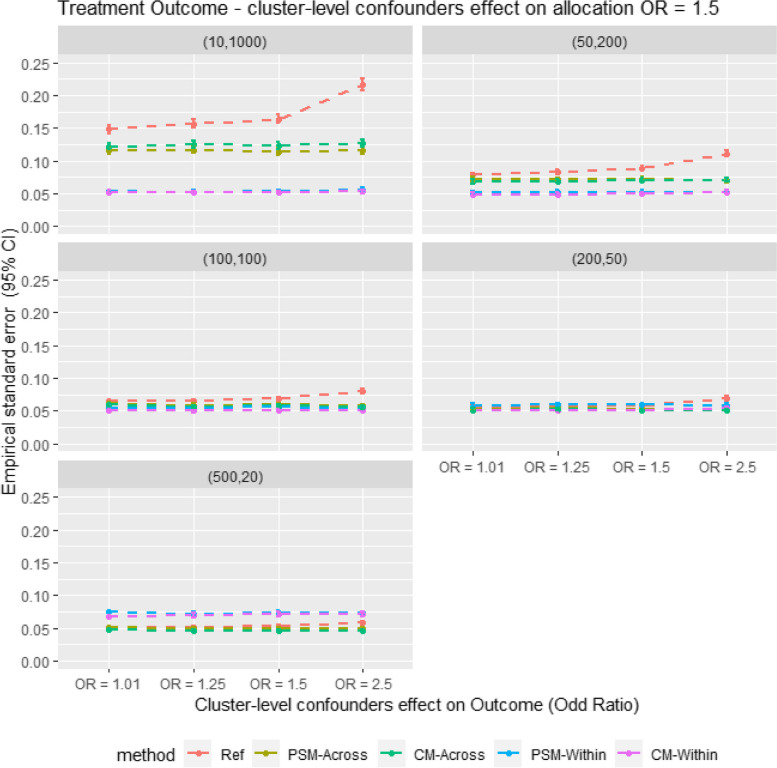
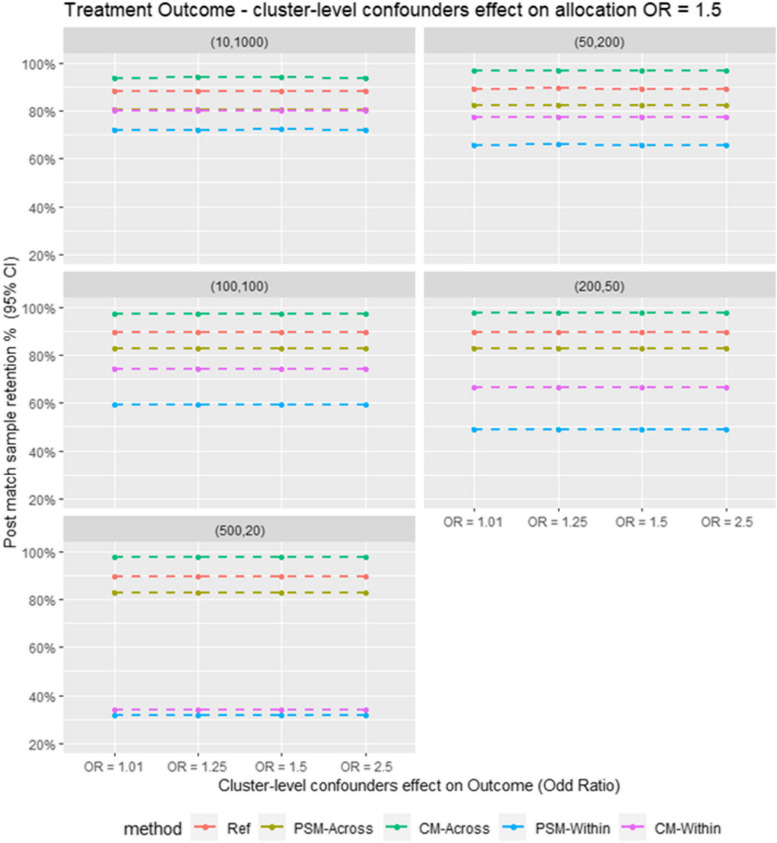
Two Monte Carlo simulation studies were carried out: 1) Parametric simulations (1,000 iterations) with patients nested in clusters (ratio 10:1, 50:1, 100:1, 200:1, 500:1) and sample size n = 10,000 were conducted with patient and cluster level confounders; 2) Plasmode simulations generated from a cohort of 9981 patients admitted for pancreatectomy between 2015 to 2019 from a US hospital database. CM with 0.1 standardised mean different constraint threshold (SMD) for confounders and PSM were used to balance the confounders for within-cluster and cross-cluster matching. Treatment effects were then estimated using logistic regression as the outcome model on the obtained matched sample.
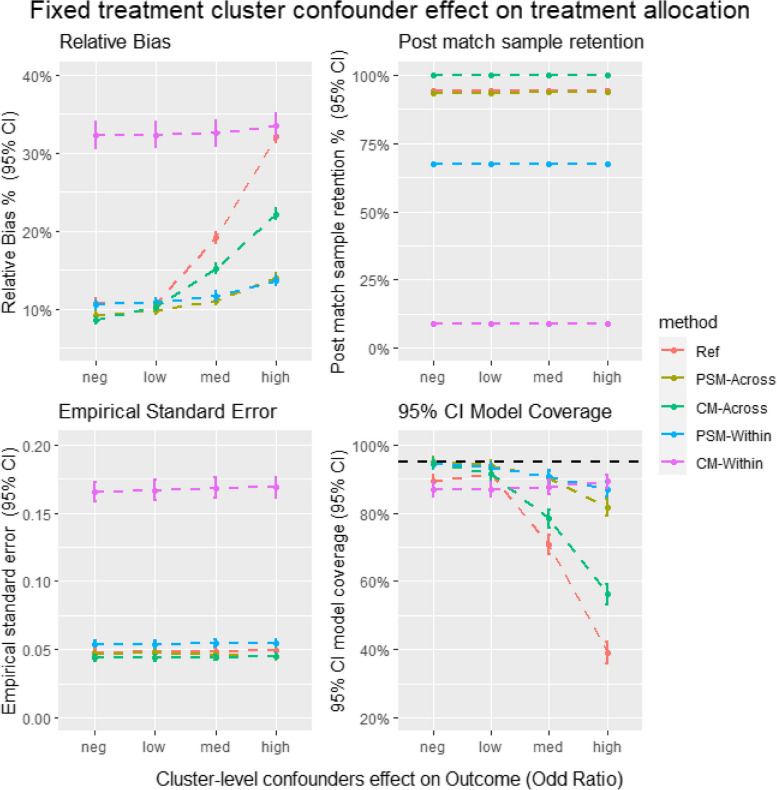
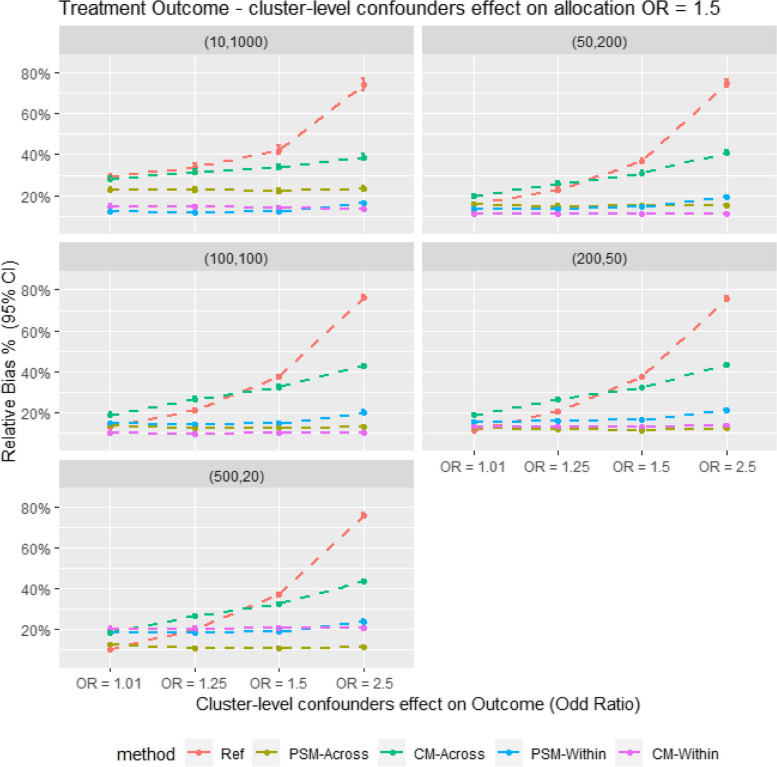
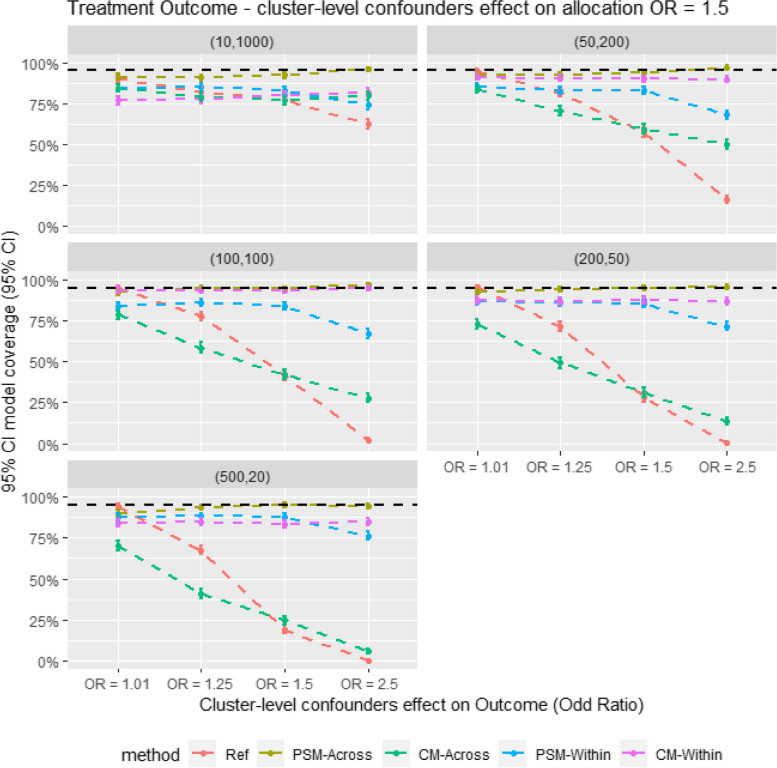
CM yielded higher sample retention but more bias than PSM for cross-cluster matching in most scenarios. For instance, with ratio of 100:1, sample retention and relative bias were 97.1% and 26.5% for CM, compared to 82.5% and 12.2% for PSM. The results for plasmode simulation were similar.
CM offered better sample retention but higher bias in most scenarios compared to PSM. More research is needed to guide the use of CM particularly in constraint setting for confounders for medical device and surgical epidemiology.
快速创新和新法规导致对植入设备的上市后监测的需求增加。然而,不仅与患者相关,而且与外科医生或医院相关的复杂多层次混杂因素阻碍了风险和益处的观察性研究。我们进行了参数和血浆模型模拟,以比较基数匹配 (CM) 与倾向评分匹配 (PSM) 在存在聚类水平混杂时减少混杂偏差的性能。
进行了两项蒙特卡罗模拟研究:1)参数模拟(1000 次迭代),患者嵌套在聚类中(比例为 10:1、50:1、100:1、200:1、500:1),样本量 n=10000,患者和聚类水平混杂因素;2)从美国医院数据库中 2015 年至 2019 年间接受胰腺切除术的 9981 名患者的队列中生成血浆模型。使用 0.1 个标准化均数差约束阈值 (SMD) 的 CM 对混杂因素进行匹配,并对聚类内和跨聚类匹配进行平衡。然后使用逻辑回归作为结果模型,在获得的匹配样本上估计治疗效果。
在大多数情况下,CM 比 PSM 更能保留样本,但在跨聚类匹配中会产生更大的偏差。例如,在比例为 100:1 的情况下,CM 的样本保留率和相对偏差分别为 97.1%和 26.5%,而 PSM 的样本保留率和相对偏差分别为 82.5%和 12.2%。血浆模型模拟的结果也类似。
与 PSM 相比,CM 在大多数情况下提供了更好的样本保留率,但偏差更大。需要进一步研究以指导 CM 的使用,特别是在医疗器械和外科流行病学中混杂因素的约束设置方面。