School of Epidemiology and Public Health, University of Ottawa, Ottawa, ON, Canada.
École de Nutrition, Centre de Nutrition, Santé Et Société (NUTRISS), Université Laval, Quebec City, QC, Canada.
BMC Public Health. 2024 Nov 26;24(1):3275. doi: 10.1186/s12889-024-20770-9.
Consumption of sugary drinks (SD) among children and adolescents is a prevalent public health issue both within Canada and worldwide. This problem is exacerbated by the powerful marketing of such beverages to youth, which is known to influence a wide range of dietary behaviours.
A cross-sectional, secondary analysis of the International Food Policy Survey Youth Wave 2019 was conducted to assess the relationship between self-reported exposure to SD marketing within the past 30 days or SD brand advertisements and brand preference and brand recall among youth aged 10-17 from Australia, Canada, Chile, Mexico, the United Kingdom, and the United States. Ordinal, multinomial, and binary logistic regression were used as appropriate to examine these associations.
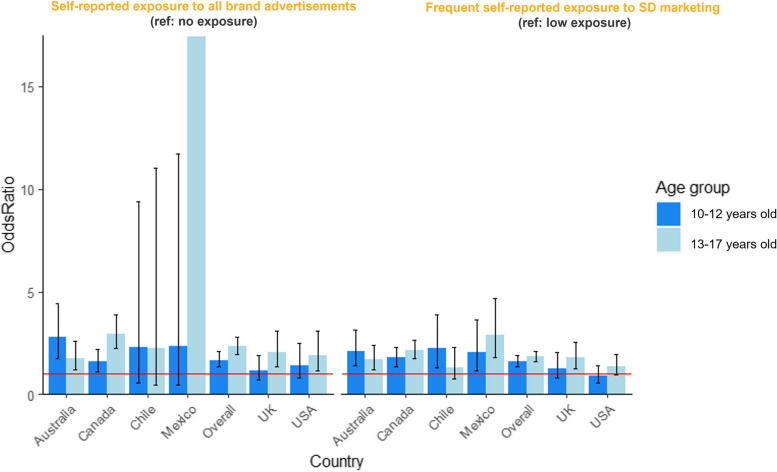
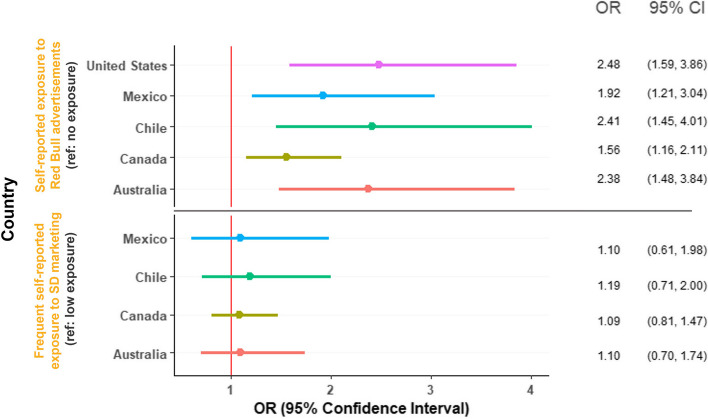
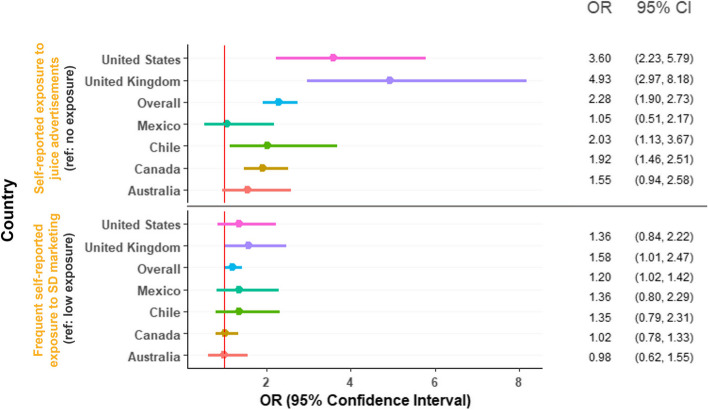
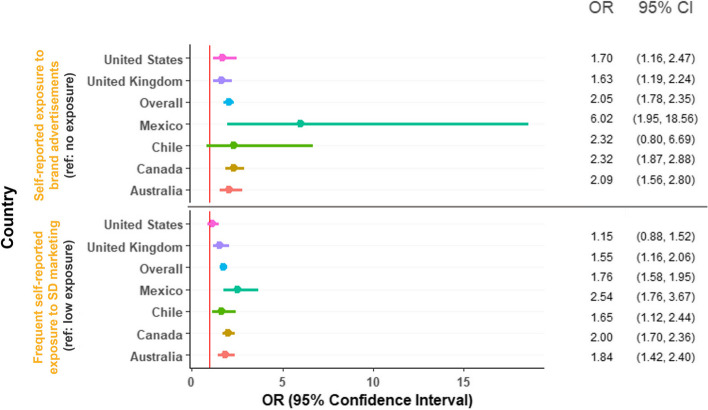
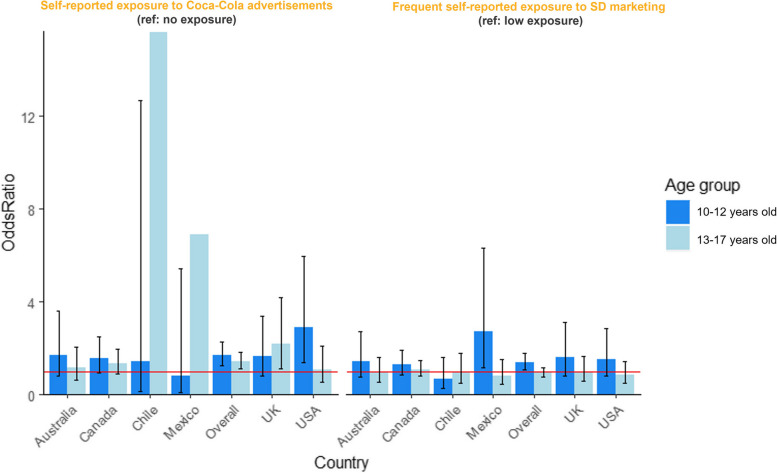
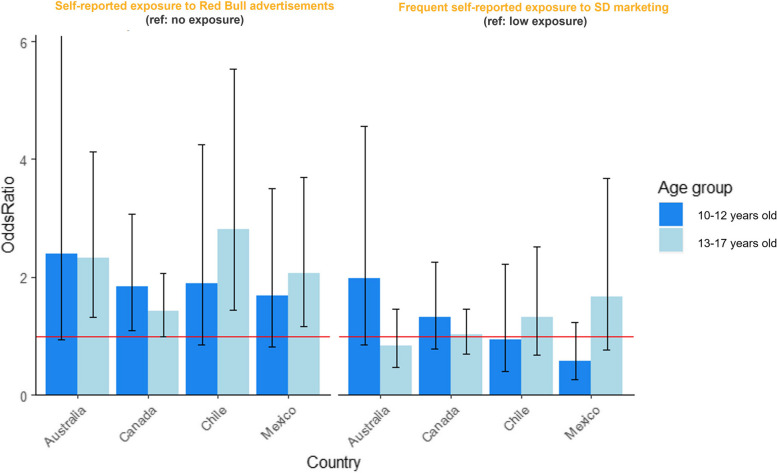
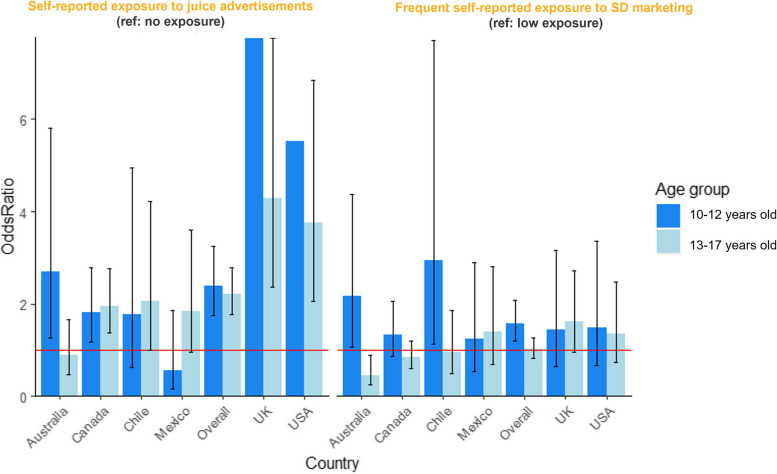
Youth brand preference and recall was positively associated with self-reported exposure to general and brand-specific SD marketing across all countries. No statistical interaction was observed between youth age and SD marketing overall or within countries. Soft drinks, sports drinks, and fruit juice brands were most commonly recalled by all youth.
Similar results were observed among children and adolescents within all countries. Global marketing policies should consider older children and adolescents to adequately protect and support child health.
在加拿大和全球范围内,儿童和青少年饮用含糖饮料(SD)是一个普遍存在的公共卫生问题。这种饮料向年轻人进行强有力的营销,加剧了这个问题,这被认为会影响广泛的饮食行为。
对 2019 年国际粮食政策调查青年波进行了横断面、二次分析,以评估在过去 30 天内报告的 SD 营销(包括一般 SD 营销和特定 SD 品牌广告)与澳大利亚、加拿大、智利、墨西哥、英国和美国 10-17 岁青少年的 SD 品牌偏好和品牌记忆之间的关系。适当使用有序、多项和二项逻辑回归来检验这些关联。
在所有国家,青少年的品牌偏好和记忆与报告的一般和特定 SD 营销的暴露呈正相关。在整个国家或国家内部,青少年年龄与 SD 营销之间没有观察到统计学上的相互作用。所有青少年最常回忆起软饮料、运动饮料和果汁品牌。
在所有国家的儿童和青少年中都观察到了类似的结果。全球营销政策应考虑到年龄较大的儿童和青少年,以充分保护和支持儿童健康。