Department of Population Health, Division of Environmental Health, Occupational Medicine and Epidemiology, Wroclaw Medical University, Mikulicza-Radeckiego 7, PL 50-368 Wroclaw, Poland.
Norwegian Institute of Public Health (NIPH), N-0213 Oslo, Norway.
Biomolecules. 2024 Nov 7;14(11):1420. doi: 10.3390/biom14111420.
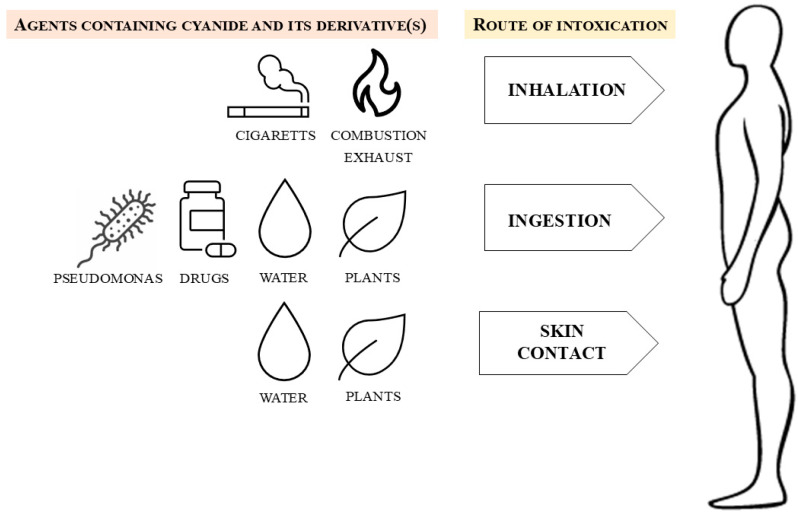
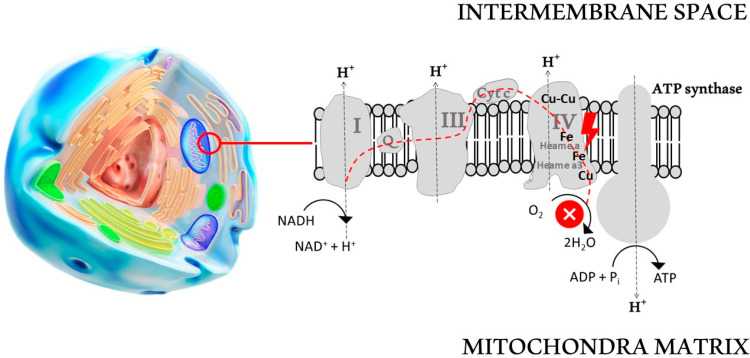
Cyanide (CN) is a well-known mitochondrial poison. CN poisoning may result from acute or long-term exposure to a number of CN compounds. Recent insight into the chemical affinities of the CN anion has increased our understanding of its toxicity and the mechanisms of antidotal actions, which, together with information on various exposure sources, are reviewed in the present article. A literature search in Scopus, Embase, Web of Science, PubMed, and Google Scholar for the period 2001-2024 revealed that the CN anion after exposure or degradation of CN compounds is distributed to vulnerable copper and iron-containing targets, especially in mitochondria, thus blocking the electron transport chain. Intake of cyanogenic compounds may exert subacute or chronic toxic effects, also because of the interaction with cobalt in vitamin B. Antidotal agents exert their effects through the affinity of CN for cobalt- or iron-containing compounds. Research on CN interactions with metalloproteins may increase our insight into CN toxicity and efficient antidotal regimens.
氰化物 (CN) 是一种众所周知的线粒体毒物。CN 中毒可能是由于急性或长期暴露于多种 CN 化合物引起的。最近对 CN 阴离子的化学亲和力的深入了解提高了我们对其毒性和解毒作用机制的认识,本文综述了 CN 阴离子的各种暴露源。2001 年至 2024 年期间,在 Scopus、Embase、Web of Science、PubMed 和 Google Scholar 中进行文献检索,结果表明,暴露或降解 CN 化合物后,CN 阴离子会分布到易受影响的含铜和含铁靶标上,特别是在线粒体中,从而阻断电子传递链。摄入生氰化合物可能会产生亚急性或慢性毒性作用,这也是由于与维生素 B 中的钴相互作用所致。解毒剂通过 CN 与含钴或含铁化合物的亲和力发挥作用。对 CN 与金属蛋白相互作用的研究可能会增加我们对 CN 毒性和有效解毒方案的认识。