Butt Muhammad A
Institute of Microelectronics and Optoelectronics, Warsaw University of Technology, Koszykowa 75, 00-662 Warsaw, Poland.
Sensors (Basel). 2024 Nov 7;24(22):7158. doi: 10.3390/s24227158.
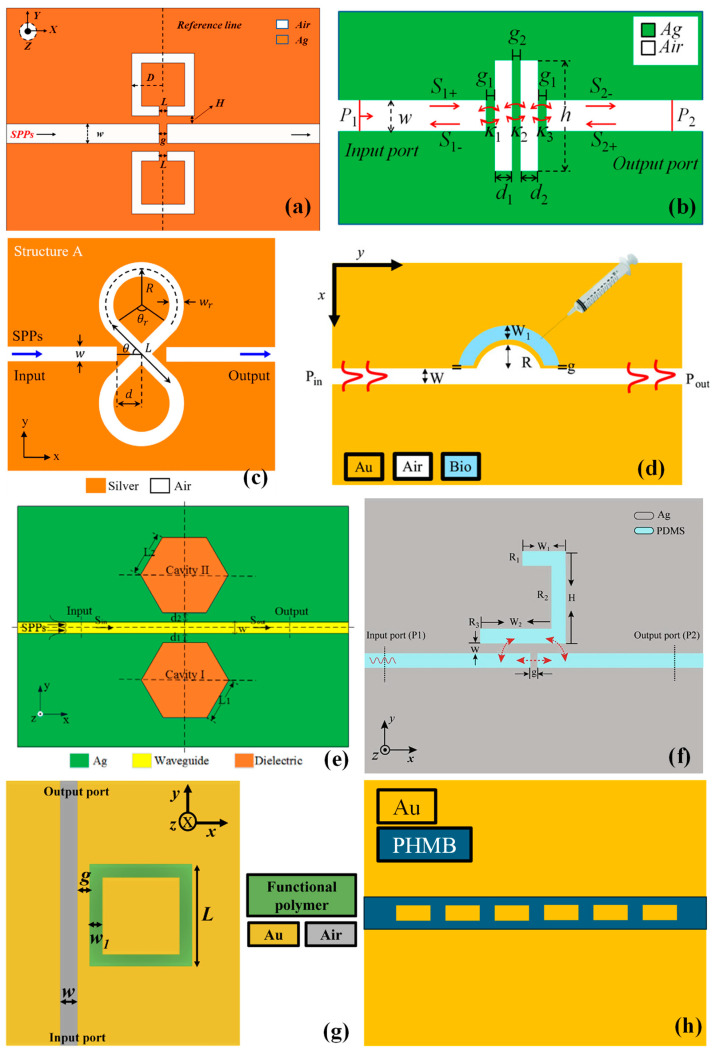
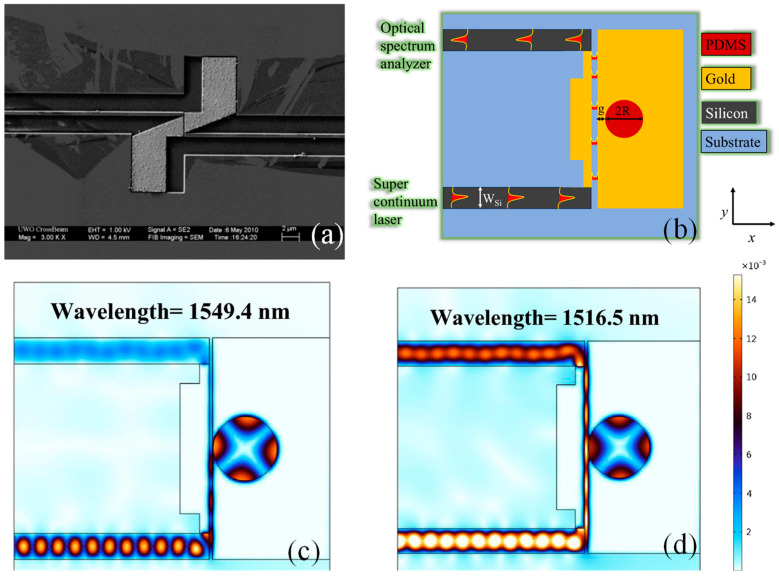
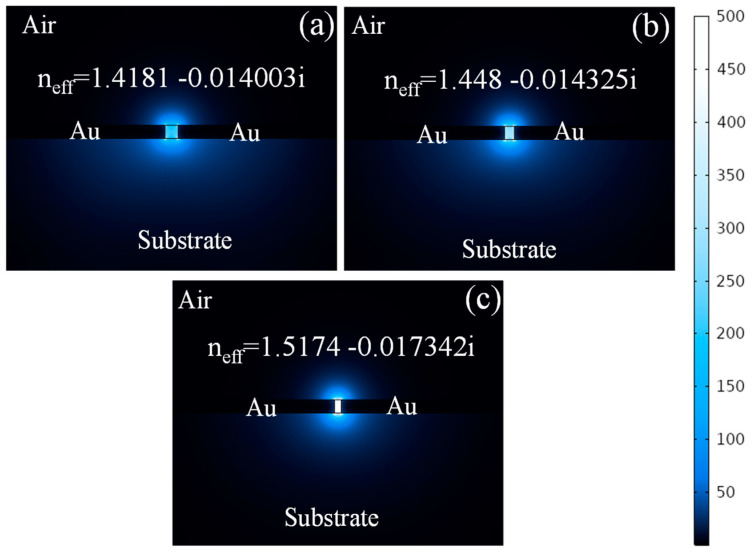
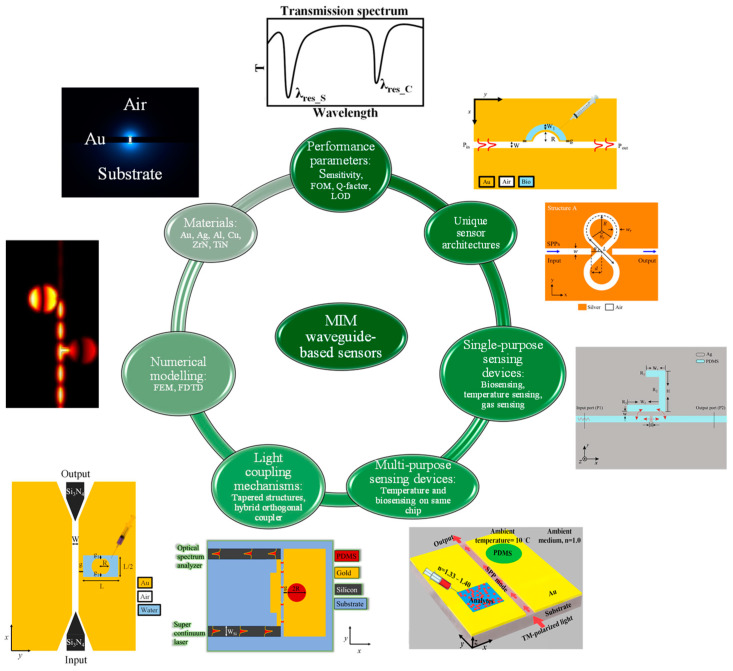
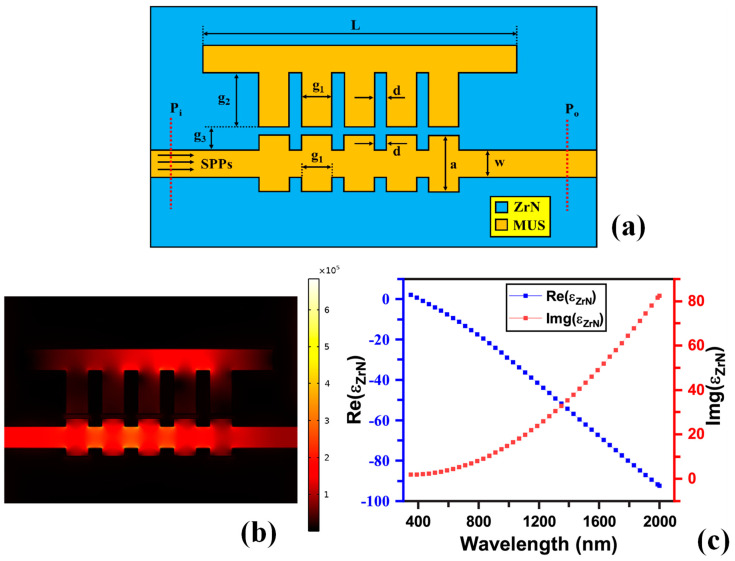
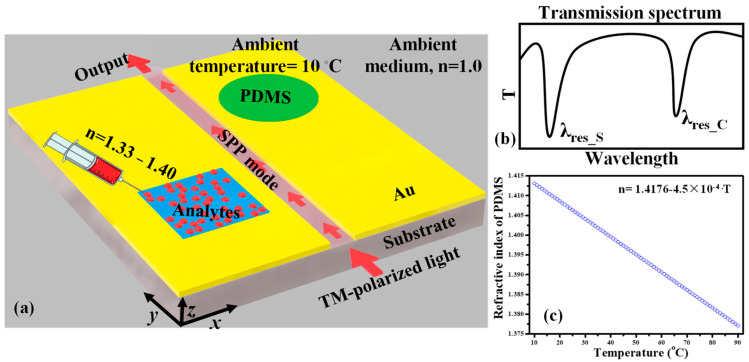
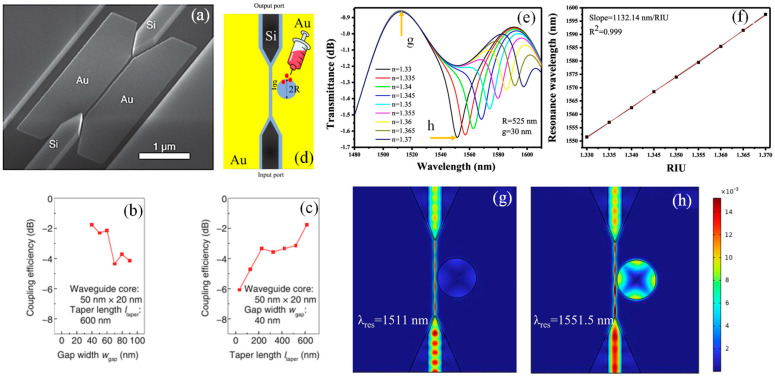
Metal-insulator-metal (MIM) waveguide-based plasmonic sensors are significantly important in the domain of advanced sensing technologies due to their exceptional ability to guide and confine light at subwavelength scales. These sensors exploit the unique properties of surface plasmon polaritons (SPPs) that propagate along the metal-insulator interface, facilitating strong field confinement and enhanced light-matter interactions. In this review, several critical aspects of MIM waveguide-based plasmonic sensors are thoroughly examined, including sensor designs, material choices, fabrication methods, and diverse applications. Notably, there exists a substantial gap between the numerical data and the experimental verification of these devices, largely due to the insufficient attention given to the hybrid integration of plasmonic components. This disconnect underscores the need for more focused research on seamless integration techniques. Additionally, innovative light-coupling mechanisms are suggested that could pave the way for the practical realization of these highly promising plasmonic sensors.
基于金属-绝缘体-金属(MIM)波导的等离子体传感器在先进传感技术领域具有极其重要的意义,因为它们具有在亚波长尺度下引导和限制光的卓越能力。这些传感器利用沿金属-绝缘体界面传播的表面等离激元极化激元(SPP)的独特特性,实现强场限制并增强光与物质的相互作用。在本综述中,我们全面研究了基于MIM波导的等离子体传感器的几个关键方面,包括传感器设计、材料选择、制造方法和各种应用。值得注意的是,这些器件的数值数据与实验验证之间存在很大差距,这主要是由于对等离激元组件的混合集成关注不足。这种脱节凸显了对无缝集成技术进行更集中研究的必要性。此外,还提出了创新的光耦合机制,这可能为这些极具前景的等离子体传感器的实际实现铺平道路。