Avsyn Research Institute of Human Morphology of Federal State Budgetary Scientific Institution "Petrovsky National Research Centre of Surgery", Tsurupi Street, 3, Moscow, 117418, Russia.
The National Research Council Institute CNR-NANOTEC, Piazzale Aldo Moro 5, 00185, Rome, Italy.
Biol Res. 2024 Nov 28;57(1):93. doi: 10.1186/s40659-024-00576-0.
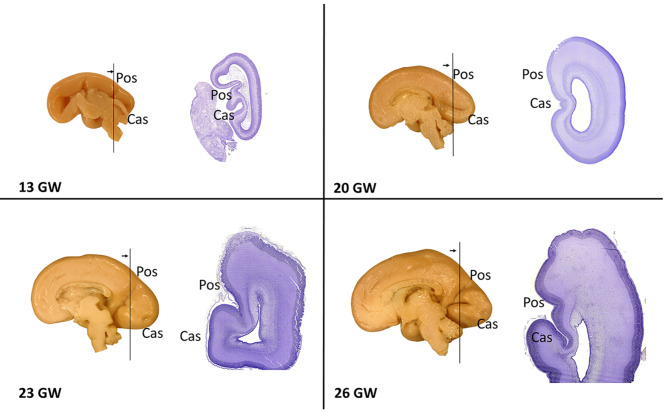
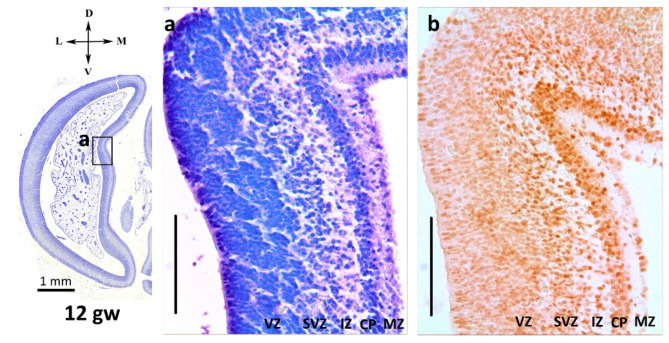
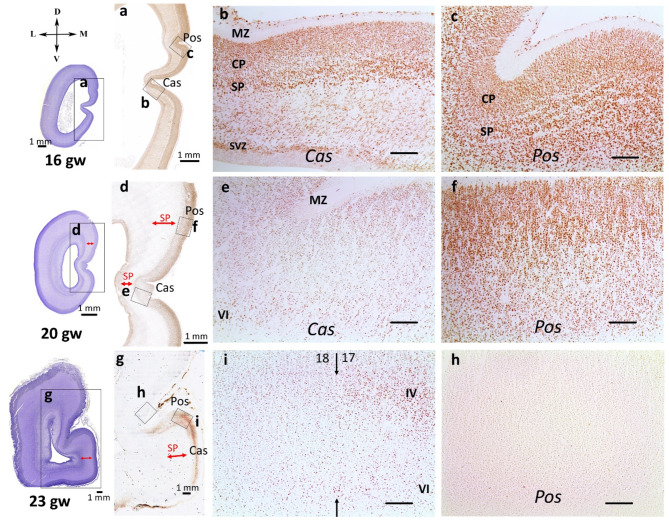
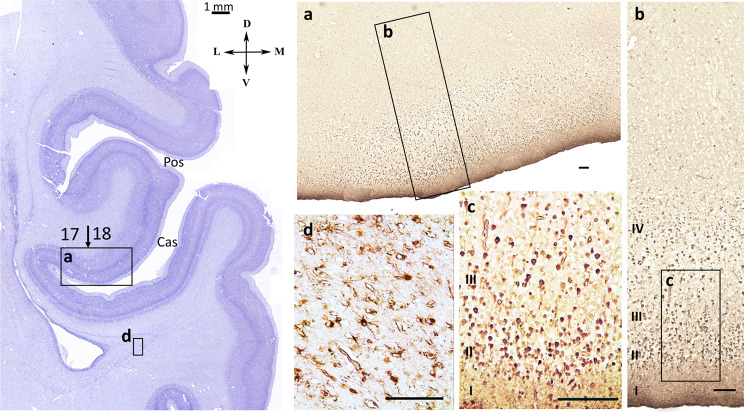
The human neocortex has a huge surface area with unique cytoarchitectonics, most of which is concealed in sulci. Some cytoarchitectonic fields are associated with macroscopic landmarks. In particular, the primary visual field 17 is associated with the calcarine sulcus. During the prenatal development of the human brain, neocortical gyri and sulci undergo changes and modifications after primary formation. To explore the morphogenetic processes in visual fields during the formation of the primary (provisional) and secondary (permanent) sulci, the occipital lobe of the human fetal brain was studied using immunohistochemical methods. The distribution of various glial and neuronal markers (S-100, β-III-tubulin, NeuN, reelin) in the calcarine sulcus and parietooccipital sulcus was compared. The heterogeneity in the formation of primary and secondary visual fields was demonstrated. The study revealed that the development of the primary visual field 17, linked with the calcarine sulcus, preceded the development of a shared anlage of fields 18 and 19 linked with the parietooccipital sulcus. The functional differentiation of the primary visual field begins during the period of thalamic afferent ingrowth. This process coincides with the temporal smoothing of the calcarine sulcus, indicating a simultaneous progression of functional specialization and structural modifications. At the late fetal period, cortical plate of gyri and sulci banks showed higher NeuN-labeling than inside the sulcus in the same cytoarchitectonic field.
人类新皮层具有巨大的表面积和独特的细胞构筑,其中大部分隐藏在脑回沟中。一些细胞构筑领域与宏观地标相关。特别是,初级视场 17 与枕沟有关。在人类大脑的产前发育过程中,新皮层脑回和脑沟在初级形成后会发生变化和修饰。为了探索初级(临时)和次级(永久)脑沟形成过程中视场的形态发生过程,使用免疫组织化学方法研究了人类胎儿大脑的枕叶。比较了钙斑沟和顶枕沟中各种神经胶质和神经元标记物(S-100、β-III-微管蛋白、NeuN、reelin)的分布。展示了初级和次级视场形成的异质性。研究表明,与枕沟相连的初级视场 17 的发育先于与顶枕沟相连的共享 18 和 19 字段的原基的发育。初级视场的功能分化始于丘系传入纤维生长的时期。这个过程与枕沟的时间平滑相吻合,表明功能特化和结构修饰的同时进展。在胎儿晚期,脑回和脑沟的皮质板在同一细胞构筑领域中的 NeuN 标记比脑沟内部更高。