Conklin Annalijn I, Guo Peter N
Faculty of Pharmaceutical Sciences, University of British Columbia, Vancouver, BC V6T 1Z3, Canada.
Centre for Advancing Health Outcomes, Providence Health Care Research Institute, Vancouver, BC V6Z 2K5, Canada.
Rev Cardiovasc Med. 2024 Nov 22;25(11):424. doi: 10.31083/j.rcm2511424. eCollection 2024 Nov.
Social connections impact cardiovascular diseases (CVD) morbidity and mortality, but their role in hypertension, as a CVD risk factor, and their gender inequities is less understood. This review aimed to examine the longitudinal evidence on the impact of changes in social connections on risk of hypertension among aging adults, with a specific focus on gender.
A systematic search of peer-reviewed literature in Medline, Embase, Scopus, and CINAHL conducted until 10 June 2024. Prospective studies evaluating the effect of changes in living arrangement, marital status, social network, or social participation on changes in blood pressure or incident hypertension among adults aged 45 and above were included.
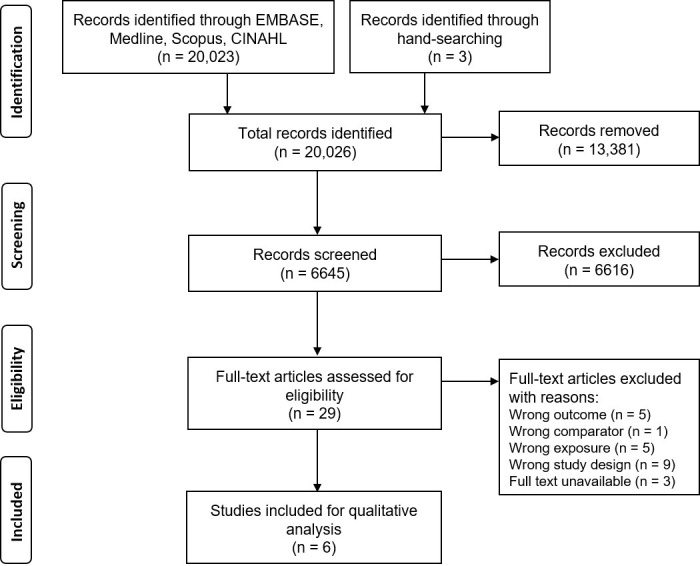
We found 20,026 records (13,381 duplicates), resulting in 6645 eligible titles/abstracts for screening and 29 texts read in full. Only six studies from three countries met inclusion criteria, with four focused on marital transitions and two on changes in living arrangement. Overall, loss of close social connections had mixed effects on changes in blood pressure or risk of hypertension. More consistent adverse CVD outcomes were observed across studies for aging adults who entered marriage or became co-living (gain of close social connections). Similarly, persistent lack of close social connections appeared to result in greater increases in blood pressure or higher risk of hypertension. Two included studies were of high quality and the rest were medium quality. Excluded studies assessing change in either CVD risk or social tie transitions were also described (n = 9).
There is a surprising paucity of prospective evidence on social relationships as determinants of CVD risk in the aging population, despite ample research on social factors correlated with health. Limited research suggests that both gains and losses of close social connections as well as persistent lack of close social connections may alter CVD risk, but effects are specific to single-sex samples. Research and policy should prioritize causally robust high-quality studies to unravel social determinants of CVD risk as actionable evidence to inform social prescribing in CVD prevention and healthy aging strategies is still tenuous.
CRD42022373196, https://www.crd.york.ac.uk/prospero/display_record.php?RecordID=373196.
社会关系会影响心血管疾病(CVD)的发病率和死亡率,但其在高血压(作为心血管疾病的一个危险因素)中的作用以及其中的性别不平等问题尚鲜为人知。本综述旨在研究关于社会关系变化对老年人高血压风险影响的纵向证据,并特别关注性别因素。
截至2024年6月10日,对Medline、Embase、Scopus和CINAHL中同行评审的文献进行系统检索。纳入评估生活安排、婚姻状况、社交网络或社会参与的变化对45岁及以上成年人血压变化或高血压发病影响的前瞻性研究。
我们共找到20,026条记录(其中13,381条为重复记录),筛选出6645条符合条件的标题/摘要,并阅读了29篇全文。只有来自三个国家的六项研究符合纳入标准,其中四项关注婚姻转变,两项关注生活安排变化。总体而言,亲密社会关系的丧失对血压变化或高血压风险的影响不一。对于步入婚姻或开始共同生活(获得亲密社会关系)的老年人,跨研究观察到更一致的不良心血管疾病结局。同样,长期缺乏亲密社会关系似乎会导致血压升高幅度更大或患高血压的风险更高。纳入的两项研究质量高,其余为中等质量。还描述了排除的评估心血管疾病风险变化或社会关系转变的研究(n = 9)。
尽管对与健康相关的社会因素进行了大量研究,但关于社会关系作为老年人群心血管疾病风险决定因素的前瞻性证据却惊人地匮乏。有限的研究表明,亲密社会关系的获得与丧失以及长期缺乏亲密社会关系都可能改变心血管疾病风险,但这些影响在单性别样本中具有特异性。研究和政策应优先开展因果关系可靠的高质量研究,以揭示心血管疾病风险的社会决定因素,因为目前用于为心血管疾病预防和健康老龄化策略中的社会处方提供信息的可操作证据仍然不足。
PROSPERO注册号:CRD42022373196,https://www.crd.york.ac.uk/prospero/display_record.php?RecordID=373196