Gold Hannah, Pajovic Simo, Mukherjee Abhishek, Boriskina Svetlana V
Massachusetts Institute of Technology, Cambridge, USA.
Nanophotonics. 2024 Jan 8;13(5):773-792. doi: 10.1515/nanoph-2023-0598. eCollection 2024 Mar.
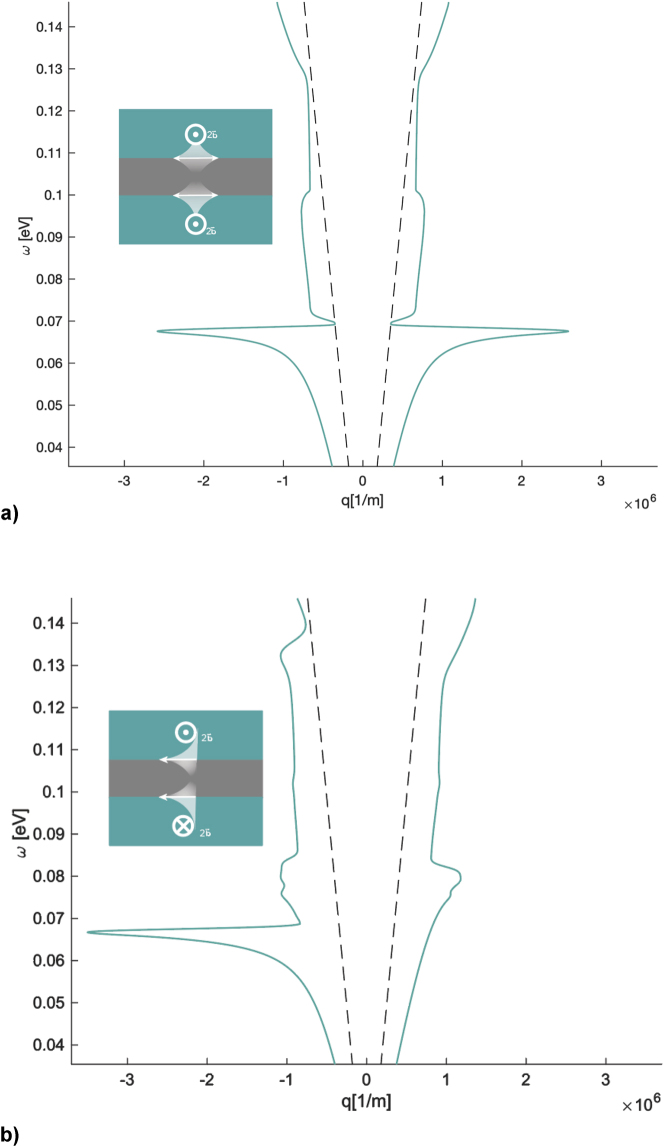
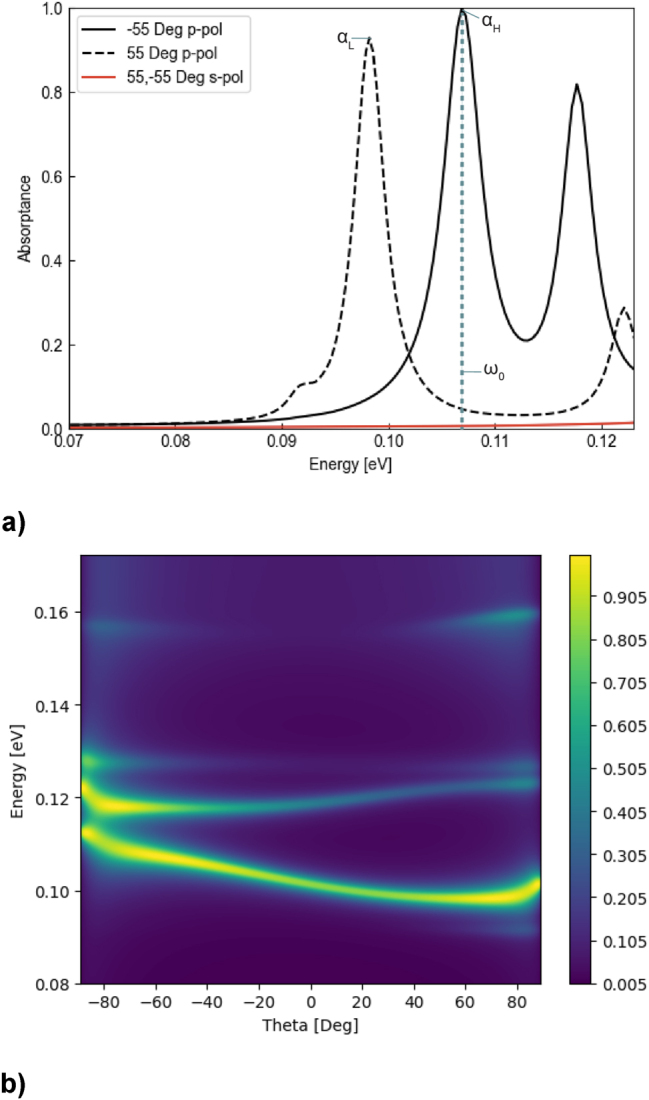
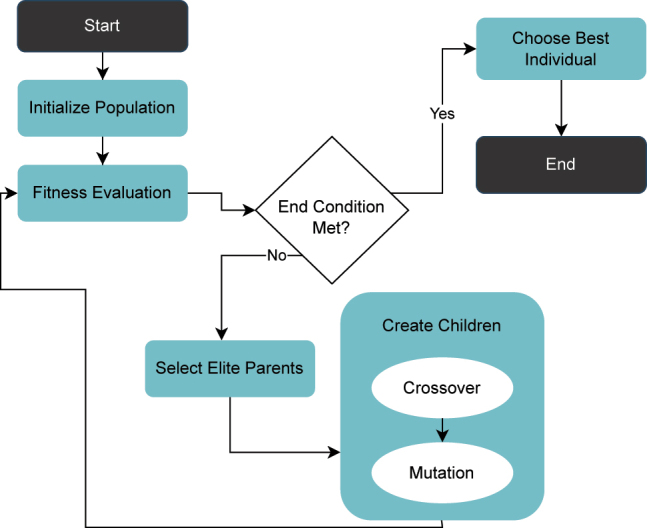
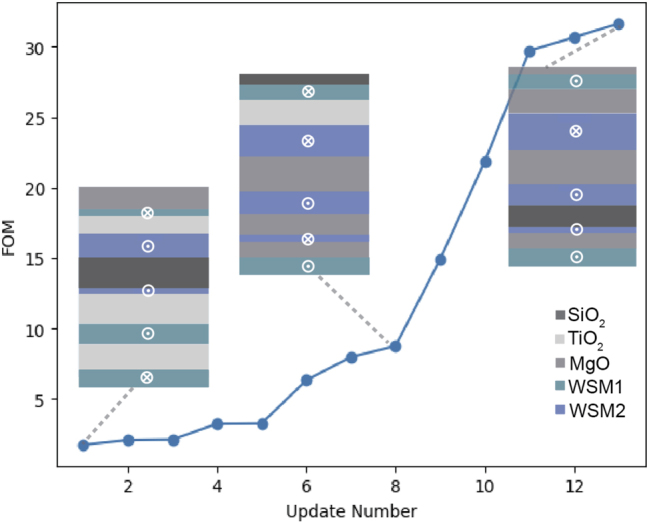
Fundamental limits of thermal radiation are imposed by Kirchhoff's law, which assumes the electromagnetic reciprocity of a material or material system. Thus, breaking reciprocity can enable breaking barriers in thermal efficiency engineering. In this work, we present a subwavelength, 1D photonic crystal composed of Weyl semimetal and dielectric layers, whose structure was optimized to maximize the nonreciprocity of infrared radiation absorptance in a planar and compact design. To engineer an ultra-compact absorber structure that does not require gratings or prisms to couple light, we used a genetic algorithm (GA) to maximize nonreciprocity in the design globally, followed by the application of the numerical gradient ascent (GAGA) algorithm as a local optimization to further enhance the design. We chose Weyl semimetals as active layers in our design as they possess strong, intrinsic nonreciprocity, and do not require an external magnetic field. The resulting GAGA-generated 1D magnetophotonic crystal offers high nonreciprocity (quantified by absorptance contrast) while maintaining an ultra-compact design with much fewer layers than prior work. We account for both s- and p-polarized absorptance spectra to create a final, eight-layer design suitable for thermal applications, which simultaneously minimizes the parasitic, reciprocal absorptance of s-polarized light.
热辐射的基本限制由基尔霍夫定律决定,该定律假定材料或材料系统具有电磁互易性。因此,打破互易性能够突破热效率工程中的障碍。在这项工作中,我们展示了一种由外尔半金属和电介质层组成的亚波长一维光子晶体,其结构经过优化,在平面紧凑设计中使红外辐射吸收率的非互易性最大化。为了设计一种无需光栅或棱镜来耦合光的超紧凑吸收器结构,我们使用遗传算法(GA)在全局设计中最大化非互易性,随后应用数值梯度上升(GAGA)算法进行局部优化以进一步改进设计。我们在设计中选择外尔半金属作为有源层,因为它们具有很强的固有非互易性,且不需要外部磁场。最终由GAGA生成的一维磁光子晶体具有很高的非互易性(通过吸收率对比度量化),同时保持超紧凑设计,层数比先前的工作少得多。我们考虑了s偏振和p偏振的吸收率光谱,以创建一个适用于热应用的最终八层设计,该设计同时将s偏振光的寄生互易吸收率降至最低。