Cui Zifeng, Wang Shuxian, Niu Jianhua, Ma Jingmei, Yang Huixia
Department of Obstetrics and Gynecology, Peking University First Hospital, Beijing, China.
Beijing Key Laboratory of Maternal Fetal Medicine of Gestational Diabetes Mellitus, Beijing, China.
BMC Microbiol. 2024 Dec 6;24(1):520. doi: 10.1186/s12866-024-03680-z.
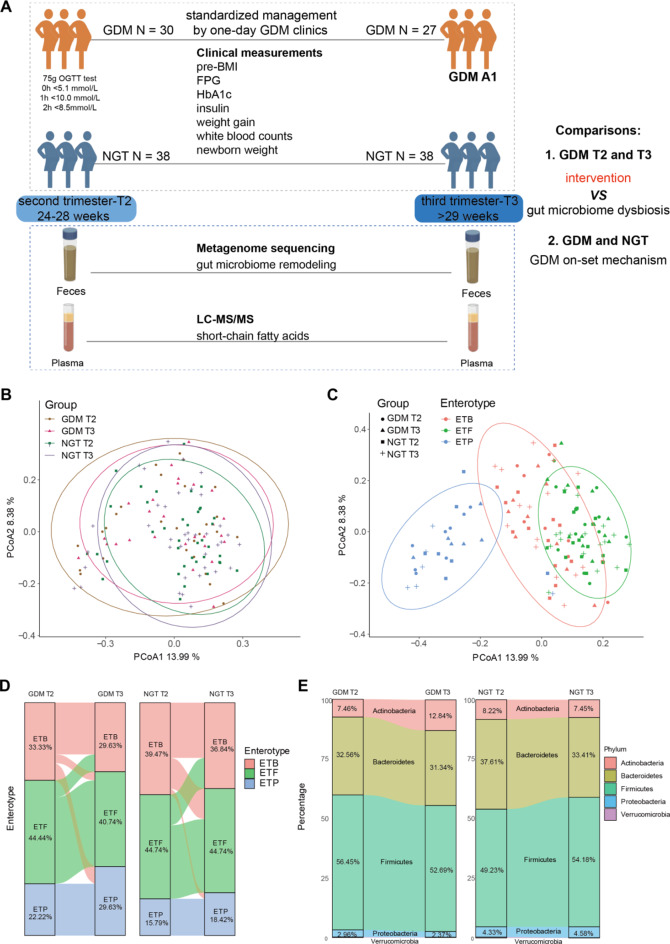
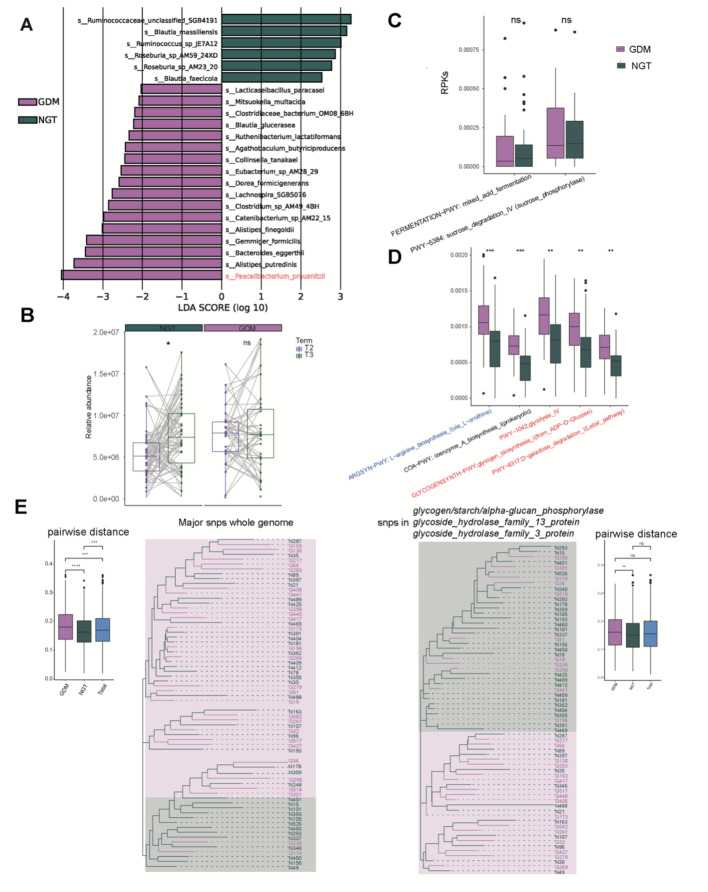
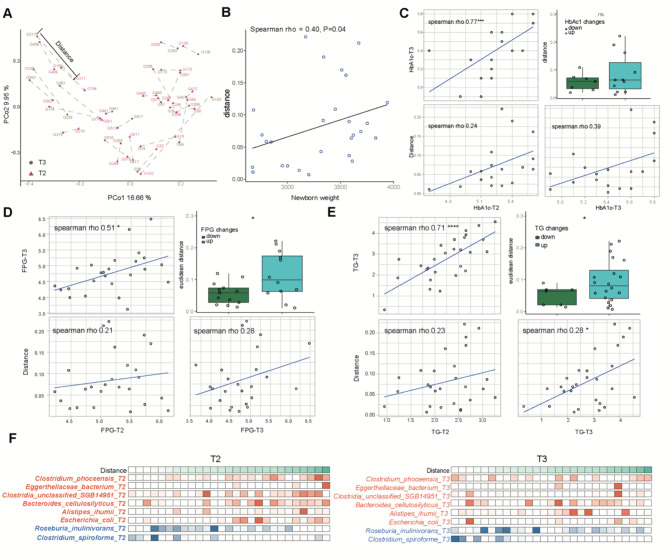
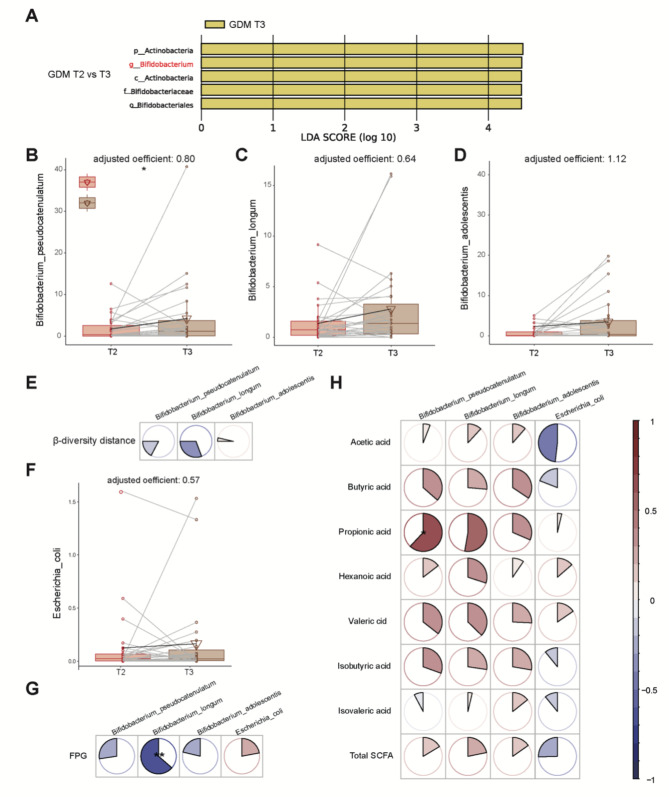
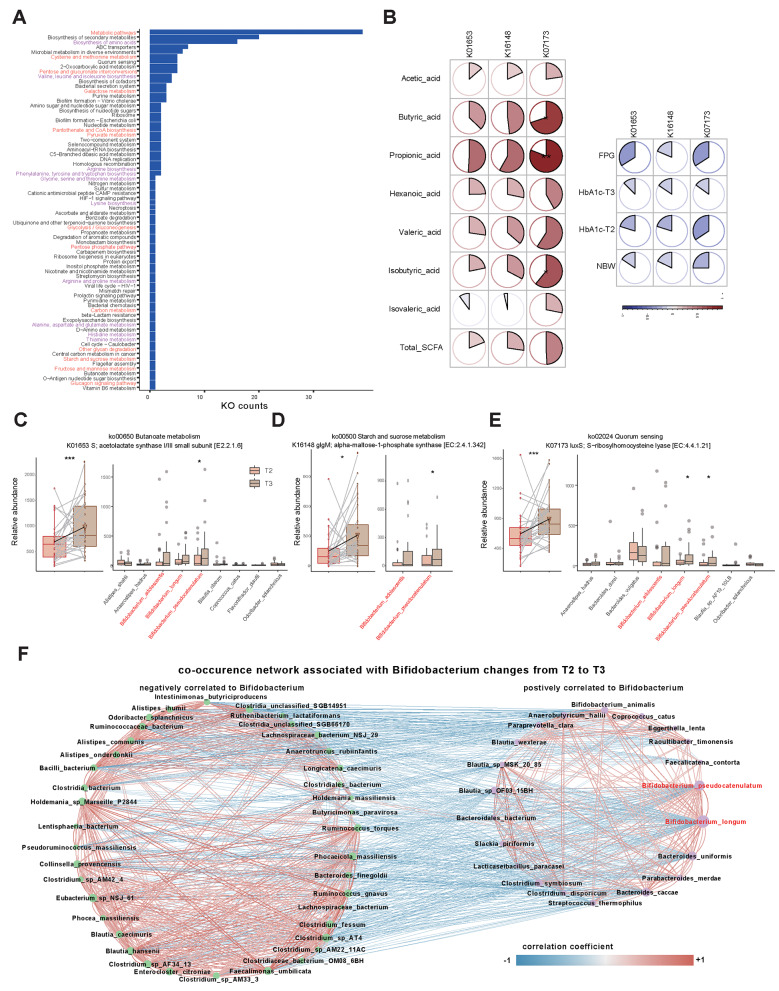
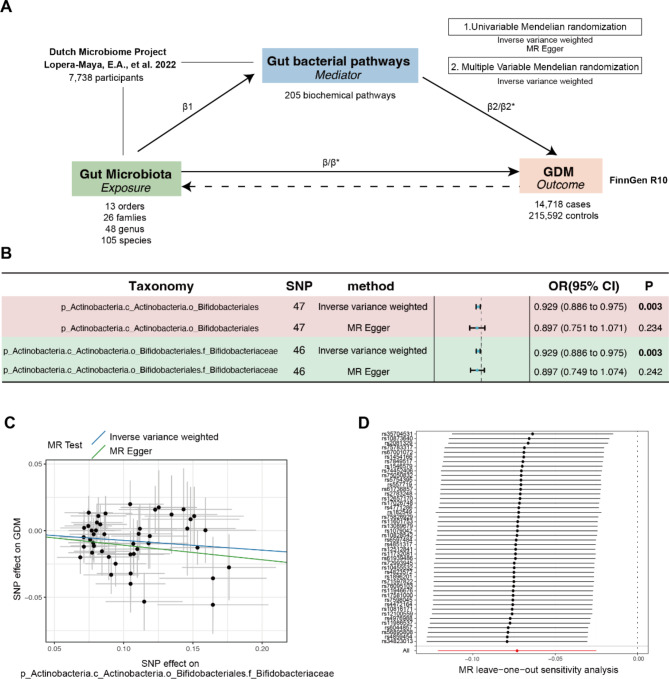
Gut microbiome dysbiosis is associated with gestational diabetes mellitus (GDM), and its modulation represents a promising approach for enhancing glycemic control. In this study, we aimed to discover specific alterations in the gut microbiome through lifestyle management. We performed metagenome sequencing on fecal samples and measured short-chain fatty acid (SCFA) in plasma samples from 27 well-controlled GDM pregnancies before and after glycemic control. At the same time, 38 normal glucose tolerance (NGT) samples served as controls. Additionally, we employed two-sample Mendelian Randomization (MR) to validate our findings against Genome-Wide Association Study (GWAS) database. Our dynamic analysis revealed Bifidobacterium genus increased in GDM patients after intervention. The MR analysis confirmed that the family of Bifidobacteriaceae (OR 0.929, 95% CI, 0.886-0.975; P = 0.003) was the only negatively associated family with GDM. Further analysis indicated the increased abundance of Bifidobacterium species were negatively correlated with glycemic traits (Spearman rho mean - 0.32 ± 0.34) but positively correlated with plasma SCFA levels (Spearman rho mean 0.24 ± 0.19). Functional analysis revealed that the quorum-sensing pathway had the strongest effect on the ability of Bifidobacterium to promote glucose homeostasis (Spearman rho = -0.34), suggesting its role in regulating intestinal microbiota. Finally, the multivariable MR analysis demonstrated that two pathways, COLANSYN PWY and PWY 7323, responsible for cell surface compound synthesis in gram-negative bacteria, mediated 14.83% (P = 0.017) and 16.64% (P = 0.049) of the protective effects of Bifidobacteriaceae against GDM, respectively. In summary, Bifidobacterium is an effective gut microbiota regulator for GDM-related glucose homeostasis.
肠道微生物群失调与妊娠期糖尿病(GDM)相关,对其进行调节是改善血糖控制的一种有前景的方法。在本研究中,我们旨在通过生活方式管理发现肠道微生物群的特定变化。我们对27例血糖控制良好的GDM孕妇在血糖控制前后的粪便样本进行了宏基因组测序,并测量了血浆样本中的短链脂肪酸(SCFA)。同时,38例糖耐量正常(NGT)样本作为对照。此外,我们采用两样本孟德尔随机化(MR)方法,根据全基因组关联研究(GWAS)数据库验证我们的发现。我们的动态分析显示,干预后GDM患者中双歧杆菌属增加。MR分析证实,双歧杆菌科(比值比0.929,95%可信区间,0.886 - 0.975;P = 0.003)是唯一与GDM呈负相关的科。进一步分析表明,双歧杆菌种类丰度的增加与血糖特征呈负相关(斯皮尔曼相关系数均值 -0.32 ± 0.34),但与血浆SCFA水平呈正相关(斯皮尔曼相关系数均值0.24 ± 0.19)。功能分析表明,群体感应途径对双歧杆菌促进葡萄糖稳态的能力影响最强(斯皮尔曼相关系数 = -0.34),表明其在调节肠道微生物群中的作用。最后,多变量MR分析表明,负责革兰氏阴性菌细胞表面化合物合成的两条途径,即COLANSYN PWY和PWY 7323,分别介导了双歧杆菌科对GDM保护作用的14.83%(P = 0.017)和16.64%(P = 0.049)。总之,双歧杆菌是GDM相关葡萄糖稳态的有效肠道微生物群调节剂。