Topal Ahmet, Tunga Burcu, Tirkolaee Erfan Babaee
Department of Mathematics Engineering, Istanbul Technical University, Istanbul, Turkey.
Department of Industrial Engineering, Istinye University, Istanbul, Turkey.
PeerJ Comput Sci. 2024 Nov 13;10:e2406. doi: 10.7717/peerj-cs.2406. eCollection 2024.
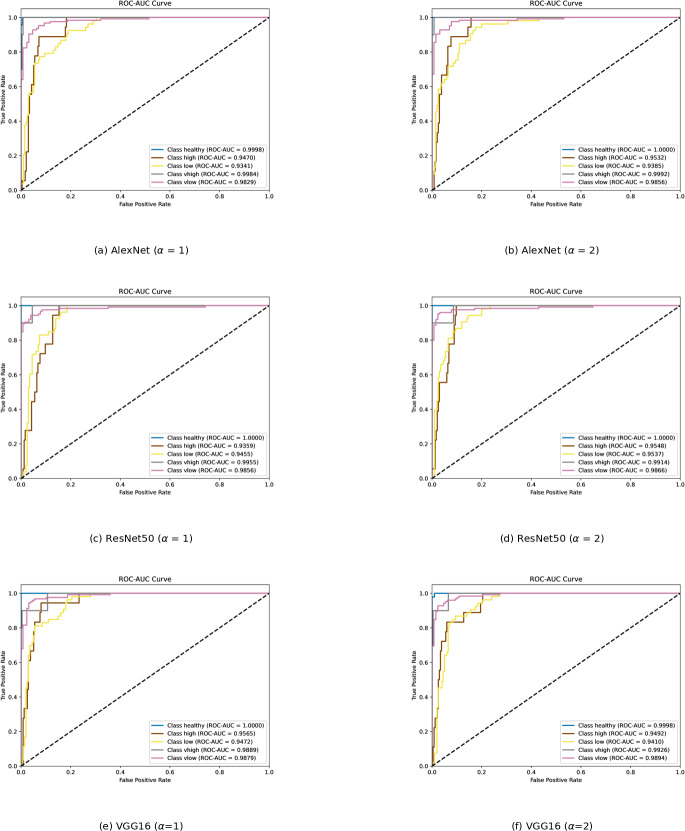
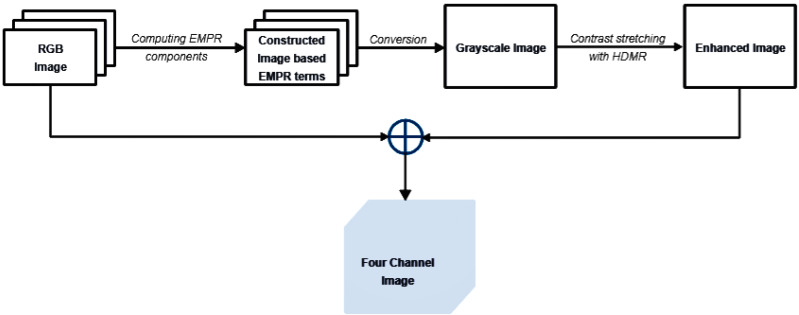
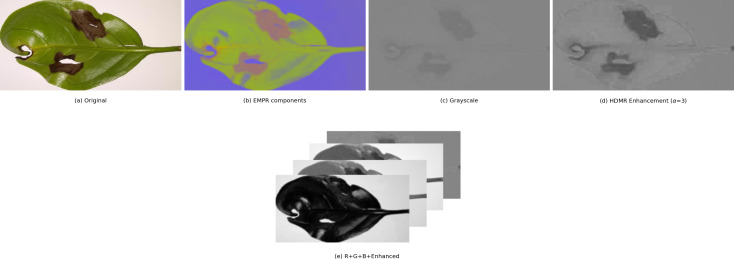
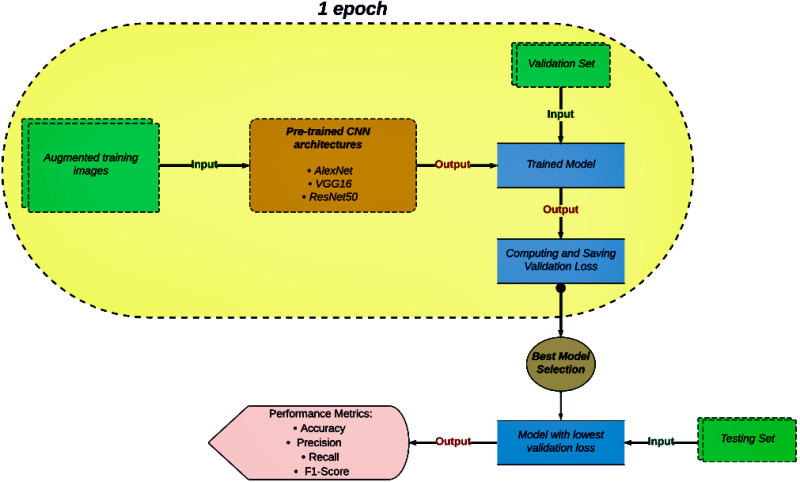
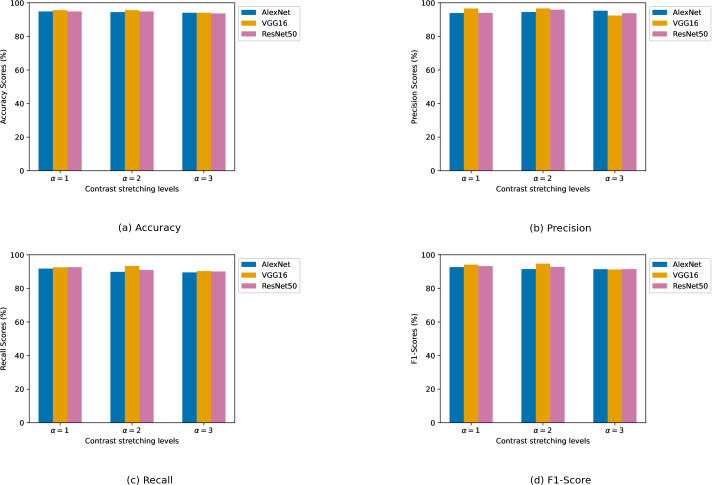
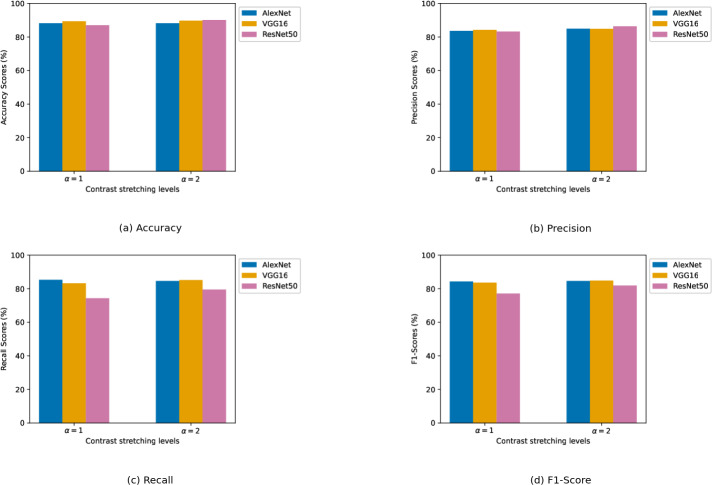
Plant diseases threaten agricultural sustainability by reducing crop yields. Rapid and accurate disease identification is crucial for effective management. Recent advancements in artificial intelligence (AI) have facilitated the development of automated systems for disease detection. This study focuses on enhancing the classification of diseases and estimating their severity in coffee leaf images. To do so, we propose a novel approach as the preprocessing step for the classification in which enhanced multivariance product representation (EMPR) is used to decompose the considered image into components, a new image is constructed using some of those components, and the contrast of the new image is enhanced by applying high-dimensional model representation (HDMR) to highlight the diseased parts of the leaves. Popular convolutional neural network (CNN) architectures, including AlexNet, VGG16, and ResNet50, are evaluated. Results show that VGG16 achieves the highest classification accuracy of approximately 96%, while all models perform well in predicting disease severity levels, with accuracies exceeding 85%. Notably, the ResNet50 model achieves accuracy levels surpassing 90%. This research contributes to the advancement of automated crop health management systems.
植物病害通过降低作物产量威胁农业可持续性。快速准确的病害识别对于有效管理至关重要。人工智能(AI)的最新进展推动了用于病害检测的自动化系统的发展。本研究专注于提高咖啡叶片图像中病害的分类并估计其严重程度。为此,我们提出了一种新颖的方法作为分类的预处理步骤,其中使用增强多变量积表示(EMPR)将所考虑的图像分解为组件,使用其中一些组件构建新图像,并通过应用高维模型表示(HDMR)来增强新图像的对比度,以突出叶片的患病部分。对包括AlexNet、VGG16和ResNet50在内的流行卷积神经网络(CNN)架构进行了评估。结果表明,VGG16实现了约96%的最高分类准确率,而所有模型在预测病害严重程度水平方面表现良好,准确率超过85%。值得注意的是,ResNet50模型的准确率超过了90%。这项研究有助于推进自动化作物健康管理系统。