College of Computer Science and Engineering, Taibah University, Medina 42353, Saudi Arabia.
Department of Computer Science, Sheba Region University, Marib 14400, Yemen.
Int J Environ Res Public Health. 2022 Nov 21;19(22):15414. doi: 10.3390/ijerph192215414.
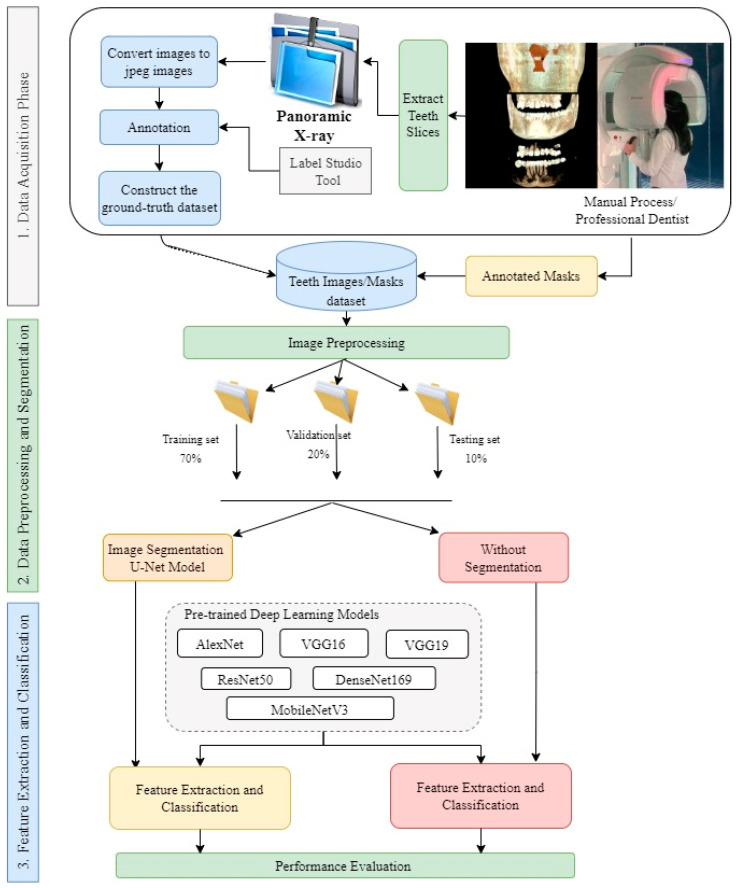
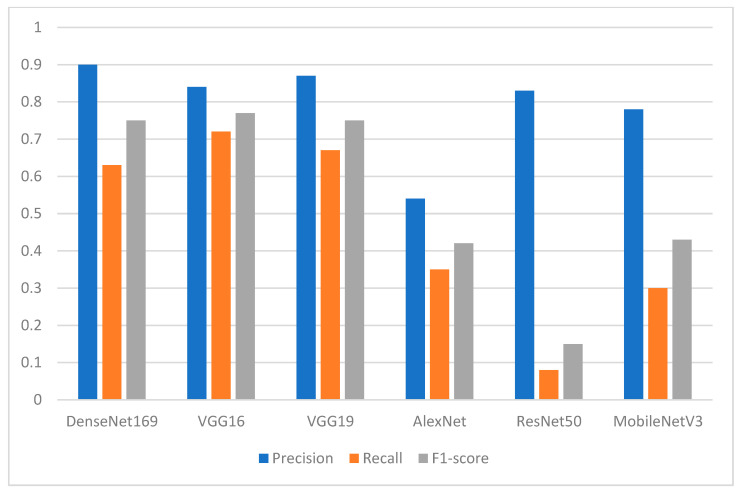
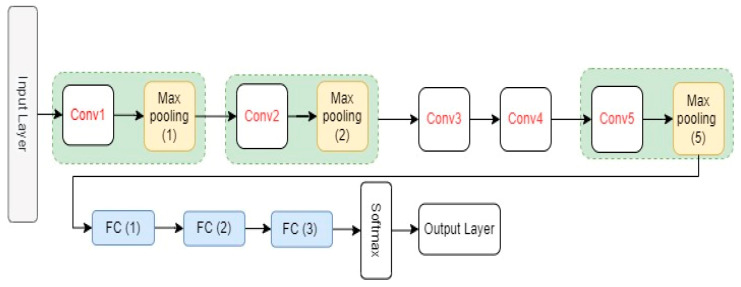
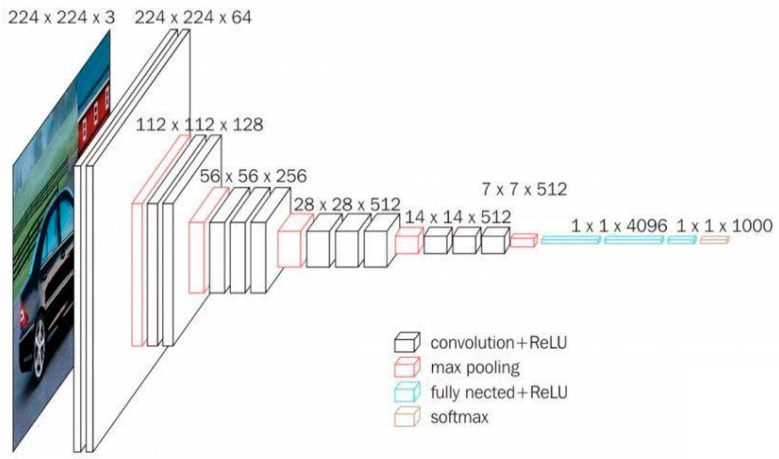
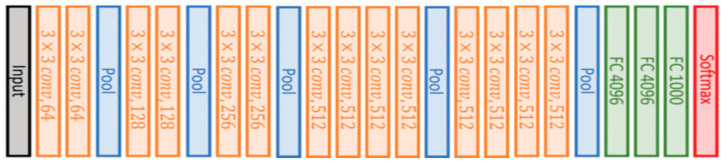
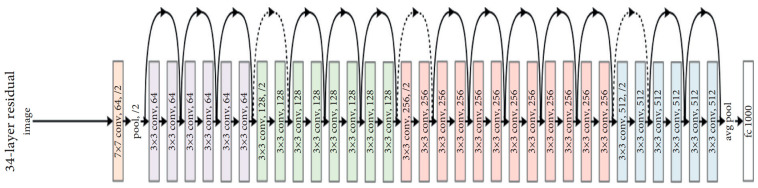
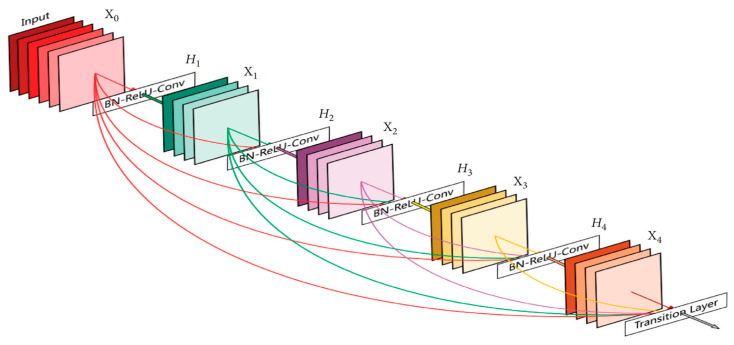
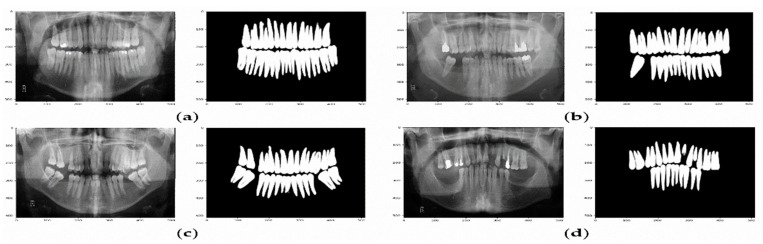
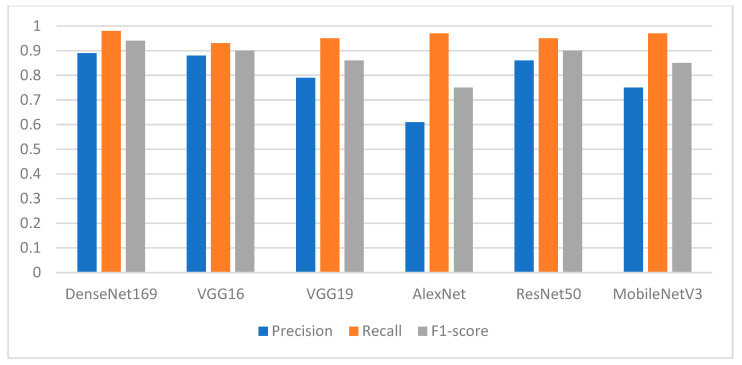
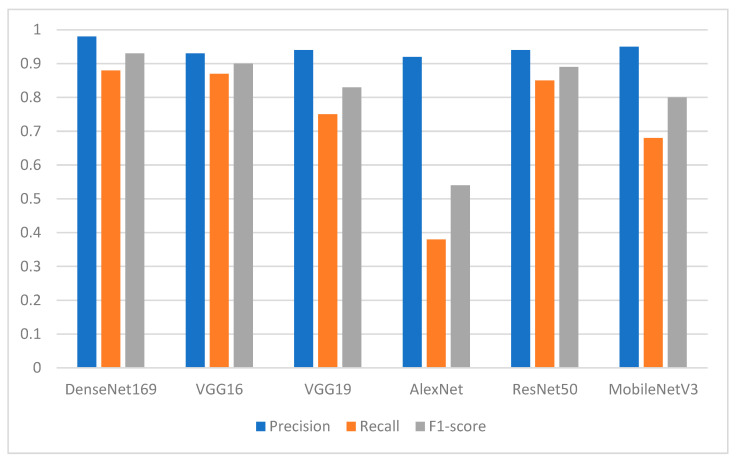
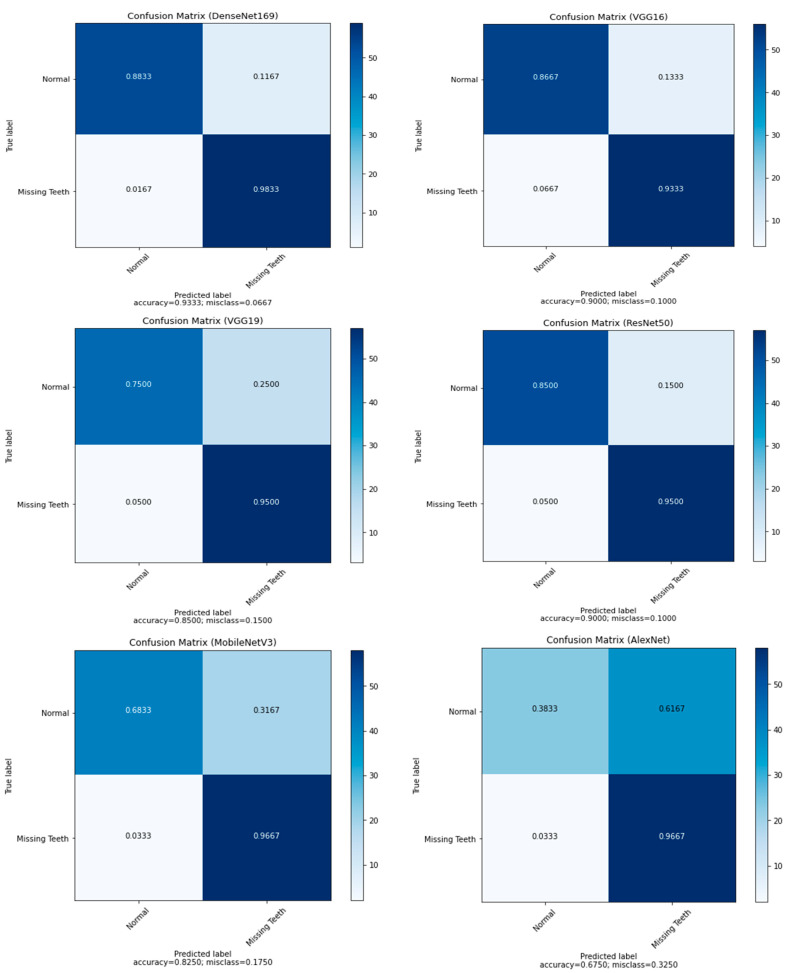
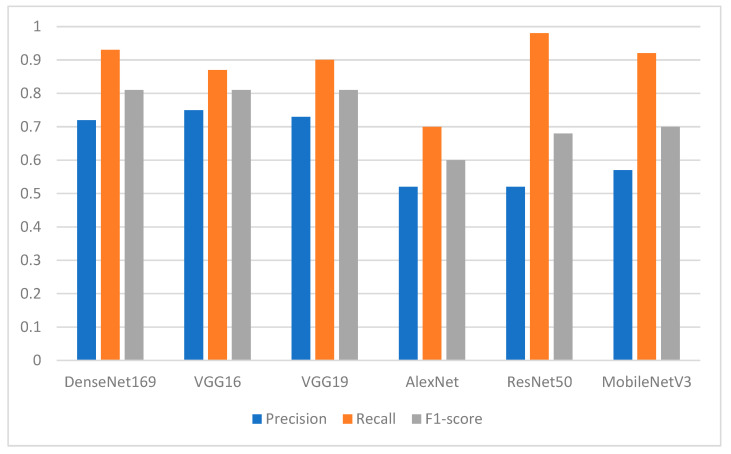
The rapid development of artificial intelligence (AI) has led to the emergence of many new technologies in the healthcare industry. In dentistry, the patient's panoramic radiographic or cone beam computed tomography (CBCT) images are used for implant placement planning to find the correct implant position and eliminate surgical risks. This study aims to develop a deep learning-based model that detects missing teeth's position on a dataset segmented from CBCT images. Five hundred CBCT images were included in this study. After preprocessing, the datasets were randomized and divided into 70% training, 20% validation, and 10% test data. A total of six pretrained convolutional neural network (CNN) models were used in this study, which includes AlexNet, VGG16, VGG19, ResNet50, DenseNet169, and MobileNetV3. In addition, the proposed models were tested with/without applying the segmentation technique. Regarding the normal teeth class, the performance of the proposed pretrained DL models in terms of precision was above 0.90. Moreover, the experimental results showed the superiority of DenseNet169 with a precision of 0.98. In addition, other models such as MobileNetV3, VGG19, ResNet50, VGG16, and AlexNet obtained a precision of 0.95, 0.94, 0.94, 0.93, and 0.92, respectively. The DenseNet169 model performed well at the different stages of CBCT-based detection and classification with a segmentation accuracy of 93.3% and classification of missing tooth regions with an accuracy of 89%. As a result, the use of this model may represent a promising time-saving tool serving dental implantologists with a significant step toward automated dental implant planning.
人工智能(AI)的快速发展导致医疗行业出现了许多新技术。在牙科领域,患者的全景射线照相或锥形束计算机断层扫描(CBCT)图像用于植入物放置规划,以找到正确的植入物位置并消除手术风险。本研究旨在开发一种基于深度学习的模型,该模型可以在从 CBCT 图像分割的数据集中检测缺失牙齿的位置。本研究共纳入 500 例 CBCT 图像。经过预处理后,数据集被随机分为 70%的训练集、20%的验证集和 10%的测试集。本研究共使用了 6 个预先训练的卷积神经网络(CNN)模型,包括 AlexNet、VGG16、VGG19、ResNet50、DenseNet169 和 MobileNetV3。此外,还测试了应用/不应用分割技术的建议模型。对于正常牙齿类别,所提出的预训练深度学习模型在精度方面的性能均高于 0.90。此外,实验结果表明 DenseNet169 的优势明显,精度为 0.98。此外,其他模型,如 MobileNetV3、VGG19、ResNet50、VGG16 和 AlexNet 的精度分别为 0.95、0.94、0.94、0.93 和 0.92。DenseNet169 模型在基于 CBCT 的检测和分类的不同阶段表现良好,分割精度为 93.3%,缺失牙齿区域分类精度为 89%。因此,该模型的使用可能代表着一种有前途的节省时间的工具,为牙科植入物医生提供了向自动牙科植入物规划迈进的重要一步。