Falcao Igor Wenner Silva, Cardoso Diego Lisboa, Coutinho Dos Santos Santos Albert Einstein, Paixao Erminio, Costa Fernando Augusto R, Figueiredo Karla, Carneiro Saul, Seruffo Marcos César da Rocha
Institute of Technology, Federal University of Para, Belém, PA, Brazil.
Center for Higher Amazon Studies, Federal University of Para, Belém, PA, Brazil.
PeerJ Comput Sci. 2024 Oct 14;10:e2246. doi: 10.7717/peerj-cs.2246. eCollection 2024.
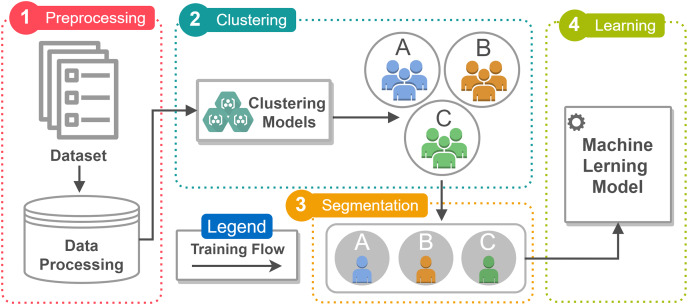
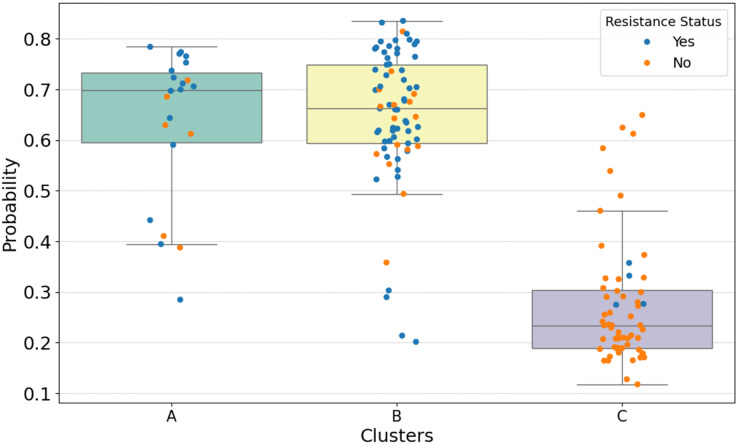
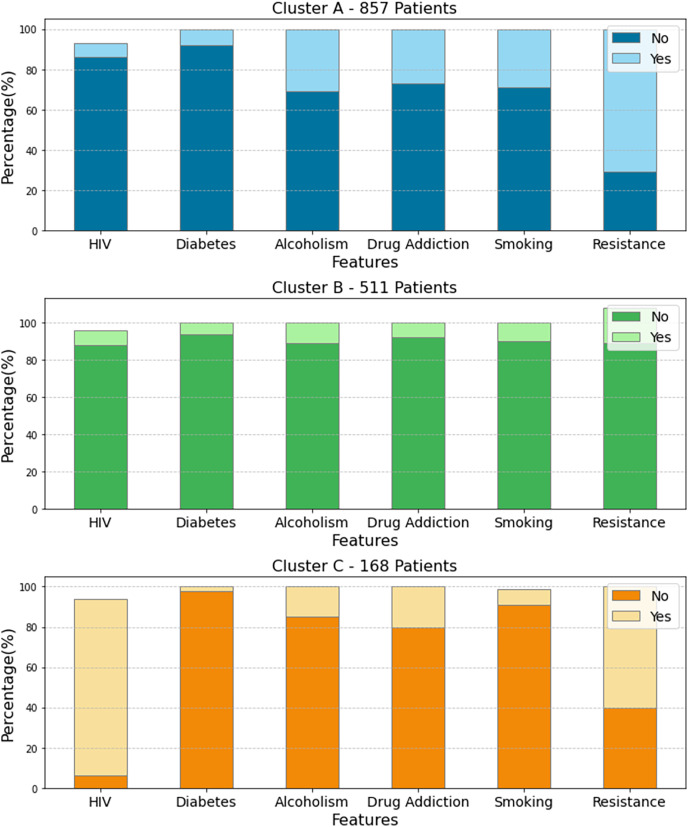
Tuberculosis (TB) is a disease caused by the bacterium and despite effective treatments, still affects millions of people worldwide. The advent of new treatments has not eliminated the significant challenge of TB drug resistance. Repeated and inadequate exposure to drugs has led to the development of strains of the bacteria that are resistant to conventional treatments, making the eradication of the disease even more complex. In this context, it is essential to seek more effective approaches to fighting TB. This article proposes a model for predicting drug resistance based on the clinical profile of TB patients, using machine learning techniques. The model aims to optimize the work of health professionals directly involved with tuberculosis patients, driving the creation of new containment strategies and preventive measures, as it specifies the clinical data that has the greatest impact and identifies the individuals with the greatest predisposition to develop resistance to anti-tuberculosis drugs. The results obtained show, in one of the scenarios, a probability of development of 70% and an accuracy of 84.65% for predicting drug resistance.
结核病(TB)是一种由细菌引起的疾病,尽管有有效的治疗方法,但仍影响着全球数百万人。新治疗方法的出现并未消除结核病耐药性这一重大挑战。反复且不充分地接触药物导致了对传统治疗有耐药性的细菌菌株的出现,使得根除该疾病变得更加复杂。在这种背景下,寻求更有效的结核病防治方法至关重要。本文提出了一种基于结核病患者临床特征,利用机器学习技术预测耐药性的模型。该模型旨在优化直接参与结核病患者治疗工作的医护人员的工作,推动制定新的控制策略和预防措施,因为它明确了具有最大影响的临床数据,并识别出最易产生抗结核药物耐药性的个体。在其中一种情况下,所获得的结果显示预测耐药性的发生概率为70%,准确率为84.65%。