• 文献检索
  • 文档翻译
  • 深度研究
  • 学术资讯
  • Suppr Zotero 插件Zotero 插件
  • 邀请有礼
  • 套餐&价格
  • 历史记录
应用&插件
Suppr Zotero 插件Zotero 插件浏览器插件Mac 客户端Windows 客户端微信小程序
定价
高级版会员购买积分包购买API积分包
服务
文献检索文档翻译深度研究API 文档MCP 服务
关于我们
关于 Suppr公司介绍联系我们用户协议隐私条款
关注我们

Suppr 超能文献

核心技术专利:CN118964589B侵权必究
粤ICP备2023148730 号-1Suppr @ 2026

文献检索

告别复杂PubMed语法,用中文像聊天一样搜索,搜遍4000万医学文献。AI智能推荐,让科研检索更轻松。

立即免费搜索

文件翻译

保留排版,准确专业,支持PDF/Word/PPT等文件格式,支持 12+语言互译。

免费翻译文档

深度研究

AI帮你快速写综述,25分钟生成高质量综述,智能提取关键信息,辅助科研写作。

立即免费体验

加拿大、美国和欧洲的长期新冠疫情相关话语:推特数据的主题建模与情感分析

Long COVID Discourse in Canada, the United States, and Europe: Topic Modeling and Sentiment Analysis of Twitter Data.

作者信息

AbuRaed Ahmed Ghassan Tawfiq, Prikryl Emil Azuma, Carenini Giuseppe, Janjua Naveed Zafar

机构信息

Department of Computer Science, The University of British Colombia, Vancouver, BC, Canada.

NOSM University, Thunder Bay, BC, Canada.

出版信息

J Med Internet Res. 2024 Dec 9;26:e59425. doi: 10.2196/59425.

DOI:10.2196/59425
PMID:39652387
原文链接:https://pmc.ncbi.nlm.nih.gov/articles/PMC11667136/
Abstract

BACKGROUND

Social media serves as a vast repository of data, offering insights into public perceptions and emotions surrounding significant societal issues. Amid the COVID-19 pandemic, long COVID (formally known as post-COVID-19 condition) has emerged as a chronic health condition, profoundly impacting numerous lives and livelihoods. Given the dynamic nature of long COVID and our evolving understanding of it, effectively capturing people's sentiments and perceptions through social media becomes increasingly crucial. By harnessing the wealth of data available on social platforms, we can better track the evolving narrative surrounding long COVID and the collective efforts to address this pressing issue.

OBJECTIVE

This study aimed to investigate people's perceptions and sentiments around long COVID in Canada, the United States, and Europe, by analyzing English-language tweets from these regions using advanced topic modeling and sentiment analysis techniques. Understanding regional differences in public discourse can inform tailored public health strategies.

METHODS

We analyzed long COVID-related tweets from 2021. Contextualized topic modeling was used to capture word meanings in context, providing coherent and semantically meaningful topics. Sentiment analysis was conducted in a zero-shot manner using Llama 2, a large language model, to classify tweets into positive, negative, or neutral sentiments. The results were interpreted in collaboration with public health experts, comparing the timelines of topics discussed across the 3 regions. This dual approach enabled a comprehensive understanding of the public discourse surrounding long COVID. We used metrics such as normalized pointwise mutual information for coherence and topic diversity for diversity to ensure robust topic modeling results.

RESULTS

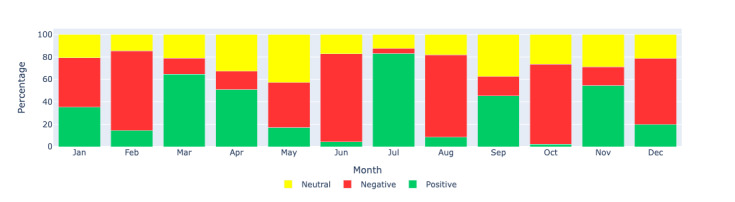
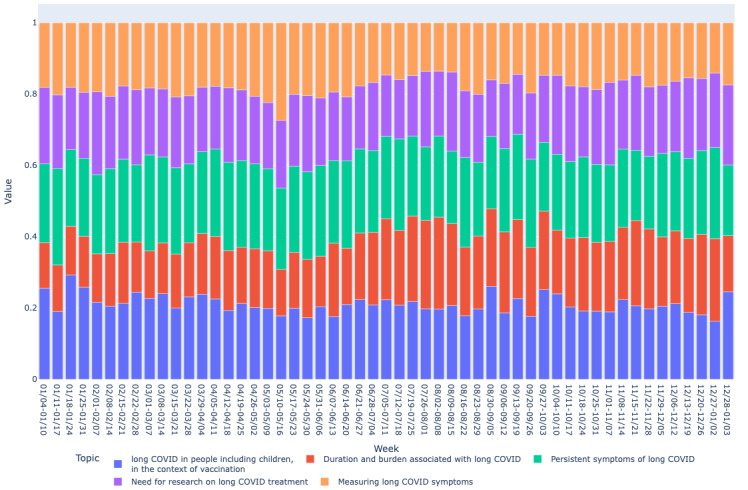
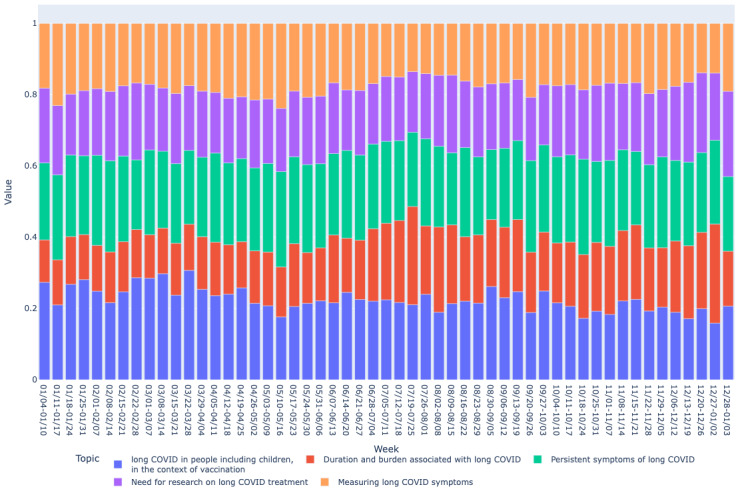
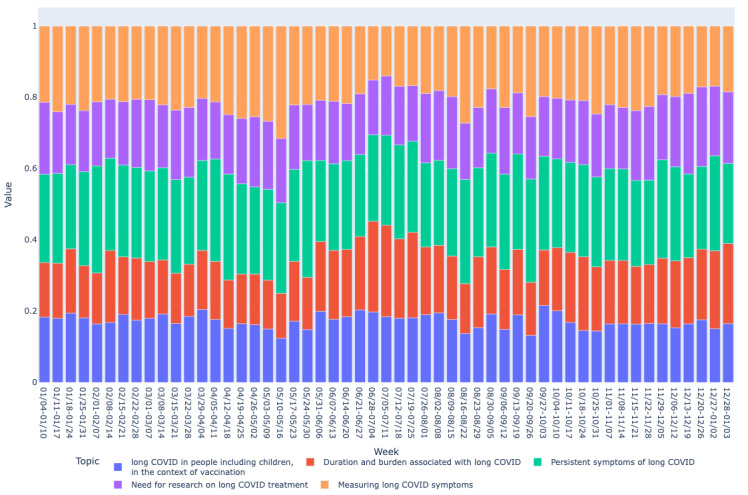
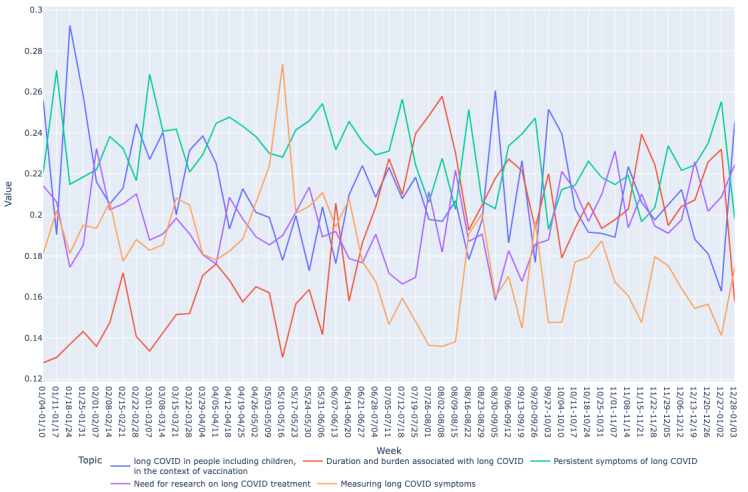
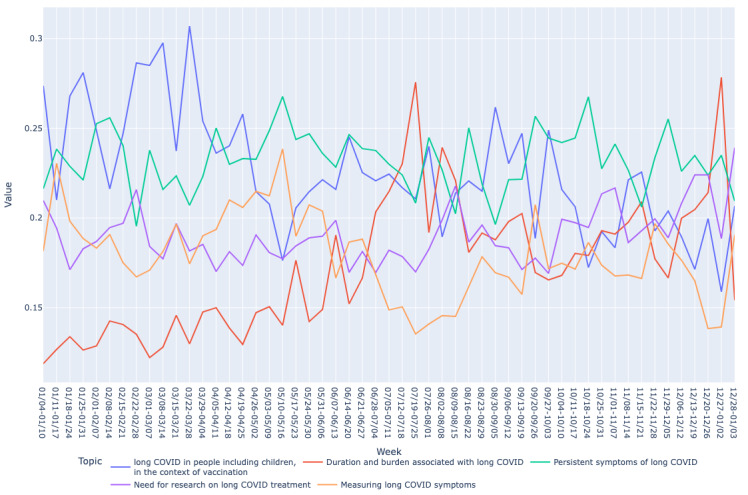
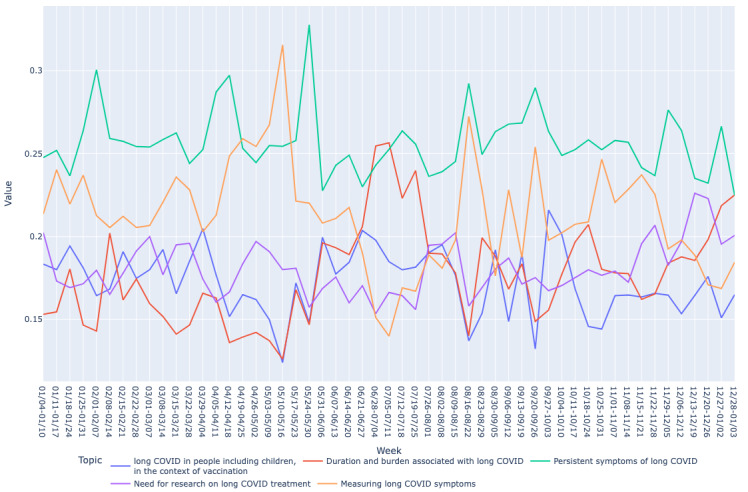
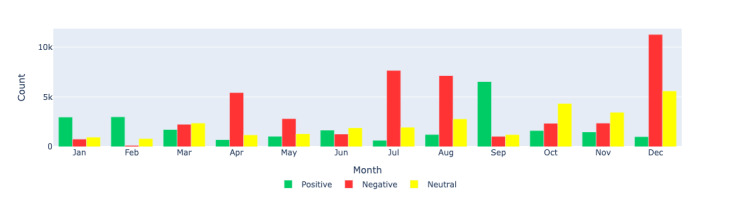
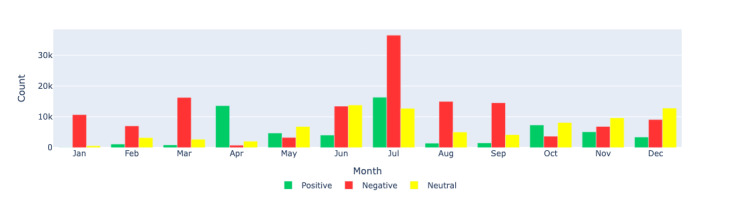
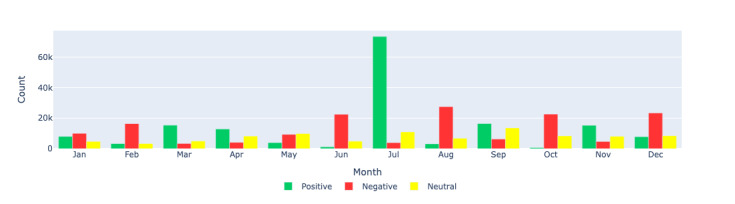
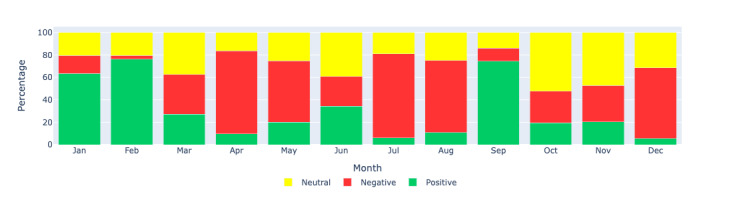
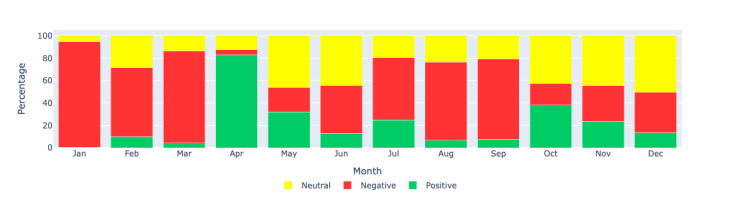
Topic modeling identified five main topics: (1) long COVID in people including children in the context of vaccination, (2) duration and suffering associated with long COVID, (3) persistent symptoms of long COVID, (4) the need for research on long COVID treatment, and (5) measuring long COVID symptoms. Significant concern was noted across all regions about the duration and suffering associated with long COVID, along with consistent discussions on persistent symptoms and calls for more research and better treatments. In particular, the topic of persistent symptoms was highly prevalent, reflecting ongoing challenges faced by individuals with long COVID. Sentiment analysis showed a mix of positive and negative sentiments, fluctuating with significant events and news related to long COVID.

CONCLUSIONS

Our study combines natural language processing techniques, including contextualized topic modeling and sentiment analysis, along with domain expert input, to provide detailed insights into public health monitoring and intervention. These findings highlight the importance of tracking public discourse on long COVID to inform public health strategies, address misinformation, and provide support to affected individuals. The use of social media analysis in understanding public health issues is underscored, emphasizing the role of emerging technologies in enhancing public health responses.

摘要

背景

社交媒体是一个庞大的数据宝库,能让我们深入了解公众对重大社会问题的看法和情绪。在新冠疫情期间,长期新冠(正式名称为新冠后状况)已成为一种慢性健康状况,对众多人的生活和生计产生了深远影响。鉴于长期新冠的动态性质以及我们对它的不断演变的理解,通过社交媒体有效捕捉人们的情绪和看法变得越来越重要。通过利用社交平台上丰富的数据,我们可以更好地追踪围绕长期新冠的不断演变的叙述以及为解决这一紧迫问题所做的集体努力。

目的

本研究旨在通过使用先进的主题建模和情感分析技术分析来自加拿大、美国和欧洲的英语推文,调查这些地区人们对长期新冠的看法和情绪。了解公共话语中的地区差异可为量身定制的公共卫生策略提供信息。

方法

我们分析了2021年与长期新冠相关的推文。情境化主题建模用于在上下文中捕捉单词含义,提供连贯且语义有意义的主题。使用大型语言模型Llama 2以零样本方式进行情感分析,将推文分类为积极、消极或中性情绪。研究结果与公共卫生专家合作进行解读,比较了三个地区讨论的主题时间线。这种双重方法使我们能够全面了解围绕长期新冠的公共话语。我们使用归一化逐点互信息等指标来衡量连贯性,使用主题多样性指标来衡量多样性,以确保主题建模结果的稳健性。

结果

主题建模确定了五个主要主题:(1)包括儿童在内的人群在疫苗接种背景下的长期新冠,(2)与长期新冠相关的持续时间和痛苦,(3)长期新冠的持续症状,(4)对长期新冠治疗进行研究的必要性,(5)测量长期新冠症状。所有地区都对与长期新冠相关的持续时间和痛苦表示了极大关注,同时也持续讨论了持续症状,并呼吁进行更多研究和更好的治疗。特别是,持续症状这一主题非常普遍,反映了长期新冠患者面临的持续挑战。情感分析显示出积极和消极情绪的混合,随着与长期新冠相关的重大事件和新闻而波动。

结论

我们的研究结合了自然语言处理技术,包括情境化主题建模和情感分析,并结合了领域专家的意见,以提供对公共卫生监测和干预的详细见解。这些发现凸显了追踪关于长期新冠的公共话语以指导公共卫生策略、解决错误信息并为受影响个人提供支持的重要性。强调了利用社交媒体分析来理解公共卫生问题,突出了新兴技术在加强公共卫生应对方面的作用。

https://cdn.ncbi.nlm.nih.gov/pmc/blobs/52dc/11667136/21b7238bb6be/jmir_v26i1e59425_fig13.jpg
https://cdn.ncbi.nlm.nih.gov/pmc/blobs/52dc/11667136/6ff20c85fd08/jmir_v26i1e59425_fig1.jpg
https://cdn.ncbi.nlm.nih.gov/pmc/blobs/52dc/11667136/c20a18cf574b/jmir_v26i1e59425_fig2.jpg
https://cdn.ncbi.nlm.nih.gov/pmc/blobs/52dc/11667136/74bfabc49fcc/jmir_v26i1e59425_fig3.jpg
https://cdn.ncbi.nlm.nih.gov/pmc/blobs/52dc/11667136/28a520c8b102/jmir_v26i1e59425_fig4.jpg
https://cdn.ncbi.nlm.nih.gov/pmc/blobs/52dc/11667136/f9bd36c19bdd/jmir_v26i1e59425_fig5.jpg
https://cdn.ncbi.nlm.nih.gov/pmc/blobs/52dc/11667136/938dd430766f/jmir_v26i1e59425_fig6.jpg
https://cdn.ncbi.nlm.nih.gov/pmc/blobs/52dc/11667136/a6a0e3e9141c/jmir_v26i1e59425_fig7.jpg
https://cdn.ncbi.nlm.nih.gov/pmc/blobs/52dc/11667136/8ee574209083/jmir_v26i1e59425_fig8.jpg
https://cdn.ncbi.nlm.nih.gov/pmc/blobs/52dc/11667136/78aa6b21e36d/jmir_v26i1e59425_fig9.jpg
https://cdn.ncbi.nlm.nih.gov/pmc/blobs/52dc/11667136/5527825464ce/jmir_v26i1e59425_fig10.jpg
https://cdn.ncbi.nlm.nih.gov/pmc/blobs/52dc/11667136/8b3348697c43/jmir_v26i1e59425_fig11.jpg
https://cdn.ncbi.nlm.nih.gov/pmc/blobs/52dc/11667136/01c2067bb989/jmir_v26i1e59425_fig12.jpg
https://cdn.ncbi.nlm.nih.gov/pmc/blobs/52dc/11667136/21b7238bb6be/jmir_v26i1e59425_fig13.jpg
https://cdn.ncbi.nlm.nih.gov/pmc/blobs/52dc/11667136/6ff20c85fd08/jmir_v26i1e59425_fig1.jpg
https://cdn.ncbi.nlm.nih.gov/pmc/blobs/52dc/11667136/c20a18cf574b/jmir_v26i1e59425_fig2.jpg
https://cdn.ncbi.nlm.nih.gov/pmc/blobs/52dc/11667136/74bfabc49fcc/jmir_v26i1e59425_fig3.jpg
https://cdn.ncbi.nlm.nih.gov/pmc/blobs/52dc/11667136/28a520c8b102/jmir_v26i1e59425_fig4.jpg
https://cdn.ncbi.nlm.nih.gov/pmc/blobs/52dc/11667136/f9bd36c19bdd/jmir_v26i1e59425_fig5.jpg
https://cdn.ncbi.nlm.nih.gov/pmc/blobs/52dc/11667136/938dd430766f/jmir_v26i1e59425_fig6.jpg
https://cdn.ncbi.nlm.nih.gov/pmc/blobs/52dc/11667136/a6a0e3e9141c/jmir_v26i1e59425_fig7.jpg
https://cdn.ncbi.nlm.nih.gov/pmc/blobs/52dc/11667136/8ee574209083/jmir_v26i1e59425_fig8.jpg
https://cdn.ncbi.nlm.nih.gov/pmc/blobs/52dc/11667136/78aa6b21e36d/jmir_v26i1e59425_fig9.jpg
https://cdn.ncbi.nlm.nih.gov/pmc/blobs/52dc/11667136/5527825464ce/jmir_v26i1e59425_fig10.jpg
https://cdn.ncbi.nlm.nih.gov/pmc/blobs/52dc/11667136/8b3348697c43/jmir_v26i1e59425_fig11.jpg
https://cdn.ncbi.nlm.nih.gov/pmc/blobs/52dc/11667136/01c2067bb989/jmir_v26i1e59425_fig12.jpg
https://cdn.ncbi.nlm.nih.gov/pmc/blobs/52dc/11667136/21b7238bb6be/jmir_v26i1e59425_fig13.jpg

相似文献

1
Long COVID Discourse in Canada, the United States, and Europe: Topic Modeling and Sentiment Analysis of Twitter Data.加拿大、美国和欧洲的长期新冠疫情相关话语:推特数据的主题建模与情感分析
J Med Internet Res. 2024 Dec 9;26:e59425. doi: 10.2196/59425.
2
Tracking COVID-19 Discourse on Twitter in North America: Infodemiology Study Using Topic Modeling and Aspect-Based Sentiment Analysis.追踪北美地区推特上的 COVID-19 相关言论:使用主题建模和基于方面的情感分析的信息流行病学研究。
J Med Internet Res. 2021 Feb 10;23(2):e25431. doi: 10.2196/25431.
3
Unveiling Topics and Emotions in Arabic Tweets Surrounding the COVID-19 Pandemic: Topic Modeling and Sentiment Analysis Approach.揭示围绕新冠疫情的阿拉伯语推文的主题与情感:主题建模与情感分析方法
JMIR Infodemiology. 2025 Feb 10;5:e53434. doi: 10.2196/53434.
4
Unveiling public perceptions at the beginning of lockdown: an application of structural topic modeling and sentiment analysis in the UK and India.揭示封锁初期的公众看法:英国和印度的结构主题建模和情感分析应用。
BMC Public Health. 2024 Oct 15;24(1):2832. doi: 10.1186/s12889-024-20160-1.
5
Social Media Insights Into US Mental Health During the COVID-19 Pandemic: Longitudinal Analysis of Twitter Data.社交媒体洞察美国在 COVID-19 大流行期间的心理健康状况:对 Twitter 数据的纵向分析。
J Med Internet Res. 2020 Dec 14;22(12):e21418. doi: 10.2196/21418.
6
COVID-19 Vaccine-Related Discussion on Twitter: Topic Modeling and Sentiment Analysis.新冠疫苗相关推文的讨论:主题建模和情感分析。
J Med Internet Res. 2021 Jun 29;23(6):e24435. doi: 10.2196/24435.
7
Emotions and Topics Expressed on Twitter During the COVID-19 Pandemic in the United Kingdom: Comparative Geolocation and Text Mining Analysis.在英国 COVID-19 大流行期间在 Twitter 上表达的情绪和主题:比较地理定位和文本挖掘分析。
J Med Internet Res. 2022 Oct 5;24(10):e40323. doi: 10.2196/40323.
8
Tracking Public Attitudes Toward COVID-19 Vaccination on Tweets in Canada: Using Aspect-Based Sentiment Analysis.追踪加拿大推特上公众对 COVID-19 疫苗接种的态度:使用基于方面的情感分析。
J Med Internet Res. 2022 Mar 29;24(3):e35016. doi: 10.2196/35016.
9
User-Chatbot Conversations During the COVID-19 Pandemic: Study Based on Topic Modeling and Sentiment Analysis.用户-聊天机器人在 COVID-19 大流行期间的对话:基于主题建模和情感分析的研究。
J Med Internet Res. 2023 Jan 27;25:e40922. doi: 10.2196/40922.
10
Exploring Public Emotions on Obesity During the COVID-19 Pandemic Using Sentiment Analysis and Topic Modeling: Cross-Sectional Study.使用情感分析和主题建模探究 COVID-19 大流行期间公众对肥胖的情绪:横断面研究。
J Med Internet Res. 2024 Oct 11;26:e52142. doi: 10.2196/52142.

引用本文的文献

1
Impact of the COVID-19 Pandemic and the 2021 National Institute for Health and Care Excellence Guidelines on Public Perspectives Toward Myalgic Encephalomyelitis/Chronic Fatigue Syndrome: Thematic and Sentiment Analysis on Twitter (Rebranded as X).2019年冠状病毒病疫情及2021年国家卫生与保健优化研究所指南对公众关于肌痛性脑脊髓炎/慢性疲劳综合征看法的影响:推特(现更名为X)上的主题和情感分析
J Med Internet Res. 2025 May 21;27:e65087. doi: 10.2196/65087.

本文引用的文献

1
The immunology of long COVID.长新冠的免疫学
Nat Rev Immunol. 2023 Oct;23(10):618-634. doi: 10.1038/s41577-023-00904-7. Epub 2023 Jul 11.
2
A systematic review and meta-analysis of long COVID symptoms.长新冠症状的系统评价和荟萃分析。
Syst Rev. 2023 May 27;12(1):88. doi: 10.1186/s13643-023-02250-0.
3
Public Opinions toward COVID-19 Vaccine Mandates: A Machine Learning-based Analysis of U.S. Tweets.公众对 COVID-19 疫苗强制接种令的看法:基于机器学习的美国推特分析。
AMIA Annu Symp Proc. 2023 Apr 29;2022:502-511. eCollection 2022.
4
COVID-19 topics and emotional frames in vaccine hesitation: A social media text and sentiment analysis.疫苗犹豫中的新冠疫情话题与情感框架:一项社交媒体文本及情感分析
Digit Health. 2023 Mar 3;9:20552076231158308. doi: 10.1177/20552076231158308. eCollection 2023 Jan-Dec.
5
The effects of long COVID-19, its severity, and the need for immediate attention: Analysis of clinical trials and Twitter data.新冠长期症状的影响、其严重程度以及立即关注的必要性:临床试验与推特数据的分析
Front Big Data. 2022 Dec 15;5:1051386. doi: 10.3389/fdata.2022.1051386. eCollection 2022.
6
An Elastic Net Regression Model for Identifying Long COVID Patients Using Health Administrative Data: A Population-Based Study.一种使用卫生行政数据识别长期新冠患者的弹性网络回归模型:一项基于人群的研究
Open Forum Infect Dis. 2022 Nov 24;9(12):ofac640. doi: 10.1093/ofid/ofac640. eCollection 2022 Dec.
7
Data-driven identification of post-acute SARS-CoV-2 infection subphenotypes.基于数据驱动的急性 SARS-CoV-2 感染后亚表型识别。
Nat Med. 2023 Jan;29(1):226-235. doi: 10.1038/s41591-022-02116-3. Epub 2022 Dec 1.
8
Identifying Profiles and Symptoms of Patients With Long COVID in France: Data Mining Infodemiology Study Based on Social Media.识别法国长期新冠患者的特征和症状:基于社交媒体的数据挖掘信息流行病学研究
JMIR Infodemiology. 2022 Nov 22;2(2):e39849. doi: 10.2196/39849. eCollection 2022 Jul-Dec.
9
Making sense of COVID-19 over time in New Zealand: Assessing the public conversation using Twitter.随着时间的推移对新西兰 COVID-19 疫情的认知:利用 Twitter 评估公众对话。
PLoS One. 2021 Dec 15;16(12):e0259882. doi: 10.1371/journal.pone.0259882. eCollection 2021.
10
Long Covid: Online patient narratives, public health communication and vaccine hesitancy.长期新冠:在线患者叙述、公共卫生传播与疫苗犹豫
Digit Health. 2021 Nov 29;7:20552076211059649. doi: 10.1177/20552076211059649. eCollection 2021 Jan-Dec.