Siddique Aftab, Panda Sudhanshu S, Khan Sophia, Dargan Seymone T, Lewis Savana, Carter India, Van Wyk Jan A, Mahapatra Ajit K, Morgan Eric R, Terrill Thomas H
Department of Agricultural Science, Fort Valley State University, Fort Valley, GA, United States.
Institute for Environmental Spatial Analysis, University of North Georgia, Oakwood, GA, United States.
Front Vet Sci. 2024 Nov 26;11:1493403. doi: 10.3389/fvets.2024.1493403. eCollection 2024.
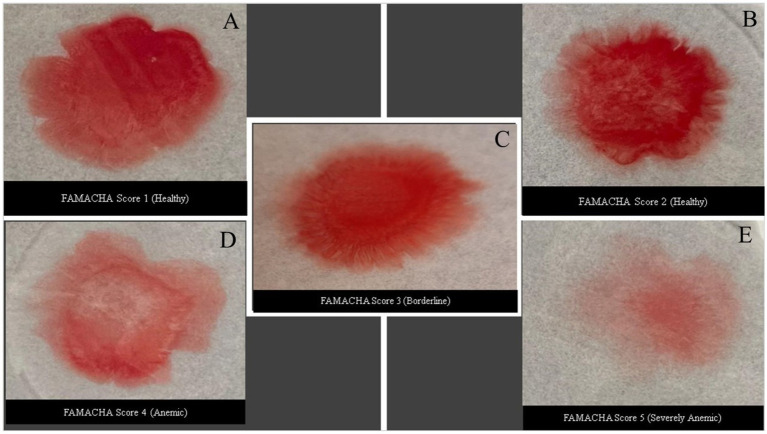
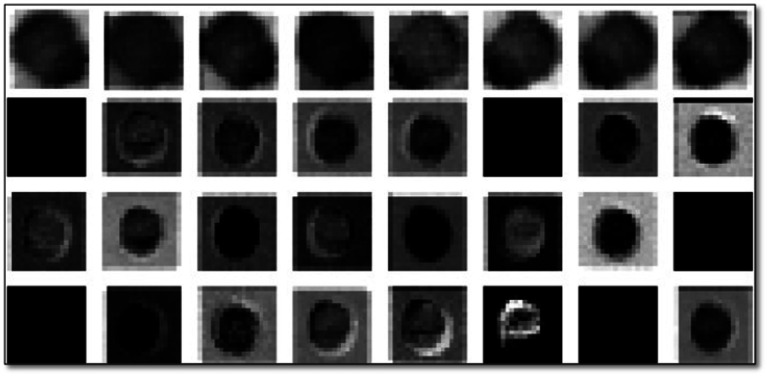
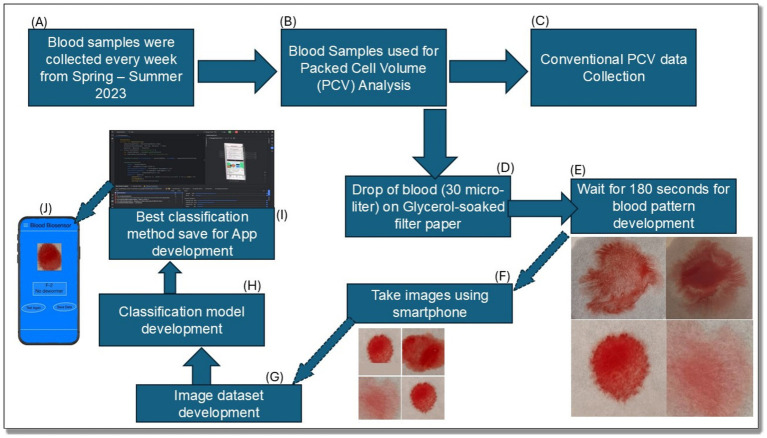
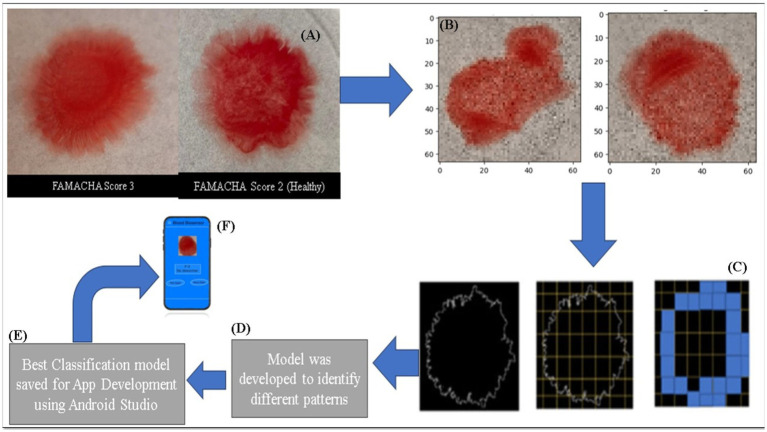
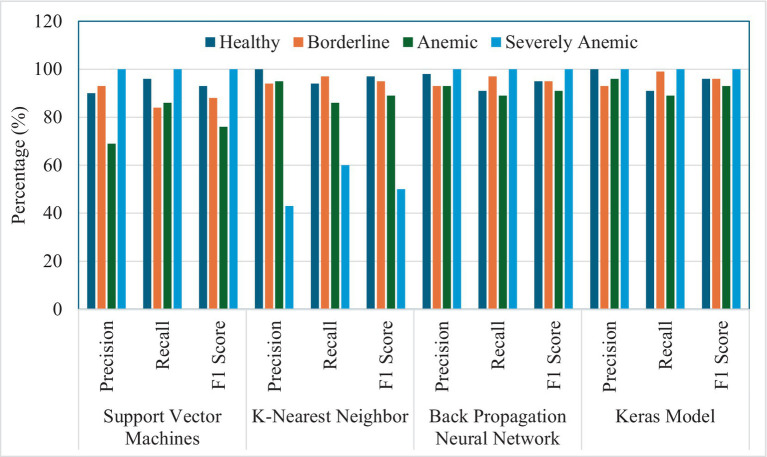
Due to their value as a food source, fiber, and other products globally, there has been a growing focus on the wellbeing and health of small ruminants, particularly in relation to anemia induced by blood-feeding gastrointestinal parasites like . The objective of this study was to assess the packed cell volume (PCV) levels in blood samples from small ruminants, specifically goats, and create an efficient biosensor for more convenient, yet accurate detection of anemia for on-farm use in agricultural environments for animal production optimization. The study encompassed 75 adult male Spanish goats, which underwent PCV testing to ascertain their PCV ranges and their association with anemic conditions. Using artificial intelligence-powered machine learning algorithms, an advanced, easy-to-use sensor was developed for rapidly alerting farmers as to low red blood cell count of their animals in this way to enable timely medical intervention. The developed sensor utilizes a semi-invasive technique that requires only a small blood sample. More precisely, a volume of 30 μL of blood was placed onto Whatman filter paper No. 1, previously soaked with anhydrous glycerol. The blood dispersion pattern on the glycerol-infused paper was then recorded using a smartphone after 180 s. Subsequently, these images were examined in correlation with established PCV values obtained from conventional PCV analysis. Four separate machine learning models (ML) supported models, namely support vector machine (SVM), K-nearest neighbors (KNN), backpropagation neural network (BPNN), and image classification-based Keras model, were created and assessed using the image dataset. The dataset consisted of 1,054 images that were divided into training, testing, and validation sets in a 70:20:10 ratio. The initial findings indicated a detection accuracy of 76.06% after only 10 epochs for recognizing different levels of PCV in relation to anemia, ranging from healthy to severely anemic. This testing accuracy increased markedly, to 95.8% after 100 epochs and other model parameter optimization. Results for SVM had an overall F1 score of 74-100% in identifying the PCV range for blood pattern images representing healthy to severely anemic animals, and BPNN showed 91-100% accuracy in identifying the PCV range for anemia detection. This work demonstrates that AI-driven biosensors can be used for on-site rapid anemia detection. Optimized machine learning models maximize detection accuracy, proving the sensor's validity and rapidity in assessing anemia levels. This breakthrough will allow farmers, with rapid results, to increase animal wellbeing and agricultural productivity.
由于小型反刍动物作为全球食物来源、纤维及其他产品的价值,人们越来越关注它们的健康状况,特别是与由吸食血液的胃肠道寄生虫(如……)引起的贫血相关的问题。本研究的目的是评估小型反刍动物(特别是山羊)血液样本中的红细胞压积(PCV)水平,并创建一种高效的生物传感器,以便在农业环境中更方便、准确地检测贫血,从而优化动物生产。该研究涵盖了75只成年雄性西班牙山羊,对它们进行了PCV测试,以确定其PCV范围及其与贫血状况的关联。利用人工智能驱动的机器学习算法,开发了一种先进且易于使用的传感器,通过这种方式可以快速提醒农民其动物的红细胞计数过低,以便及时进行医疗干预。所开发的传感器采用半侵入性技术,只需要少量血液样本。更准确地说,将30μL血液放置在预先用无水甘油浸泡过的1号Whatman滤纸上。180秒后,使用智能手机记录血液在注入甘油的滤纸上的扩散模式。随后,将这些图像与通过传统PCV分析获得的既定PCV值进行关联检查。使用图像数据集创建并评估了四个单独的机器学习模型(ML)支持的模型,即支持向量机(SVM)、K近邻(KNN)、反向传播神经网络(BPNN)和基于图像分类的Keras模型。该数据集由1054张图像组成,这些图像以70:20:10的比例分为训练集、测试集和验证集。初步结果表明,在仅经过10个轮次后,识别与贫血相关的不同PCV水平(从健康到严重贫血)的检测准确率为76.06%。经过100个轮次及其他模型参数优化后,该测试准确率显著提高,达到95.8%。在识别代表健康到严重贫血动物的血液模式图像的PCV范围时,SVM的总体F1分数在74 - 100%之间,BPNN在识别用于贫血检测的PCV范围时显示出91 - 100%的准确率。这项工作表明,人工智能驱动的生物传感器可用于现场快速贫血检测。优化后的机器学习模型可最大限度地提高检测准确率,证明了该传感器在评估贫血水平方面的有效性和快速性。这一突破将使农民能够迅速获得结果,从而提高动物健康水平和农业生产力。