Kobayashi Hiroko, Yasukochi Mitsuki, Horie Masayuki, Orba Yasuko, Sawa Hirofumi, Fujino Kan, Taharaguchi Satoshi
Laboratory of Microbiology, School of Veterinary Medicine, Azabu University, Sagamihara, Kanagawa, Japan.
Division of Molecular Pathobiology, International Institute for Zoonosis Control, Hokkaido University, Sapporo, Hokkaido, Japan.
PLoS One. 2024 Dec 12;19(12):e0314980. doi: 10.1371/journal.pone.0314980. eCollection 2024.
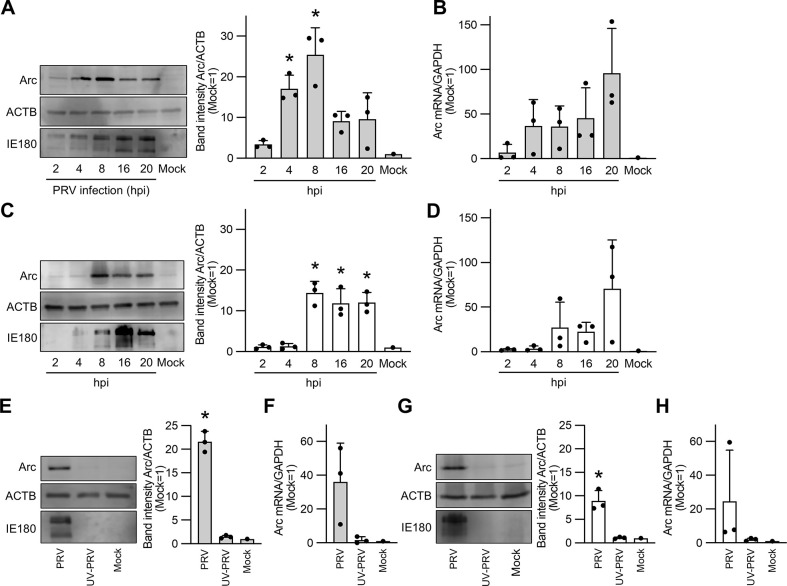
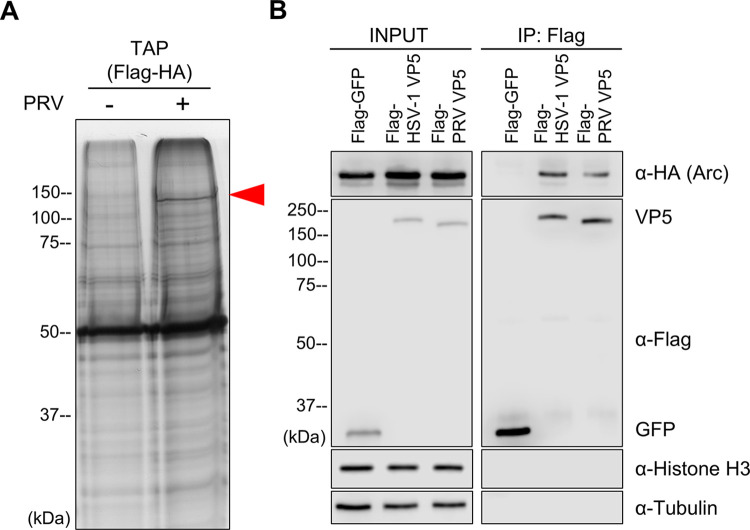
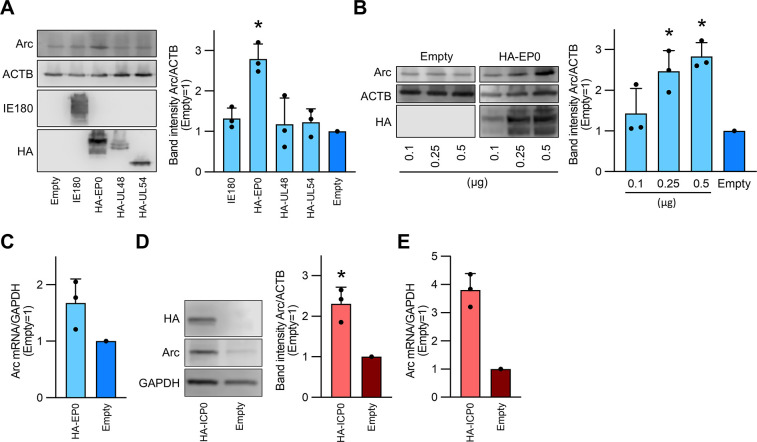
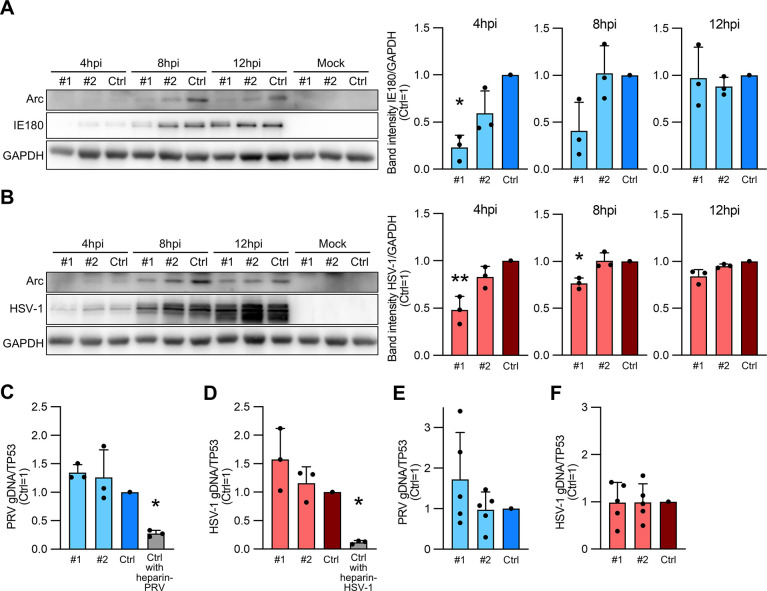
Alphaherpesviruses, including herpes simplex virus type 1 (HSV-1) and pseudorabies virus (PRV), are neurotropic double-stranded DNA viruses. Alphaherpesviruses control the expression of various host factors to ensure efficient infection and propagation. Recently, HSV-1 was found to upregulate Arc/Arg3.1 (Arc) expression, which is a retroelement-derived domesticated gene. Arc is associated with learning and neuroplasticity in host neuronal cells, and its abnormal expression leads to neurological disorders. However, the detailed mechanisms underlying the upregulation of Arc and its physiological significance in viral infections remain unclear. In this study, we found that PRV infection upregulated Arc expression in vitro and identified ICP0 and EP0, the transcriptional regulatory genes of HSV-1 and PRV, as triggers for enhanced Arc expression. Mass spectrometry and co-immunoprecipitation assays identified VP5, the major capsid protein of PRV and HSV-1, as the viral factor that interacted with Arc. Arc knockdown delayed viral infection during the early stages of the viral life cycle, but did not impact the viral attachment and entry. In conclusion, we provide evidence that alphaherpesvirus ICP0 homologues control Arc expression. Additionally, we demonstrate that Arc interacts with the major capsid protein VP5 and plays an important role in the viral lifecycle after intracellular entry. This study advances our knowledge of herpesvirus and retroelement-derived Arc interactions, providing fundamental insights into the pathogenesis of retroelement-derived domesticated genes and herpesvirus-induced neurological diseases.
甲型疱疹病毒,包括单纯疱疹病毒1型(HSV-1)和伪狂犬病病毒(PRV),是嗜神经的双链DNA病毒。甲型疱疹病毒控制各种宿主因子的表达,以确保有效的感染和传播。最近,发现HSV-1上调Arc/Arg3.1(Arc)的表达,Arc是一个源自逆转录元件的驯化基因。Arc与宿主神经元细胞的学习和神经可塑性有关,其异常表达会导致神经紊乱。然而,Arc上调的详细机制及其在病毒感染中的生理意义仍不清楚。在本研究中,我们发现PRV感染在体外上调了Arc的表达,并确定HSV-1和PRV的转录调控基因ICP0和EP0是增强Arc表达的触发因素。质谱分析和免疫共沉淀试验确定PRV和HSV-1的主要衣壳蛋白VP5是与Arc相互作用的病毒因子。Arc敲低在病毒生命周期的早期阶段延迟了病毒感染,但不影响病毒的附着和进入。总之,我们提供的证据表明甲型疱疹病毒ICP0同源物控制Arc的表达。此外,我们证明Arc与主要衣壳蛋白VP5相互作用,并在细胞内进入后的病毒生命周期中发挥重要作用。这项研究推进了我们对疱疹病毒与源自逆转录元件的Arc相互作用的认识,为源自逆转录元件的驯化基因和疱疹病毒诱导的神经疾病的发病机制提供了基本见解。