Nguyen Anna T, Ratnasiri Kalani, Heitmann Gabriella Barratt, Tazin Sumaiya, Anderson Claire, Hanif Suhi, Yeamin Afsana, Shoab Abul Kasham, Shanta Ireen Sultana, Jahan Farjana, Hossain Sakib, Mahmud Zahid Hayat, Jubair Mohammad, Rahman Mustafizur, Rahman Mahbubur, Ercumen Ayse, Benjamin-Chung Jade
Department of Epidemiology & Population Health, Stanford University.
Stanford Immunology Program, Stanford University School of Medicine, Stanford, CA 94305, USA.
bioRxiv. 2024 Dec 7:2024.12.06.627269. doi: 10.1101/2024.12.06.627269.
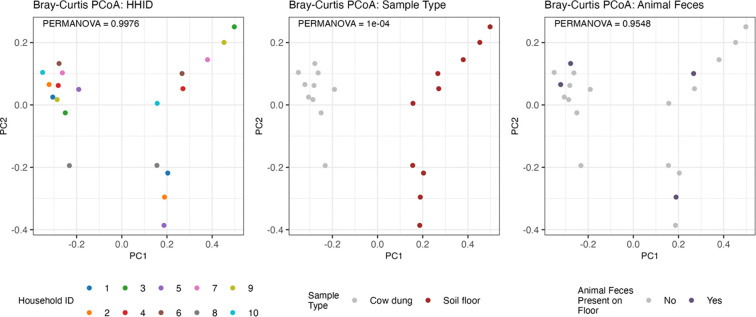
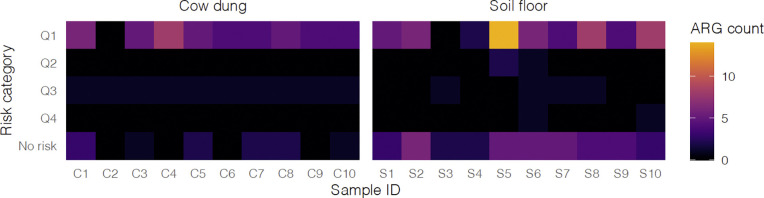
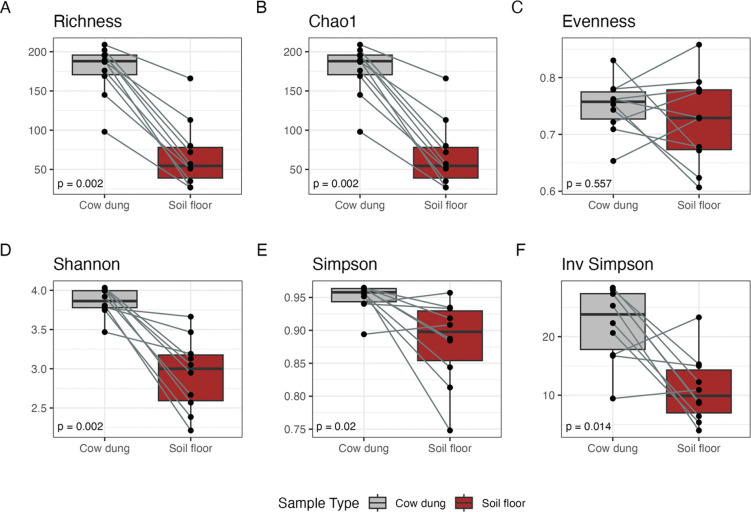
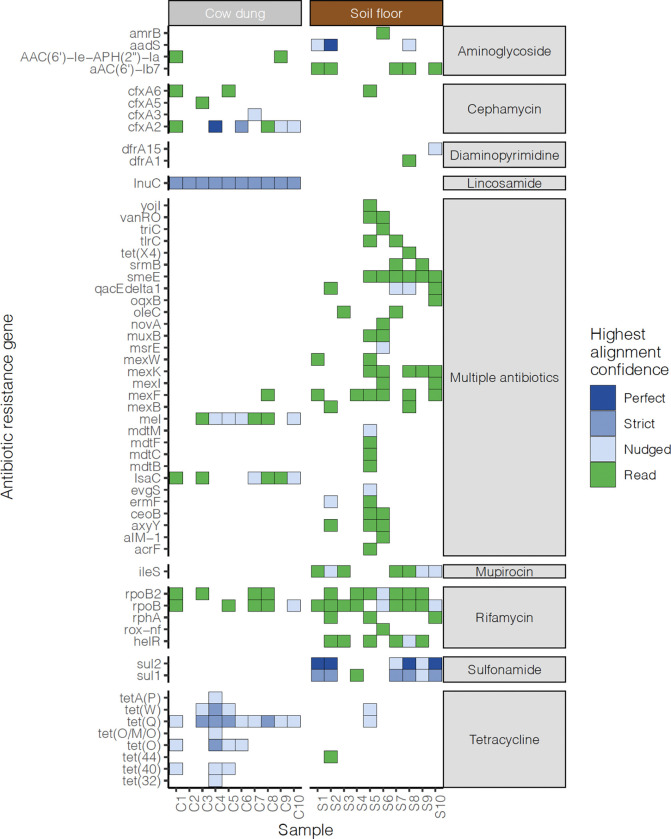
In low- and middle-income countries, living in homes with soil floors and animal cohabitation may expose children to fecal organisms, increasing risk of enteric and antimicrobial-resistant infections. Our objective was to understand whether cow cohabitation in homes with soil floors in rural Bangladesh contributed to the presence and diversity of potential pathogens and antimicrobial resistance genes (ARGs) in the home. In 10 randomly selected households in rural Sirajganj District, we sampled floor soil and cow dung, which is commonly used as sealant in soil floors. We extracted DNA and performed shotgun metagenomic sequencing to explore potential pathogens and ARGs in each sample type. We detected 6 potential pathogens in soil only, 49 pathogens in cow dung only, and 167 pathogens in both soil and cow dung. Pathogen species with relative abundances >5% in both soil floors and cow dung from the same households included (N=8 households), (N=6), (N=2), and (N=1). Cow dung exhibited modestly higher pathogen genus richness compared to soil floors (Wilcoxon signed-rank test p=0.002). Using Bray-Curtis dissimilarity, pathogen species community composition differed between floors and cow dung (PERMANOVA p<0.001). All soil floors and cow dung samples contained ARGs against antibiotic classes including sulfonamides, rifamycin, aminoglycosides, lincosamides, and tetracycline. Paired floor and cow dung samples shared ARGs against rifamycin. Our findings support the development of interventions to reduce soil and animal feces exposure in rural, low-income settings.
在低收入和中等收入国家,居住在泥土地面的房屋且与动物同居可能会使儿童接触粪便中的微生物,增加肠道感染和抗微生物药物耐药性感染的风险。我们的目标是了解在孟加拉国农村泥土地面房屋中与牛同居是否会导致家中潜在病原体和抗微生物药物耐药基因(ARGs)的存在及多样性。在锡拉杰甘杰区农村随机选取的10户家庭中,我们对泥土地面土壤和牛粪进行了采样,牛粪通常用作泥土地面的密封剂。我们提取了DNA并进行鸟枪法宏基因组测序,以探究每种样本类型中的潜在病原体和ARGs。我们在仅土壤中检测到6种潜在病原体,仅牛粪中检测到49种病原体,土壤和牛粪中均检测到167种病原体。在同一家庭的泥土地面和牛粪中相对丰度>5%的病原体物种包括(N = 8户)、(N = 6户)、(N = 2户)和(N = 1户)。与泥土地面相比,牛粪中的病原体属丰富度略高(Wilcoxon符号秩检验p = 0.002)。使用Bray-Curtis差异分析,泥土地面和牛粪之间的病原体物种群落组成不同(PERMANOVA p<0.001)。所有泥土地面和牛粪样本都含有针对包括磺胺类、利福霉素、氨基糖苷类、林可酰胺类和四环素类抗生素的ARGs。配对的泥土地面和牛粪样本共享针对利福霉素的ARGs。我们的研究结果支持制定干预措施,以减少农村低收入环境中土壤和动物粪便的接触。