Division of Environmental Health Sciences, College of Public Health, The Ohio State University, Columbus, OH, USA.
Environmental Sciences Graduate Program, The Ohio State University, Columbus, OH, USA.
Microbiome. 2023 Sep 15;11(1):207. doi: 10.1186/s40168-023-01636-5.
Early life plays a vital role in the development of the gut microbiome and subsequent health. While many factors that shape the gut microbiome have been described, including delivery mode, breastfeeding, and antibiotic use, the role of household environments is still unclear. Furthermore, the development of the gut antimicrobial resistome and its role in health and disease is not well characterized, particularly in settings with water insecurity and less sanitation infrastructure.
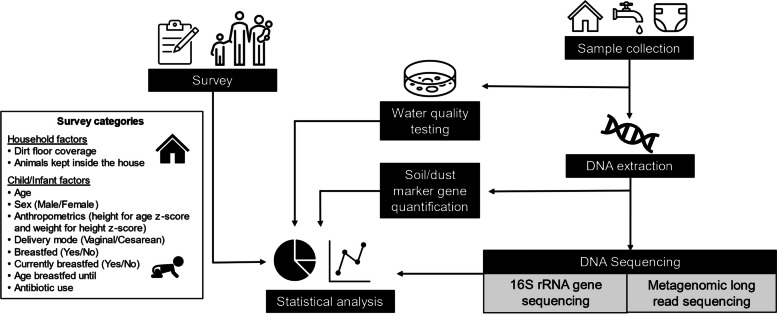
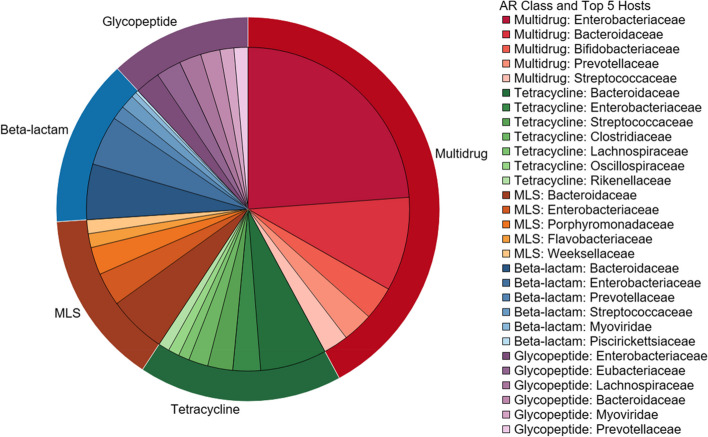
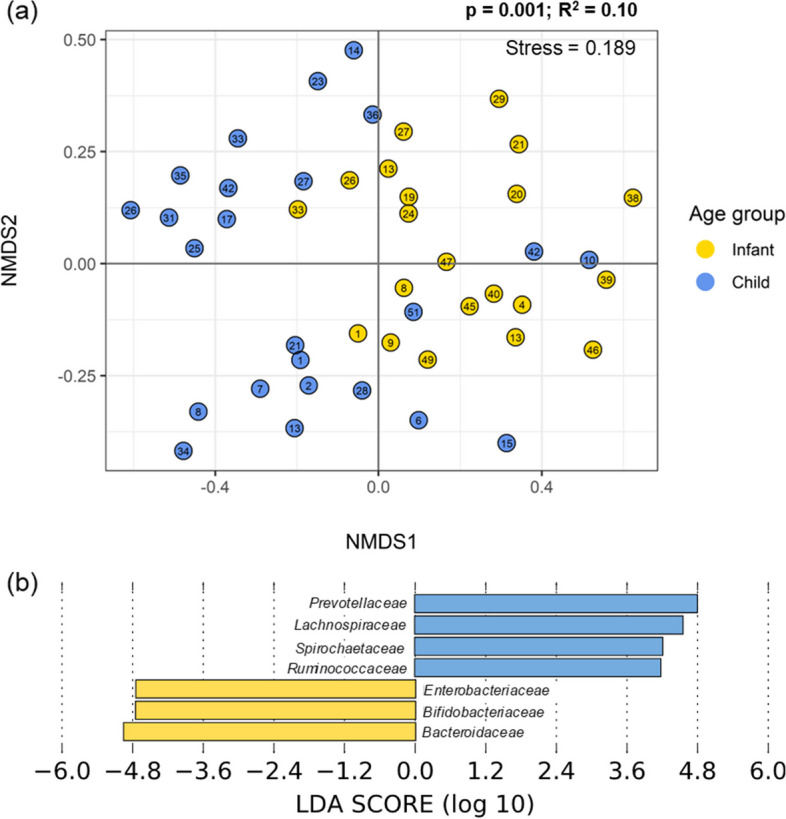
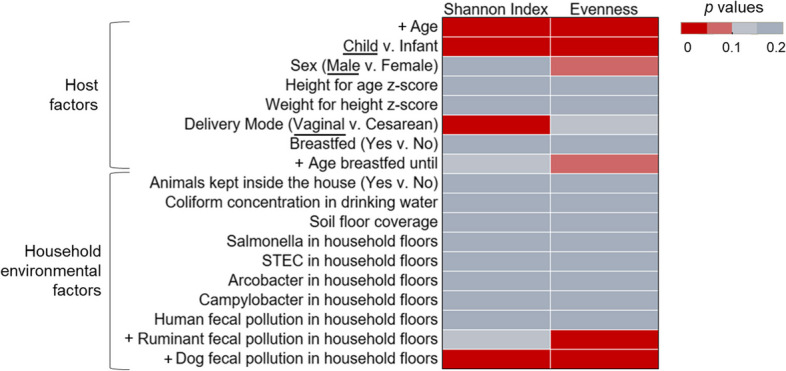
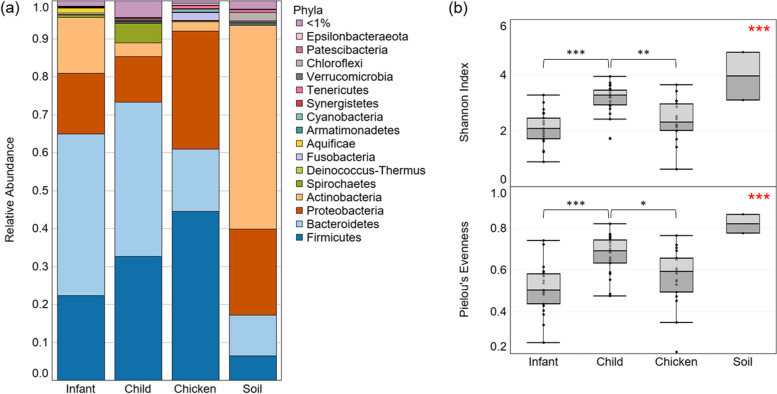
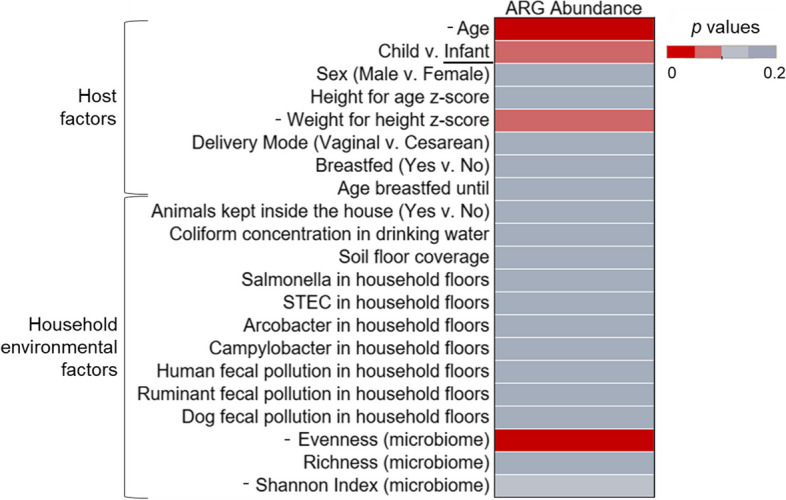
This study investigated the gut microbiome and resistome of infants and young children (ages 4 days-6 years) in rural Nicaragua using Oxford Nanopore Technology's MinION long-read sequencing. Differences in gut microbiome diversity and antibiotic resistance gene (ARG) abundance were examined for associations with host factors (age, sex, height for age z-score, weight for height z-score, delivery mode, breastfeeding habits) and household environmental factors (animals inside the home, coliforms in drinking water, enteric pathogens in household floors, fecal microbial source tracking markers in household floors). We identified anticipated associations of higher gut microbiome diversity with participant age and vaginal delivery. However, novel to this study were the significant, positive associations between ruminant and dog fecal contamination of household floors and gut microbiome diversity. We also identified greater abundance of potential pathogens in the gut microbiomes of participants with higher fecal contamination on their household floors. Path analysis revealed that water quality and household floor contamination independently and significantly influenced gut microbiome diversity when controlling for age. These gut microbiome contained diverse resistome, dominated by multidrug, tetracycline, macrolide/lincosamide/streptogramin, and beta-lactam resistance. We found that the abundance of ARGs in the gut decreased with age. The bacterial hosts of ARGs were mainly from the family Enterobacteriaceae, particularly Escherichia coli.
This study identified the role of household environmental contamination in the developing gut microbiome and resistome of young children and infants with a One Health perspective. We found significant relationships between host age, gut microbiome diversity, and the resistome. Understanding the impact of the household environment on the development of the resistome and microbiome in early life is essential to optimize the relationship between environmental exposure and human health. Video Abstract.
生命早期在肠道微生物组的发育及其随后的健康中起着至关重要的作用。虽然已经描述了许多塑造肠道微生物组的因素,包括分娩方式、母乳喂养和抗生素使用,但家庭环境的作用仍不清楚。此外,肠道抗菌药物抗性组的发展及其在健康和疾病中的作用尚未得到很好的描述,特别是在水不安全和卫生基础设施较少的环境中。
本研究使用牛津纳米孔技术的 MinION 长读测序技术,研究了尼加拉瓜农村地区婴儿和幼儿(4 天至 6 岁)的肠道微生物组和抗性组。检查了肠道微生物组多样性和抗生素抗性基因(ARG)丰度的差异,以确定其与宿主因素(年龄、性别、身高年龄 z 分数、身高体重 z 分数、分娩方式、母乳喂养习惯)和家庭环境因素(家中的动物、饮用水中的大肠菌群、家庭地板中的肠道病原体、家庭地板中的粪便微生物源追踪标记物)之间的关联。我们确定了肠道微生物组多样性与参与者年龄和阴道分娩之间的预期关联。然而,本研究的新颖之处在于,家庭地板上反刍动物和狗粪便污染与肠道微生物组多样性之间存在显著的正相关关系。我们还发现,家庭地板上粪便污染程度较高的参与者肠道微生物组中存在更多潜在病原体。路径分析表明,在控制年龄的情况下,水质和家庭地板污染独立且显著影响肠道微生物组多样性。这些肠道微生物组含有多样化的抗性组,主要由多药、四环素、大环内酯/林可酰胺/链阳菌素和β-内酰胺抗性组成。我们发现肠道中 ARG 的丰度随年龄的增长而降低。ARG 的细菌宿主主要来自肠杆菌科,特别是大肠杆菌。
本研究从一个健康的角度,确定了家庭环境污染物对幼儿肠道微生物组和抗性组发育的作用。我们发现了宿主年龄、肠道微生物组多样性和抗性组之间的显著关系。了解家庭环境对早期生活中抗性组和微生物组发展的影响,对于优化环境暴露与人类健康之间的关系至关重要。