Perez-Acle Tomas, Ravello Cesar, Rosemblatt Mario
Computational Biology Laboratory, Fundacion Ciencia & Vida, Universidad San Sebastian, Avda. del Valle Norte 725, Huechuraba, 8580702, Santiago, Region Metropolitana, Chile.
Facultad de Ingeniería, Arquitectura y Diseño, Universidad San Sebastian, Bellavista 7, Recoleta, 8420524, Santiago, Region Metropolitana, Chile.
Biol Res. 2024 Dec 19;57(1):96. doi: 10.1186/s40659-024-00570-6.
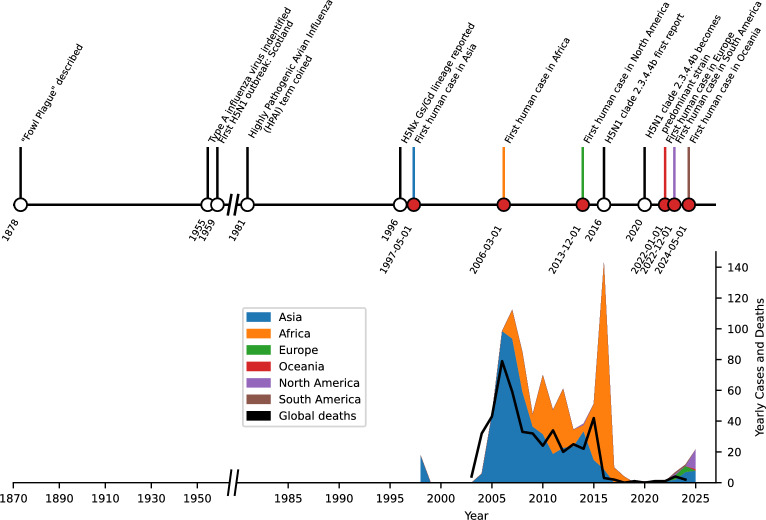
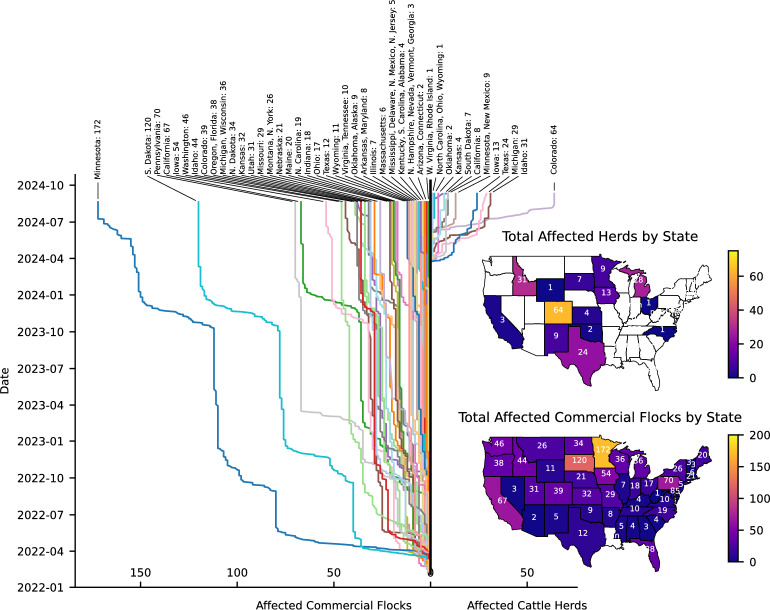
The emergence of highly pathogenic avian influenza (HPAI) A H5N1 virus in dairy cattle marks a troubling new chapter in the ongoing battle against zoonotic diseases. Since its initial detection in 1955, the H5N1 virus has primarily been associated with poultry, posing significant threats to both animal and human health. However, recent outbreaks in U.S. dairy herds across nine states have revealed an alarming expansion of the virus, with over 190 herds affected as of September 2024. This unprecedented spread in cattle has sparked intense concern among scientists and health officials, especially with reports indicating that up to 20% of dairy products may contain traces of the virus. The implications of the H5N1 virus establishing itself in cattle populations are profound. This potential endemic presence could transform dairy farms into reservoirs of the virus, facilitating its evolution and increasing the risk of human transmission. Mutations enhancing viral replication in mammals have already been identified, including the notorious PB2 E627K mutation linked to increased virulence. Moreover, the detection of the virus in the central nervous system of infected animals, including cats, underscores the broad tissue tropism and severe pathogenic potential of the H5N1 virus. Current containment efforts include stringent biosecurity measures and financial incentives for enhanced testing and personal protective equipment (PPE) for farmers. Yet, gaps in testing infrastructure and the resurgence of raw milk consumption pose significant challenges. The U.S. Department of Agriculture (USDA) and the Centers for Disease Control and Prevention (CDC) emphasize the critical need for comprehensive testing and pasteurization to mitigate the risk of human infection. As the scientific community races to adapt existing antiviral treatments and develop effective vaccines, the concept of a One Health approach becomes increasingly vital. This holistic strategy calls for coordinated actions across human, animal, and environmental health sectors to preemptively tackle emerging zoonotic threats. Strengthening surveillance, fostering international cooperation, and investing in research are essential steps to prevent the H5N1 virus from igniting the next global health crisis. The current avian influenza outbreak serves as a stark reminder of the delicate balance between human activities and viral evolution. Our collective ability to respond effectively and proactively will determine whether we can avert the perfect storm brewing on the horizon.
高致病性禽流感(HPAI)A H5N1病毒在奶牛中出现,这在对抗人畜共患病的持续斗争中标志着令人不安的新篇章。自1955年首次检测到H5N1病毒以来,它主要与家禽有关,对动物和人类健康都构成重大威胁。然而,最近在美国九个州的奶牛群中爆发疫情,显示出该病毒令人担忧的传播范围扩大,截至2024年9月,已有超过190个牛群受到影响。这种在牛群中前所未有的传播引发了科学家和卫生官员的强烈关注,特别是有报告表明高达20%的乳制品可能含有该病毒的痕迹。H5N1病毒在牛群中立足的影响是深远的。这种潜在的地方流行存在可能会使奶牛场变成病毒的储存库,促进其进化并增加人际传播的风险。已经发现了增强病毒在哺乳动物中复制的突变,包括与毒力增加有关的臭名昭著的PB2 E627K突变。此外,在包括猫在内的受感染动物的中枢神经系统中检测到该病毒,凸显了H5N1病毒广泛的组织嗜性和严重的致病潜力。目前的控制措施包括严格的生物安全措施以及为加强检测和为农民提供个人防护装备(PPE)提供财政激励。然而,检测基础设施的差距以及生奶消费的复苏带来了重大挑战。美国农业部(USDA)和疾病控制与预防中心(CDC)强调全面检测和巴氏消毒对于降低人类感染风险的迫切需要。随着科学界竞相调整现有的抗病毒治疗方法并开发有效的疫苗,“同一健康”方法的概念变得越来越重要。这种整体战略要求在人类、动物和环境卫生部门采取协调行动,以预先应对新出现的人畜共患病威胁。加强监测、促进国际合作和投资研究是防止H5N1病毒引发下一次全球健康危机的关键步骤。当前的禽流感疫情严峻地提醒人们人类活动与病毒进化之间的微妙平衡。我们集体有效和积极应对的能力将决定我们是否能够避免即将来临的完美风暴。