Li Yi, Liu Yan-Bei, Li Xu-Bin, Cui Xiao-Nan, Meng Dong-Hua, Yuan Cong-Cong, Ye Zhao-Xiang
Department of Radiology, Tianjin Medical University Cancer Institute and Hospital, National Clinical Research Center for Cancer, Tianjin's Clinical Research Center for Cancer, State Key Laboratory of Druggability Evaluation and Systematic Translational Medicine, Tianjin Key Laboratory of Digestive Cancer, Tianjin 300060, China.
School of Life Sciences, Tiangong University, Tianjin 300387, China.
World J Gastrointest Oncol. 2024 Dec 15;16(12):4663-4674. doi: 10.4251/wjgo.v16.i12.4663.
Gastrointestinal stromal tumors (GIST) are prevalent neoplasm originating from the gastrointestinal mesenchyme. Approximately 50% of GIST patients experience tumor recurrence within 5 years. Thus, there is a pressing need to accurately evaluate risk stratification preoperatively.
To assess the application of a deep learning model (DLM) combined with computed tomography features for predicting risk stratification of GISTs.
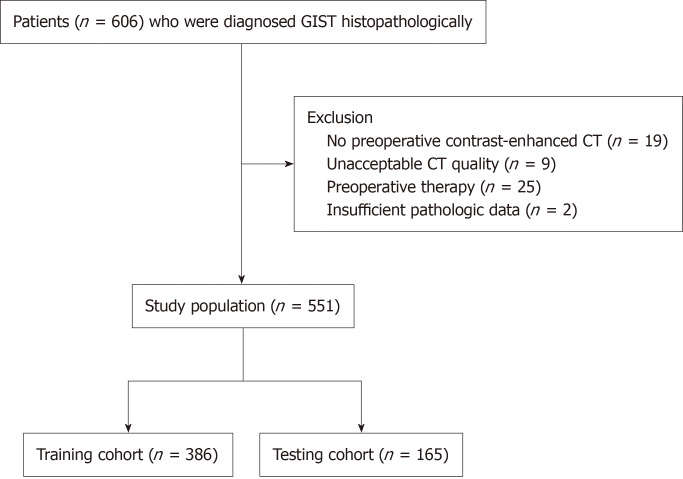
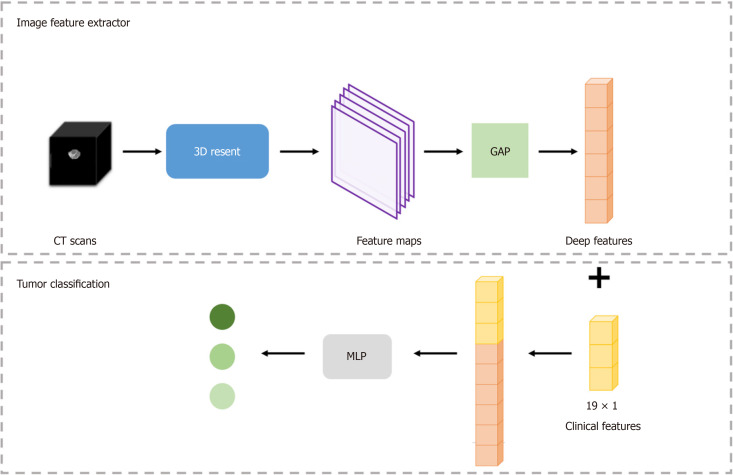
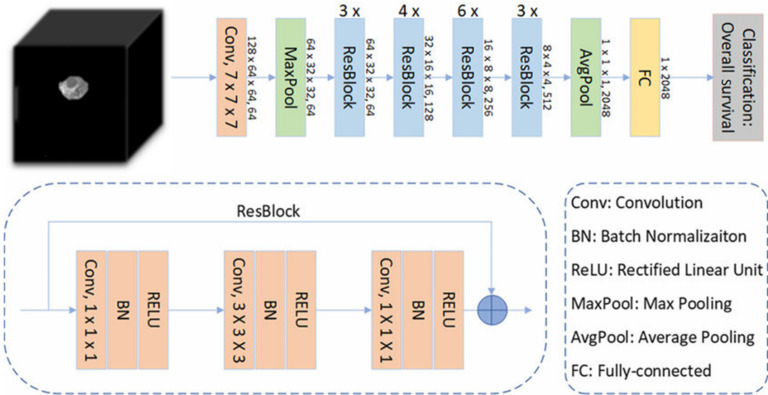
Preoperative contrast-enhanced computed tomography (CECT) images of 551 GIST patients were retrospectively analyzed. All image features were independently analyzed by two radiologists. Quantitative parameters were statistically analyzed to identify significant predictors of high-risk malignancy. Patients were randomly assigned to the training ( = 386) and validation cohorts ( = 165). A DLM and a combined DLM were established for predicting the GIST risk stratification using convolutional neural network and subsequently evaluated in the validation cohort.
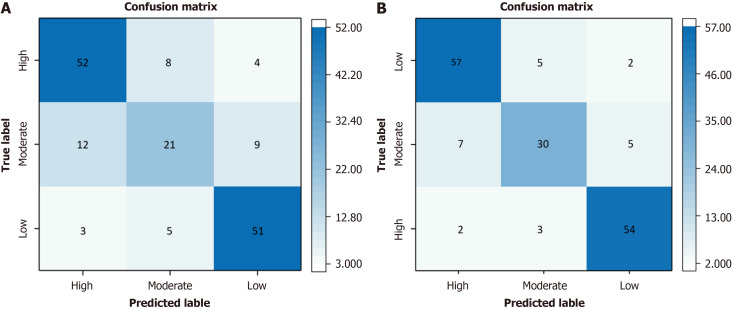
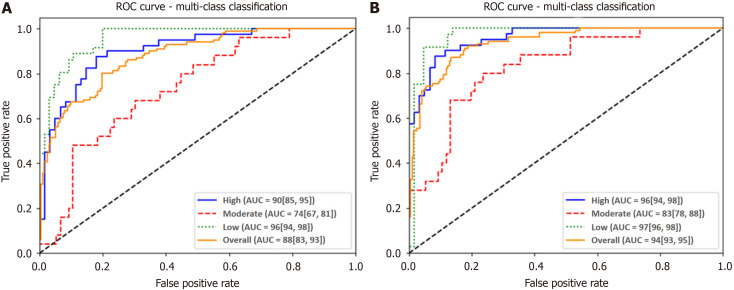
Among the analyzed CECT image features, tumor size, ulceration, and enlarged feeding vessels were identified as significant risk predictors ( < 0.05). In DLM, the overall area under the receiver operating characteristic curve (AUROC) was 0.88, with the accuracy (ACC) and AUROCs for each stratification being 87% and 0.96 for low-risk, 79% and 0.74 for intermediate-risk, and 84% and 0.90 for high-risk, respectively. The overall ACC and AUROC were 84% and 0.94 in the combined model. The ACC and AUROCs for each risk stratification were 92% and 0.97 for low-risk, 87% and 0.83 for intermediate-risk, and 90% and 0.96 for high-risk, respectively. Differences in AUROCs for each risk stratification between the two models were significant ( < 0.05).
A combined DLM with satisfactory performance for preoperatively predicting GIST stratifications was developed using routine computed tomography data, demonstrating superiority compared to DLM.
胃肠道间质瘤(GIST)是起源于胃肠道间充质的常见肿瘤。约50%的GIST患者在5年内会出现肿瘤复发。因此,术前准确评估风险分层迫在眉睫。
评估深度学习模型(DLM)结合计算机断层扫描特征在预测GIST风险分层中的应用。
回顾性分析551例GIST患者的术前增强计算机断层扫描(CECT)图像。所有图像特征由两名放射科医生独立分析。对定量参数进行统计分析,以确定高危恶性肿瘤的显著预测因素。患者被随机分配到训练组(n = 386)和验证组(n = 165)。使用卷积神经网络建立DLM和联合DLM来预测GIST风险分层,随后在验证组中进行评估。
在分析的CECT图像特征中,肿瘤大小、溃疡和供血血管增粗被确定为显著的风险预测因素(P < 0.05)。在DLM中,受试者操作特征曲线(AUROC)下的总面积为0.88,各分层的准确率(ACC)和AUROC分别为:低风险为87%和0.96,中风险为79%和0.74,高风险为84%和0.90。联合模型的总体ACC和AUROC分别为84%和0.94。各风险分层的ACC和AUROC分别为:低风险为92%和0.97,中风险为87%和0.83,高风险为90%和0.96。两种模型各风险分层的AUROC差异有统计学意义(P < 0.05)。
利用常规计算机断层扫描数据开发了一种术前预测GIST分层性能良好的联合DLM,与DLM相比具有优越性。