Ragni Flavio, Bovo Stefano, Zen Andrea, Sona Diego, De Nadai Katia, Adamo Ginevra Giovanna, Pellegrini Marco, Nasini Francesco, Vivarelli Chiara, Tavolato Marco, Mura Marco, Parmeggiani Francesco, Jurman Giuseppe
Data Science for Health Unit, Fondazione Bruno Kessler, 38123 Trento, Italy.
Department of Translational Medicine and for Romagna, University of Ferrara, 44121 Ferrara, Italy.
Diagnostics (Basel). 2024 Nov 21;14(23):2609. doi: 10.3390/diagnostics14232609.
BACKGROUND/OBJECTIVES: Neovascular age-related macular degeneration (nAMD) is a retinal disorder leading to irreversible central vision loss. The pro-re-nata (PRN) treatment for nAMD involves frequent intravitreal injections of anti-VEGF medications, placing a burden on patients and healthcare systems. Predicting injections needs at each monitoring session could optimize treatment outcomes and reduce unnecessary interventions.
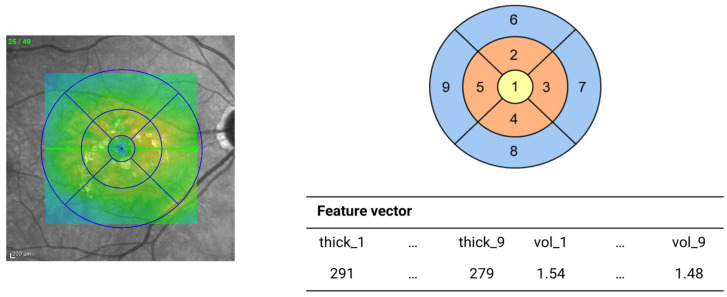
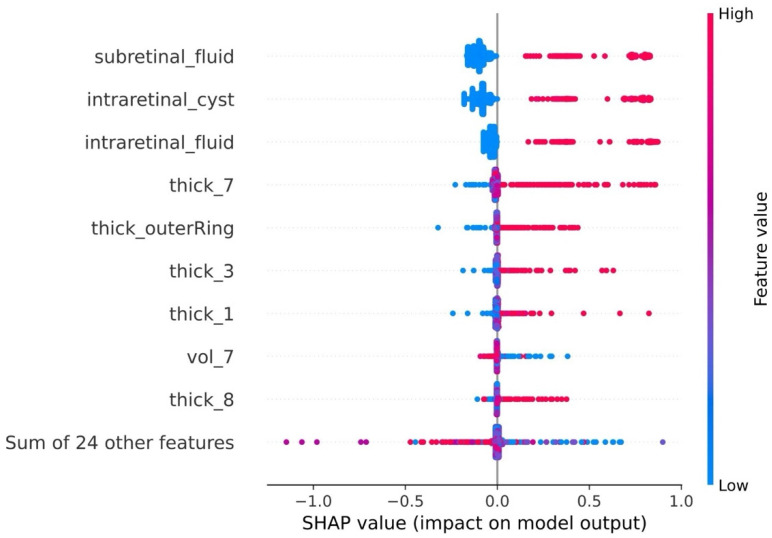
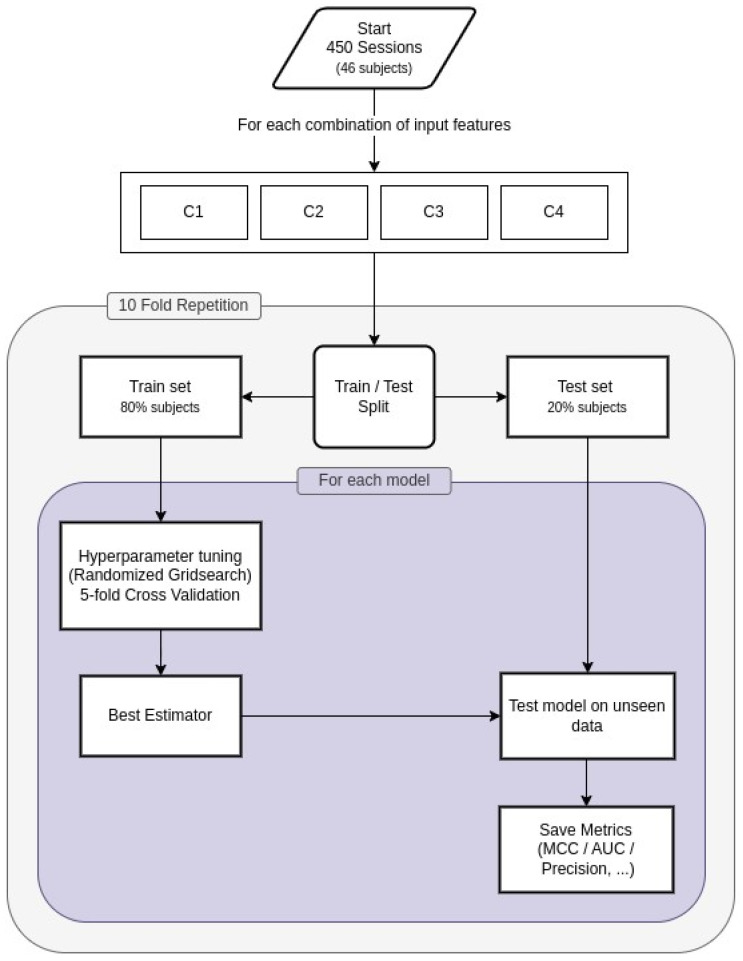
To achieve these aims, machine learning (ML) models were evaluated using different combinations of clinical variables, including retinal thickness and volume, best-corrected visual acuity, and features derived from macular optical coherence tomography (OCT). A "Leave Some Subjects Out" (LSSO) nested cross-validation approach ensured robust evaluation. Moreover, the SHapley Additive exPlanations (SHAP) analysis was employed to quantify the contribution of each feature to model predictions.
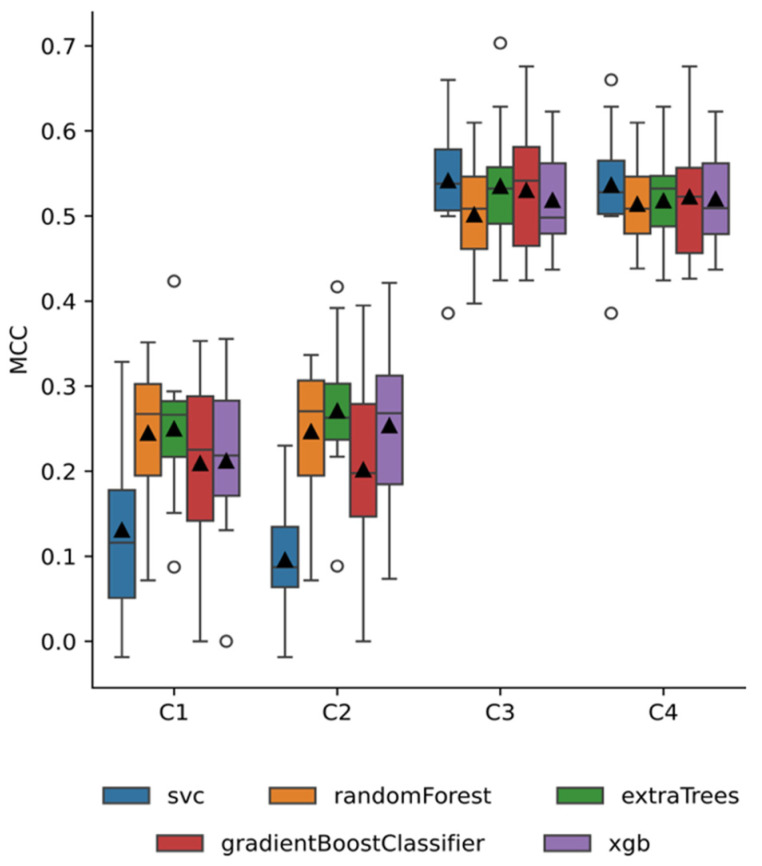
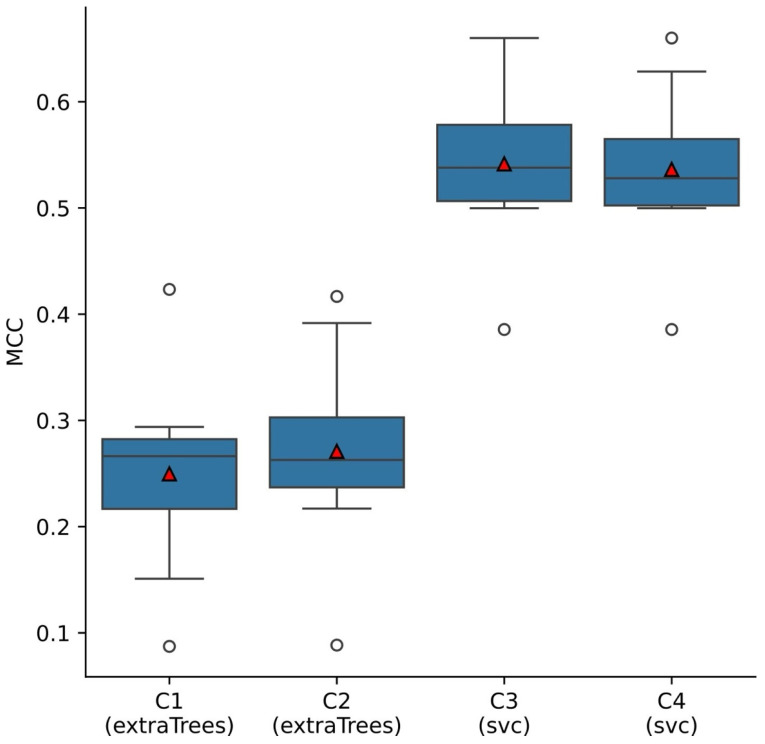
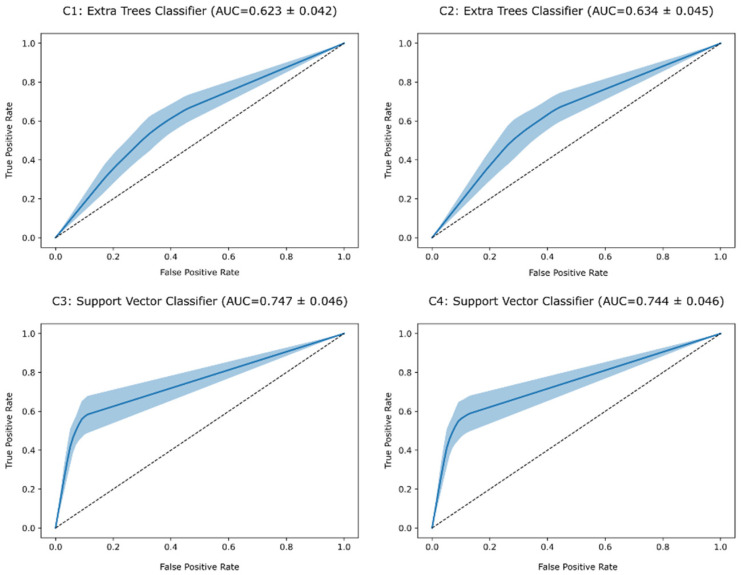
Results demonstrated that models incorporating both structural and functional features achieved high classification accuracy in predicting injection necessity (AUC = 0.747 ± 0.046, MCC = 0.541 ± 0.073). Moreover, the explainability analysis identified as key predictors both subretinal and intraretinal fluid, alongside central retinal thickness.
These findings suggest that session-by-session prediction of injection needs in nAMD patients is feasible, even without processing the entire OCT image. The proposed ML framework has the potential to be integrated into routine clinical workflows, thereby optimizing nAMD therapeutic management.
背景/目的:新生血管性年龄相关性黄斑变性(nAMD)是一种导致不可逆的中心视力丧失的视网膜疾病。nAMD的按需(PRN)治疗需要频繁玻璃体内注射抗VEGF药物,给患者和医疗系统带来负担。预测每次监测时的注射需求可以优化治疗效果并减少不必要的干预。
为实现这些目标,使用包括视网膜厚度和体积、最佳矫正视力以及黄斑光学相干断层扫描(OCT)衍生特征在内的临床变量的不同组合对机器学习(ML)模型进行评估。一种“留出部分受试者”(LSSO)嵌套交叉验证方法确保了稳健的评估。此外,采用SHapley加性解释(SHAP)分析来量化每个特征对模型预测的贡献。
结果表明,结合结构和功能特征的模型在预测注射必要性方面达到了较高的分类准确率(AUC = 0.747 ± 0.046,MCC = 0.541 ± 0.073)。此外,可解释性分析确定视网膜下液和视网膜内液以及中央视网膜厚度是关键预测因素。
这些发现表明,即使不处理整个OCT图像,逐次预测nAMD患者的注射需求也是可行的。所提出的ML框架有可能整合到常规临床工作流程中,从而优化nAMD的治疗管理。