Saponaro Federica, Bertolini Andrea, Baragatti Riccardo, Galfo Leonardo, Chiellini Grazia, Saba Alessandro, D'Urso Giuseppina
Department of Surgical, Medical and Molecular Pathology and Critical Care Medicine, University of Pisa, Via Roma 56, 56126 Pisa, Italy.
Nutrients. 2024 Nov 25;16(23):4032. doi: 10.3390/nu16234032.
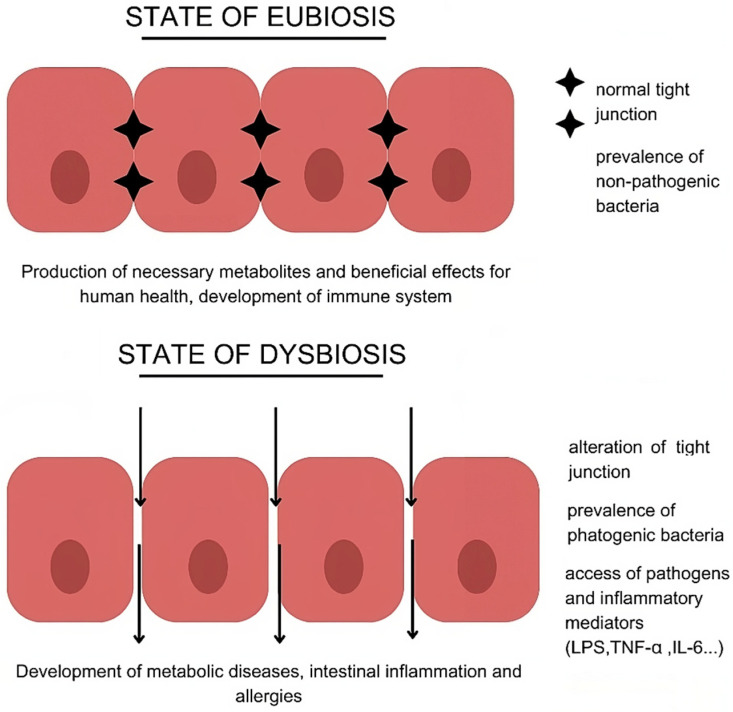
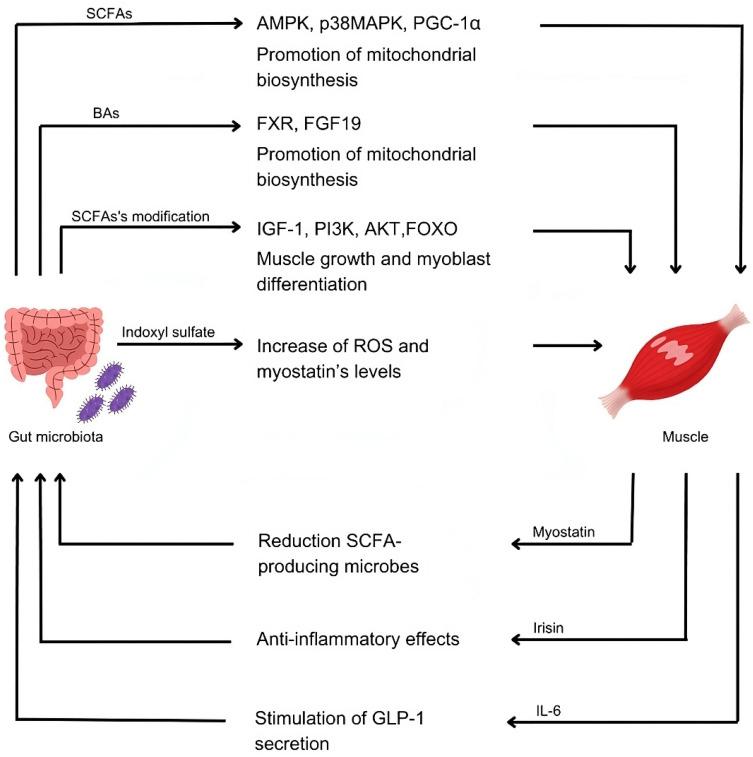
This review explores the dual role of skeletal muscle as both a mechanical and endocrine organ, highlighting its contributions to overall health and its adaptability to various inputs such as nutrition, hormones, exercise, and injuries. In addition to its role in metabolism and energy conversion, skeletal muscle secretes signalling molecules called myokines (at rest) and exerkines (during/after physical exercise), which communicate with other organs like the brain, the cardiovascular system, and the immune system. Key molecules such as interleukins, irisin, and myostatin are discussed for their roles in mediating muscle health and inter-organ communication. This work also focuses on the muscle-gut axis, emphasising the bidirectional interaction between skeletal muscle and the gut microbiota, a complex ecosystem influencing immune defence, digestion, and metabolism. Muscle activity, particularly exercise, alters the gut microbial composition, promoting beneficial species, while gut-derived metabolites like short-chain fatty acids (SCFAs) impact muscle metabolism, mitochondrial function, and insulin sensitivity. Dysbiosis, or an imbalanced microbiota, can lead to muscle atrophy, inflammation, and metabolic dysfunction. This evidence highlights emerging research into myokines and exerkines as potential therapeutic targets for managing conditions like muscle decline, ageing, and metabolic diseases through muscle-gut interactions.
本综述探讨了骨骼肌作为机械器官和内分泌器官的双重作用,强调了其对整体健康的贡献以及对营养、激素、运动和损伤等各种输入的适应性。除了在新陈代谢和能量转换中的作用外,骨骼肌还分泌称为肌动蛋白(静息时)和运动因子(运动期间/运动后)的信号分子,这些分子与大脑、心血管系统和免疫系统等其他器官进行交流。文中讨论了白细胞介素、鸢尾素和肌肉生长抑制素等关键分子在调节肌肉健康和器官间通讯中的作用。这项工作还聚焦于肌肉-肠道轴,强调骨骼肌与肠道微生物群之间的双向相互作用,肠道微生物群是一个影响免疫防御、消化和新陈代谢的复杂生态系统。肌肉活动,特别是运动,会改变肠道微生物组成,促进有益菌种的生长,而肠道衍生的代谢产物如短链脂肪酸(SCFAs)会影响肌肉代谢、线粒体功能和胰岛素敏感性。生态失调,即微生物群失衡,可导致肌肉萎缩、炎症和代谢功能障碍。这一证据凸显了对肌动蛋白和运动因子的新研究,它们有望成为通过肌肉-肠道相互作用来管理肌肉衰退、衰老和代谢疾病等病症的潜在治疗靶点。