Hsu Ting-Jui, Hsieh Rong-Hong, Huang Chin-Huan, Chen Chih-Shou, Lin Wei-Yu, Huang Yun-Ching, Lin Jian-Hui, Huang Kuo-Tsai, Liu Yu-Liang, Tsai Hui-Ming, Ho Dong-Ru
Division of Urology, Department of Surgery, Chang Gung Memorial Hospital, Chiayi 61363, Taiwan.
School of Nutrition and Health Sciences, College of Nutrition, Taipei Medical University, Taipei 11031, Taiwan.
Nutrients. 2024 Nov 28;16(23):4116. doi: 10.3390/nu16234116.
BACKGROUND/OBJECTIVES: Primary dysmenorrhea (PD) is a common condition affecting up to 90% of menstruating women, which often results in significant pain without an underlying pathology. Zinc, recognized for its anti-inflammatory and antioxidant effects through inhibiting prostaglandin production and superoxide dismutase 1 (SOD1) upregulation, alleviates menstrual pain by preventing uterine spasms and enhancing microcirculation in the endometrium, suggesting its potential as an alternative treatment for primary dysmenorrhea. The goal of this systematic review and meta-analysis was to assess the efficacy and safety of zinc supplementation in reducing pain severity among women with PD and to explore the influence of dosage and treatment duration.
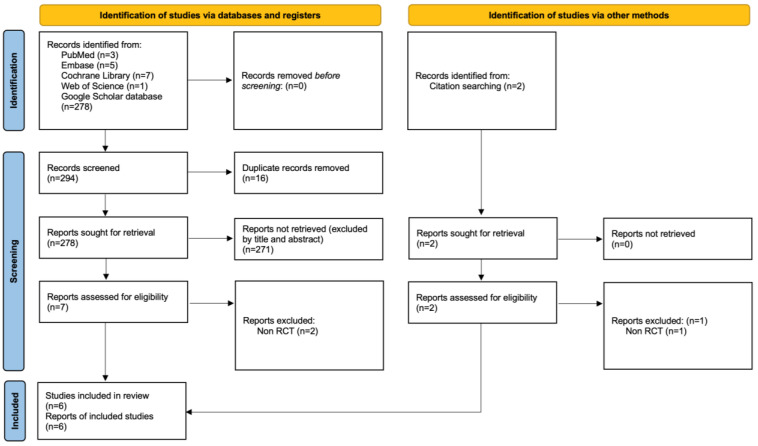
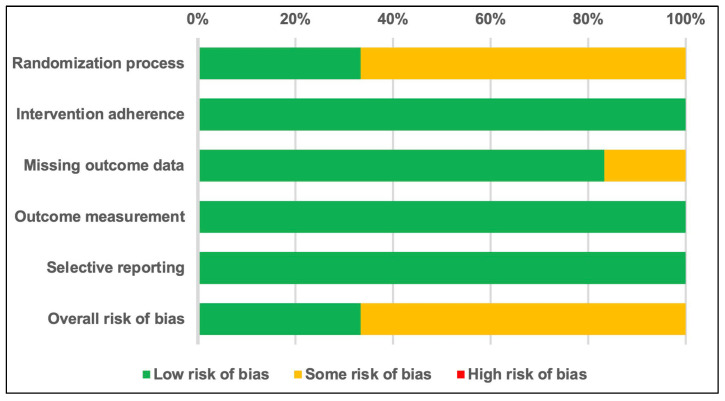
Following the PRISMA 2020 guidelines, we conducted an extensive search across databases such as PubMed, Embase, Cochrane Library, Web of Science, and Google Scholar, up to May 2024. Randomized controlled trials assessing the effects of zinc supplementation on pain severity in women with PD were included. Pain severity was evaluated with established tools, such as the Visual Analog Scale (VAS). Risk of bias was assessed using the Cochrane Risk of Bias 2 (RoB2) tool. Two reviewers independently performed the data extraction, and a random-effects model was used for meta-analysis. Meta-regressions were conducted to examine the influence of zinc dosage and treatment duration on pain reduction. Adverse events were also analyzed.
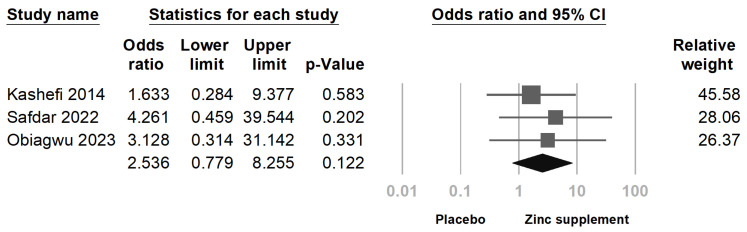
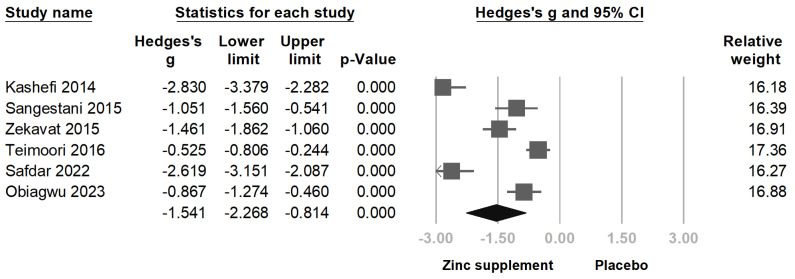
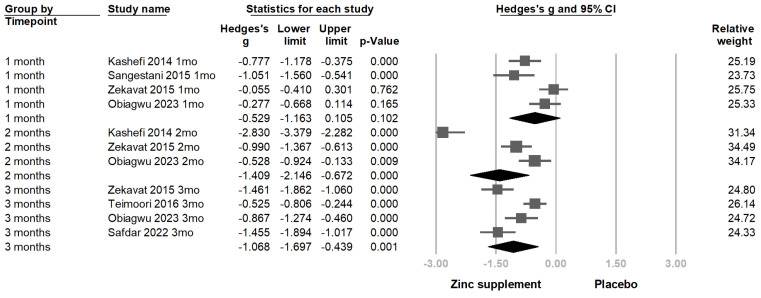
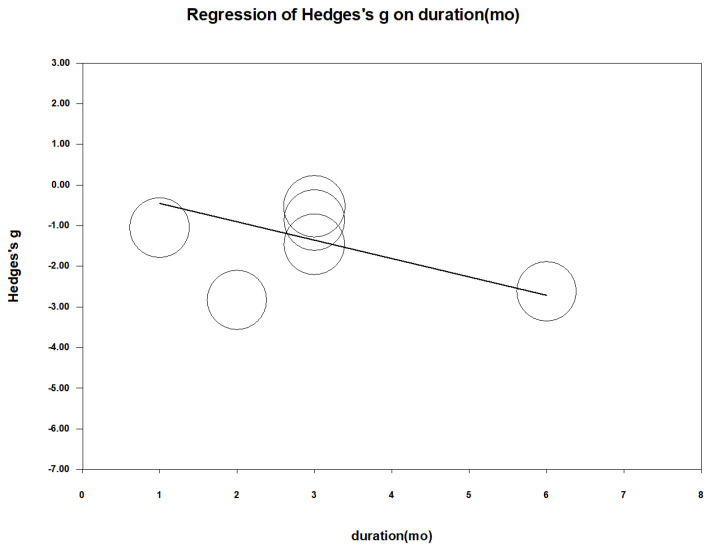
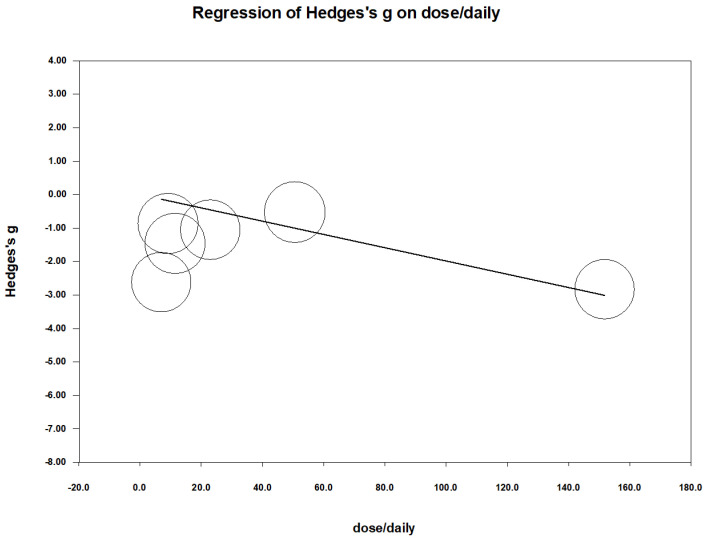
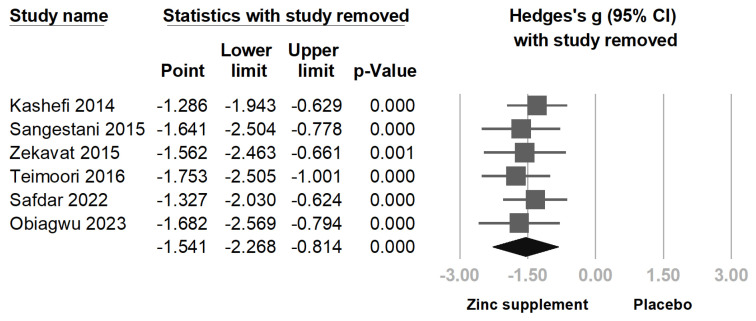
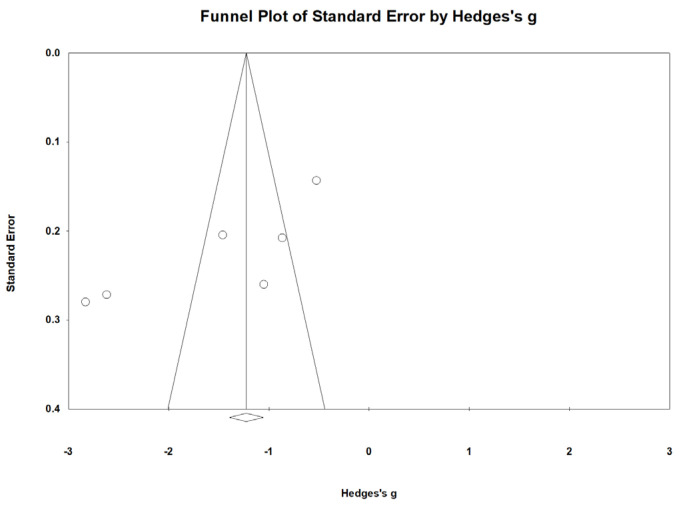
Six RCTs involving 739 participants met the inclusion criteria. Zinc supplementation significantly reduced pain severity compared to placebo (Hedges's g = -1.541; 95% CI: -2.268 to -0.814; < 0.001), representing a clinically meaningful reduction in pain. Meta-regression indicated that longer treatment durations (≥8 weeks) were associated with greater pain reduction ( = 0.003). While higher zinc doses provided additional pain relief, the incremental benefit per additional milligram was modest (regression coefficient = -0.02 per mg; = 0.005). Adverse event rates did not differ significantly between the zinc and placebo groups (odds ratio = 2.54; 95% CI: 0.78 to 8.26; = 0.122), suggesting good tolerability.
Zinc supplementation is an effective and well-tolerated option for reducing pain severity in women with primary dysmenorrhea. Doses as low as 7 mg/day of elemental zinc are sufficient to achieve significant pain relief, with longer durations (≥8 weeks) enhancing efficacy. The favorable safety profile and ease of use support the consideration of zinc supplementation as a practical approach to managing primary dysmenorrhea.
背景/目的:原发性痛经(PD)是一种常见病症,影响多达90%的经期女性,通常会导致严重疼痛且无潜在病理原因。锌因其通过抑制前列腺素生成和上调超氧化物歧化酶1(SOD1)而具有抗炎和抗氧化作用,可通过预防子宫痉挛和增强子宫内膜微循环来缓解痛经,这表明其有潜力作为原发性痛经的替代治疗方法。本系统评价和荟萃分析的目的是评估补充锌对减轻PD女性疼痛严重程度的疗效和安全性,并探讨剂量和治疗持续时间的影响。
按照PRISMA 2020指南,我们对截至2024年5月的PubMed、Embase、Cochrane图书馆、科学网和谷歌学术等数据库进行了广泛检索。纳入评估补充锌对PD女性疼痛严重程度影响的随机对照试验。使用视觉模拟量表(VAS)等既定工具评估疼痛严重程度。使用Cochrane偏倚风险2(RoB2)工具评估偏倚风险。两名研究者独立进行数据提取,并使用随机效应模型进行荟萃分析。进行荟萃回归以检验锌剂量和治疗持续时间对疼痛减轻的影响。还分析了不良事件。
六项涉及739名参与者的随机对照试验符合纳入标准。与安慰剂相比,补充锌显著降低了疼痛严重程度(Hedges's g = -1.541;95%置信区间:-2.268至-0.814;P < 0.001),这代表着疼痛在临床上有意义的减轻。荟萃回归表明较长的治疗持续时间(≥8周)与更大程度的疼痛减轻相关(P = 0.003)。虽然较高的锌剂量可提供额外的疼痛缓解,但每增加一毫克的增量益处不大(回归系数 = -0.02/毫克;P = 0.005)。锌组和安慰剂组的不良事件发生率无显著差异(优势比 = 2.54;95%置信区间:0.78至8.26;P = 0.122),表明耐受性良好。
补充锌是减轻原发性痛经女性疼痛严重程度的一种有效且耐受性良好的选择。低至每天7毫克元素锌的剂量足以实现显著的疼痛缓解,较长的治疗持续时间(≥8周)可增强疗效。良好的安全性和易用性支持将补充锌视为管理原发性痛经的一种实用方法。