Wang Ze-Yu, Cho Ji Young, Hong Yi-Kyung
Department of Housing & Interior Design (AgeTech-Service Convergence Major), Kyung Hee University, Seoul 02447, Republic of Korea.
Sensors (Basel). 2024 Dec 8;24(23):7838. doi: 10.3390/s24237838.
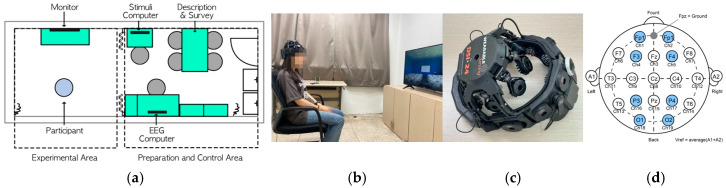
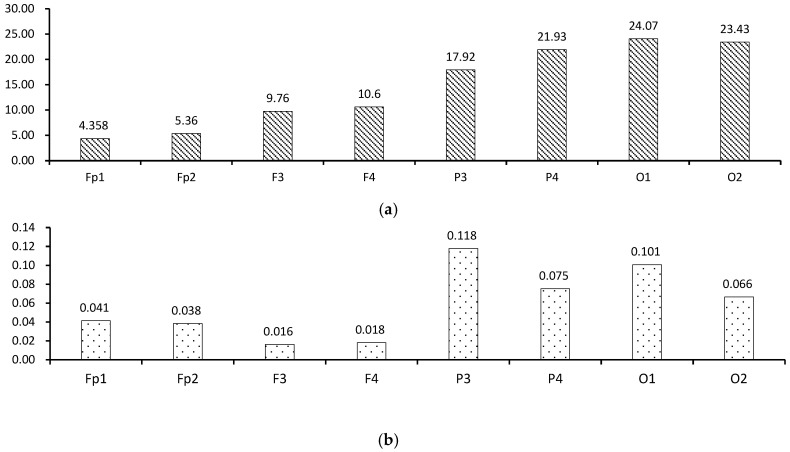
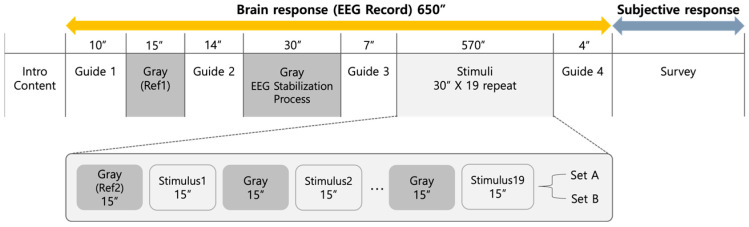
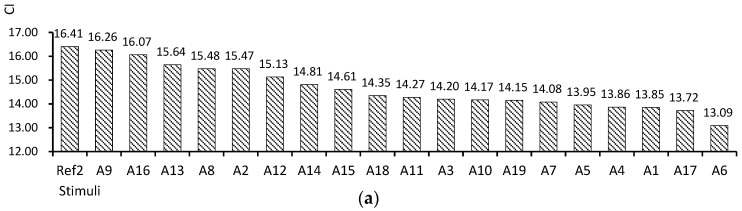
Electroencephalograms (EEGs) can be used to study the influence of environmental elements on human emotions, cognition, and behavior. EEGs can reveal unconscious responses and fill in the gaps left by subjective responses provided in survey questionnaires or interviews. EEG research on the impact of classroom design elements on concentration and creativity is scarce; the design elements studied have not been diverse enough. In addition, no researchers have examined the brain and subjective responses to multiple indoor environmental elements regarding concentration and creativity. Thus, the purpose of this study was to explore how the human brain responds to different indoor environmental elements as shown by objective EEG signals related to concentration and creativity, and their similarities and differences to subjective self-reported responses. The experimental stimuli included 16 images combining four indoor environmental elements-classroom space shape, furniture arrangement, ceiling height, and color-along with images of white walls, a full-window wall with a view of nature, and a windowless scenario, totaling 19 images. The brainwaves of 20 people collected from eight channels were analyzed to determine the concentration index (CI) for concentration and relative theta (RT) for creativity. As a subjective response, participants were asked to choose the stimuli in which they felt they could best concentrate and be most creative in a self-report format. The results showed the following tendencies: (a) More brainwaves in the parietal and occipital lobes than in the prefrontal or frontal lobes; (b) a higher CI with rectilinear shapes, traditional frontal furniture arrangements, and red walls; (c) a higher RT with curvilinear shapes, collaborative furniture arrangements, white walls, and a full view of nature; and (d) participants selected white walls and a front-facing furniture layout as supportive of concentration and a full view of nature, curvilinear shape, and collaborative furniture layout for creative thinking. The results showed that similarities in brain and subjective responses were related to furniture layout and shape, whereas differences existed in color. This study contributes to the understanding of the characteristics of indoor environments that appear to enhance the manifestation of concentration and creativity.
脑电图(EEGs)可用于研究环境因素对人类情绪、认知和行为的影响。脑电图能够揭示无意识反应,并填补调查问卷或访谈中主观反应所留下的空白。关于教室设计元素对注意力和创造力影响的脑电图研究很少;所研究的设计元素不够多样化。此外,没有研究人员考察过大脑对多种室内环境因素在注意力和创造力方面的反应以及主观反应。因此,本研究的目的是探讨人类大脑如何通过与注意力和创造力相关的客观脑电信号来对不同的室内环境因素做出反应,以及这些反应与主观自我报告反应的异同。实验刺激包括16张图像,这些图像将四种室内环境元素——教室空间形状、家具布置、天花板高度和颜色——与白色墙壁、能看到自然景色的整面墙窗户以及无窗场景的图像相结合,总共19张图像。分析了从20人身上八个通道采集的脑电波,以确定注意力的注意力指数(CI)和创造力的相对θ波(RT)。作为主观反应,参与者被要求以自我报告的形式选择他们认为最能集中注意力和最具创造力的刺激。结果显示出以下趋势:(a)顶叶和枕叶的脑电波比前额叶或额叶更多;(b)直线形状、传统的前排家具布置和红色墙壁的注意力指数较高;(c)曲线形状、协作式家具布置、白色墙壁和自然全景的相对θ波较高;(d)参与者选择白色墙壁和前排家具布局有助于集中注意力,而自然全景、曲线形状和协作式家具布局有助于创造性思维。结果表明,大脑反应和主观反应的相似之处与家具布局和形状有关,而在颜色方面存在差异。本研究有助于理解似乎能增强注意力和创造力表现的室内环境特征。