Santarpia Joshua L, Lau Josephine, Shom Debayan, Ratnesar-Shumate Shanna A, Carnes Eric C, Santarpia George W, Herrera Vicki L, Rivera Danielle N, Ackerman Daniel N, Ravnholdt Ashley R, Lowe John J, Ramos Athena K
Department of Pathology, Microbiology and Immunology, College of Medicine, University of Nebraska Medical Center, Omaha, Nebraska, United States of America.
Global Center for Health Security, University of Nebraska Medical Center, Omaha, Nebraska, United States of America.
PLoS One. 2024 Dec 17;19(12):e0314856. doi: 10.1371/journal.pone.0314856. eCollection 2024.
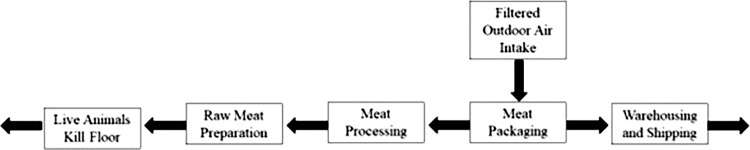
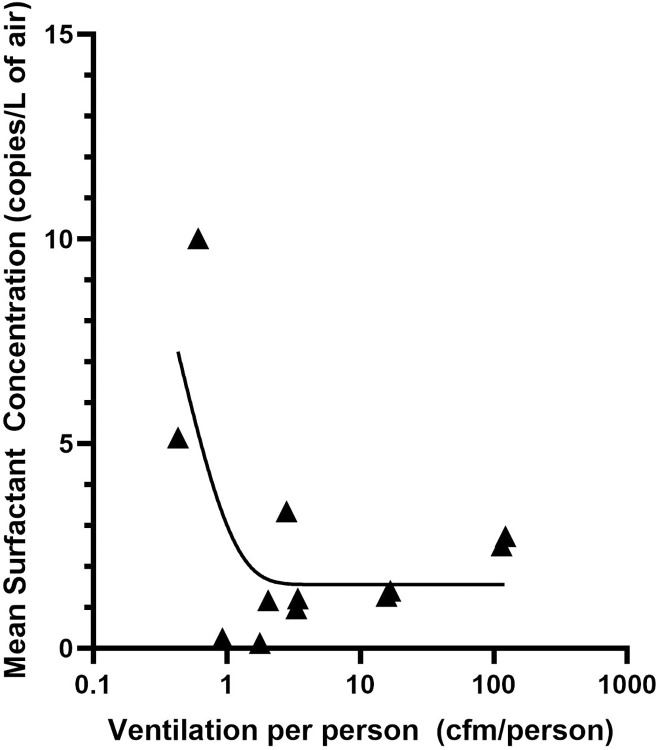
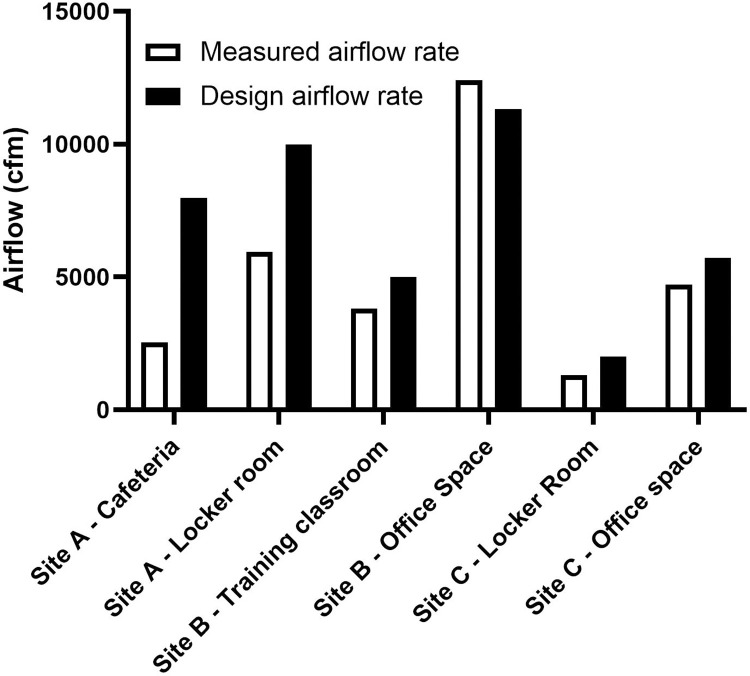
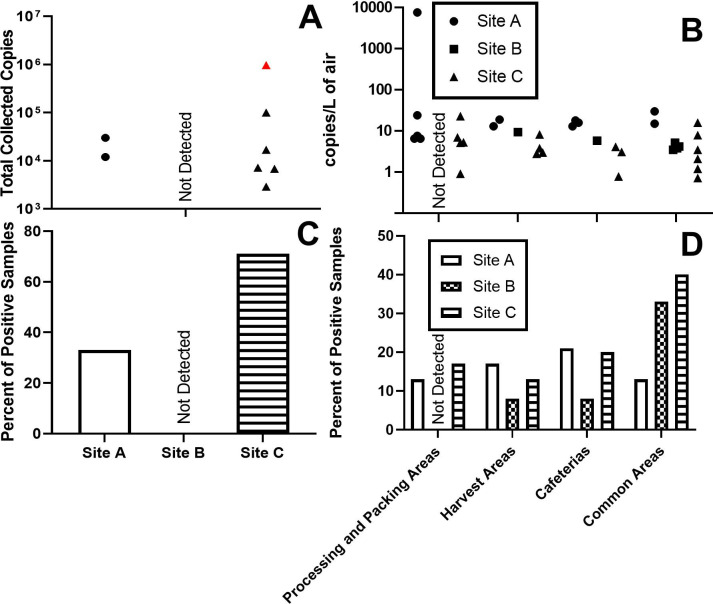
During the COVID-19 pandemic, meatpacking workers were disproportionately affected by disease. Large outbreaks at meatpacking facilities resulted in loss of life and threatened the well-being of workers across the globe. Much work was done throughout the pandemic to understand and prevent these outbreaks. This study combined ventilation system evaluation and measurement of human-generated respiratory aerosol to investigate and identify areas of highest risk for disease transmission. These findings confirm that improved ventilation reduces exposure to human-generated aerosols in meatpacking facilities, including those that may contain infectious agents, such as SARS-CoV-2. This study suggests areas of greatest risk are likely areas where workers break from work, such as cafeterias and locker rooms, where ventilation is poorer, use of face masks is reduced, and people congregate. Furthermore, these findings also suggest that ventilation of production areas of the plant, which have been designed for food safety, is sufficient to reduce exposures and likely contributes to reduced transmission in those spaces. Based on these findings, two controls should be prioritized to minimize the likelihood of exposure to potentially infectious aerosols: (1) improving mechanical ventilation and/or adding mitigation strategies such as media filters, germicidal ultraviolet, and other air cleaning technology and (2) applying administrative practices that minimize large congregations of people in poorly ventilated spaces. Importantly, this work demonstrates a method for in situ measurements of human-generated particles that can be used more broadly to understand exposure and risk in various occupied spaces.
在新冠疫情期间,肉类加工工人受到疾病的影响尤为严重。肉类加工设施中的大规模疫情导致了人员死亡,并威胁到全球工人的健康。在整个疫情期间,人们开展了大量工作来了解和预防这些疫情。本研究结合通风系统评估和对人为产生的呼吸道气溶胶的测量,以调查和确定疾病传播风险最高的区域。这些研究结果证实,改善通风可减少肉类加工设施中暴露于人为产生的气溶胶的情况,包括那些可能含有传染性病原体(如新冠病毒)的气溶胶。本研究表明,风险最大的区域可能是工人休息的地方,如通风较差、减少使用口罩且人员聚集的食堂和更衣室。此外,这些研究结果还表明,工厂中为食品安全而设计的生产区域的通风足以减少暴露,并可能有助于减少这些空间内的传播。基于这些研究结果,应优先采取两项控制措施,以尽量减少暴露于潜在传染性气溶胶的可能性:(1)改善机械通风和/或增加缓解策略,如介质过滤器、杀菌紫外线和其他空气净化技术;(2)采用行政措施,尽量减少人员在通风不良空间的大量聚集。重要的是,这项工作展示了一种用于现场测量人为产生颗粒的方法,该方法可更广泛地用于了解各种占用空间中的暴露情况和风险。