Bloise Silvia, Cocchi Enrico, Mambelli Lorenzo, Radice Caterina, Marchetti Federico
Department of Pediatrics, Santa Maria delle Croci Hospital, AUSL della Romagna, Viale Vincenzo Randi, 5, Ravenna, Ravenna, 48121, RA, Italy.
Neonatal Intensive Care Unit, AUSL Romagna, Ravenna, Italy.
Ital J Pediatr. 2024 Dec 18;50(1):261. doi: 10.1186/s13052-024-01831-6.
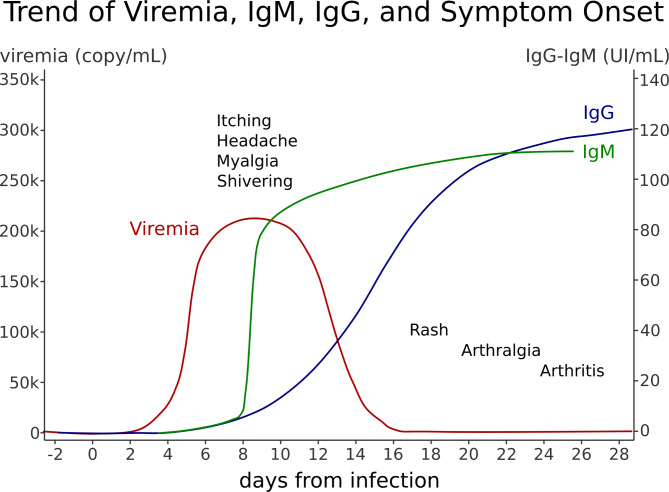
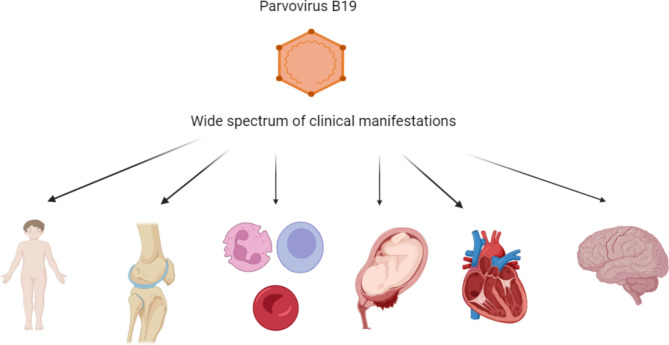
Parvovirus B19 (B19V) is a significant pathogen responsible for a wide range of clinical manifestations, particularly in children and pregnant women. While B19V is most commonly recognized as the cause of Fifth disease, a mild erythematous illness in children, its clinical impact extends far beyond this condition. B19V can lead to severe complications, including transient aplastic crisis in individuals with chronic hemolytic anemias, arthralgia, and more severe joint diseases. During pregnancy, B19V infection poses serious risks, such as spontaneous abortion, non-immune hydrops fetalis, and fetal anemia, particularly when infection occurs between 9 and 20 weeks of gestation. Moreover, B19V is associated with a variety of organ system involvements, including cardiac, neurological, hepatic, and renal complications. These manifestations can range from mild to life-threatening, necessitating a broad spectrum of therapeutic approaches, including symptomatic care, immunoglobulins, corticosteroids, and supportive therapies. Despite the significant clinical burden posed by B19V, no specific antiviral treatment or vaccine is currently available, making early recognition and prompt management crucial for improving patient outcomes. This review provides a comprehensive overview of the diverse clinical presentations of B19V infection, with a focus on pediatric and pregnancy-related complications. It underscores the need for ongoing research into targeted therapies and highlights the importance of vigilant clinical management to mitigate the severe consequences of this pervasive virus.
细小病毒B19(B19V)是一种重要的病原体,可导致多种临床表现,尤其是在儿童和孕妇中。虽然B19V最常被认为是儿童轻度红斑性疾病——第五病的病因,但其临床影响远不止于此。B19V可导致严重并发症,包括慢性溶血性贫血患者的暂时性再生障碍危象、关节痛以及更严重的关节疾病。在怀孕期间,B19V感染会带来严重风险,如自然流产、胎儿非免疫性水肿和胎儿贫血,尤其是在妊娠9至20周之间发生感染时。此外,B19V与多种器官系统受累有关,包括心脏、神经、肝脏和肾脏并发症。这些表现从轻度到危及生命不等,需要广泛的治疗方法,包括对症治疗、免疫球蛋白、皮质类固醇和支持性治疗。尽管B19V带来了巨大的临床负担,但目前尚无特异性抗病毒治疗方法或疫苗,因此早期识别和及时处理对于改善患者预后至关重要。本综述全面概述了B19V感染的各种临床表现,重点关注儿科和与妊娠相关的并发症。它强调了对靶向治疗进行持续研究的必要性,并突出了警惕临床管理以减轻这种普遍存在的病毒的严重后果的重要性。