Pelzl Lisann, Mantino Sabrina, Sauter Martina, Manuylova Tatiana, Vogel Ulrich, Klingel Karin
Cardiopathology, Institute for Pathology and Neuropathology, University Hospital of Tuebingen, 72076 Tuebingen, Germany.
Biomedicines. 2024 Aug 20;12(8):1909. doi: 10.3390/biomedicines12081909.
This study aims to evaluate the role of parvovirus B19 (B19V) in the pathogenesis of myocarditis in a paediatric population, including post-mortem samples from two children.
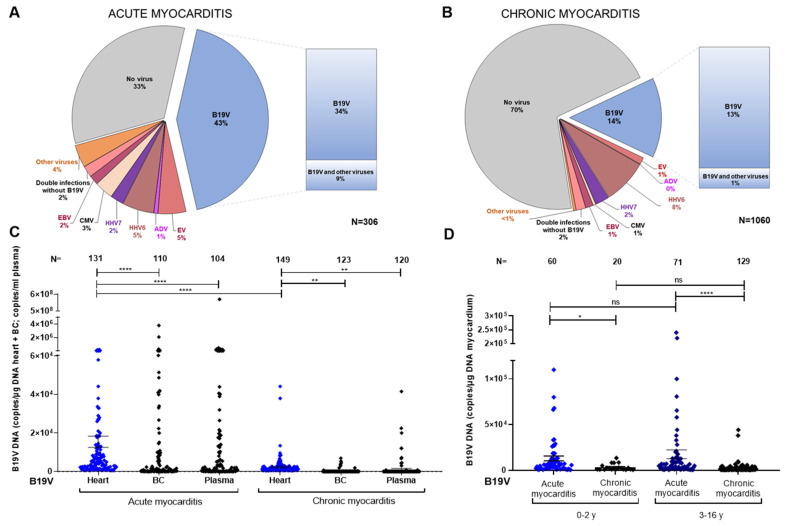
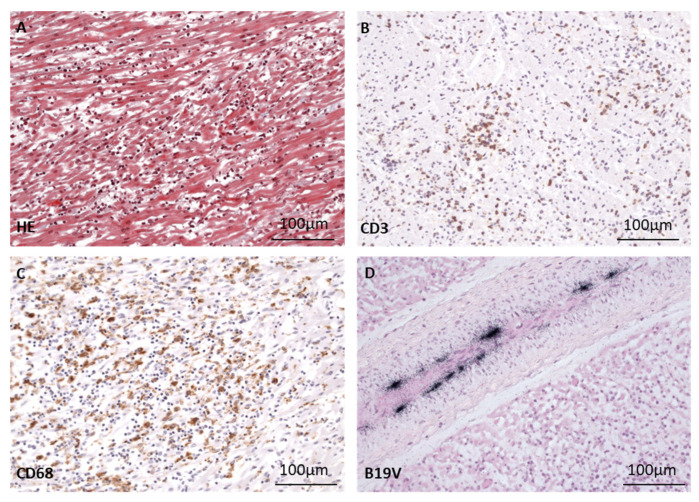
From 2004 to 2023, endomyocardial biopsies (EMBs) from children under 16 years of age were analyzed using histology, immunohistochemistry, and molecular pathology. A total of 306 children with acute and 1060 children with chronic lymphocytic myocarditis were identified.
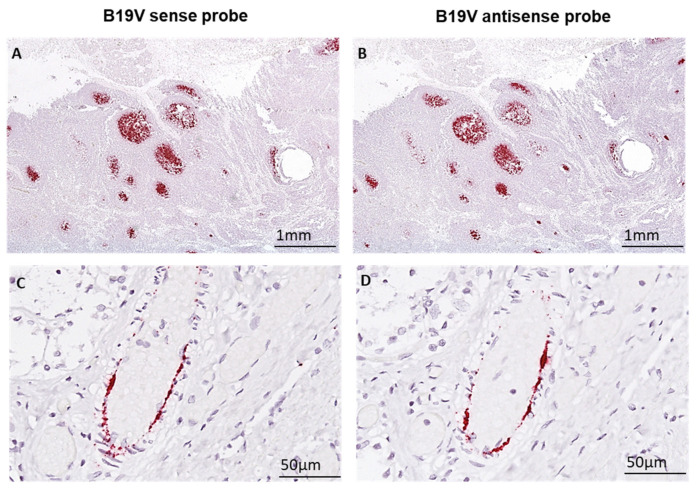
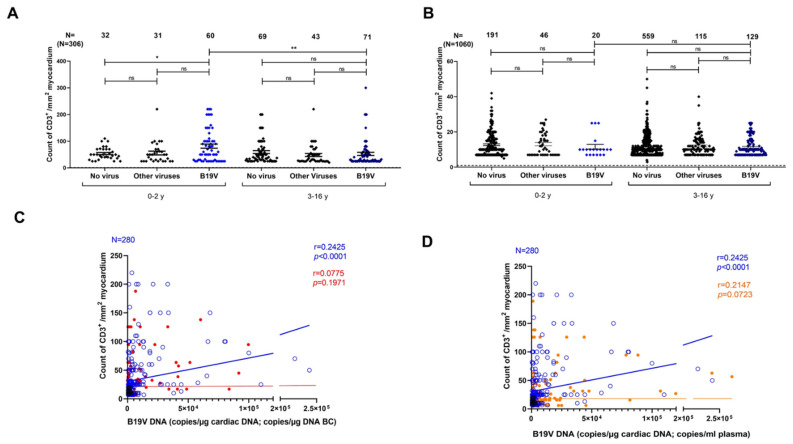
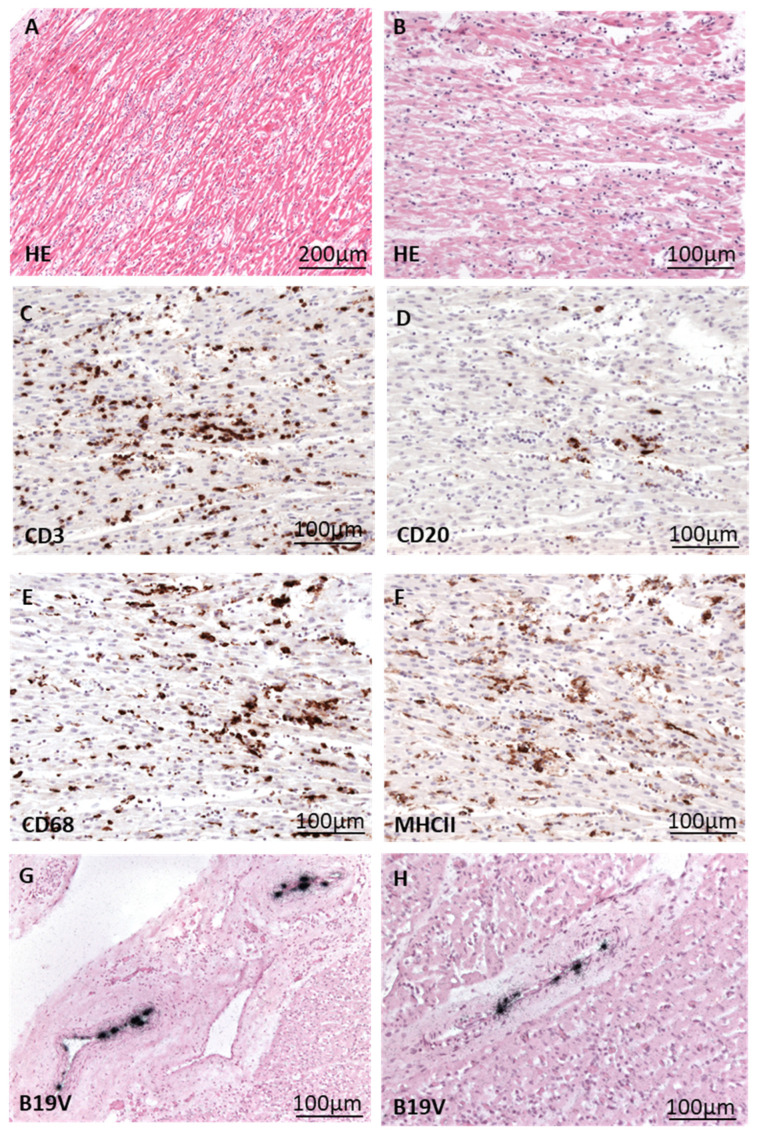
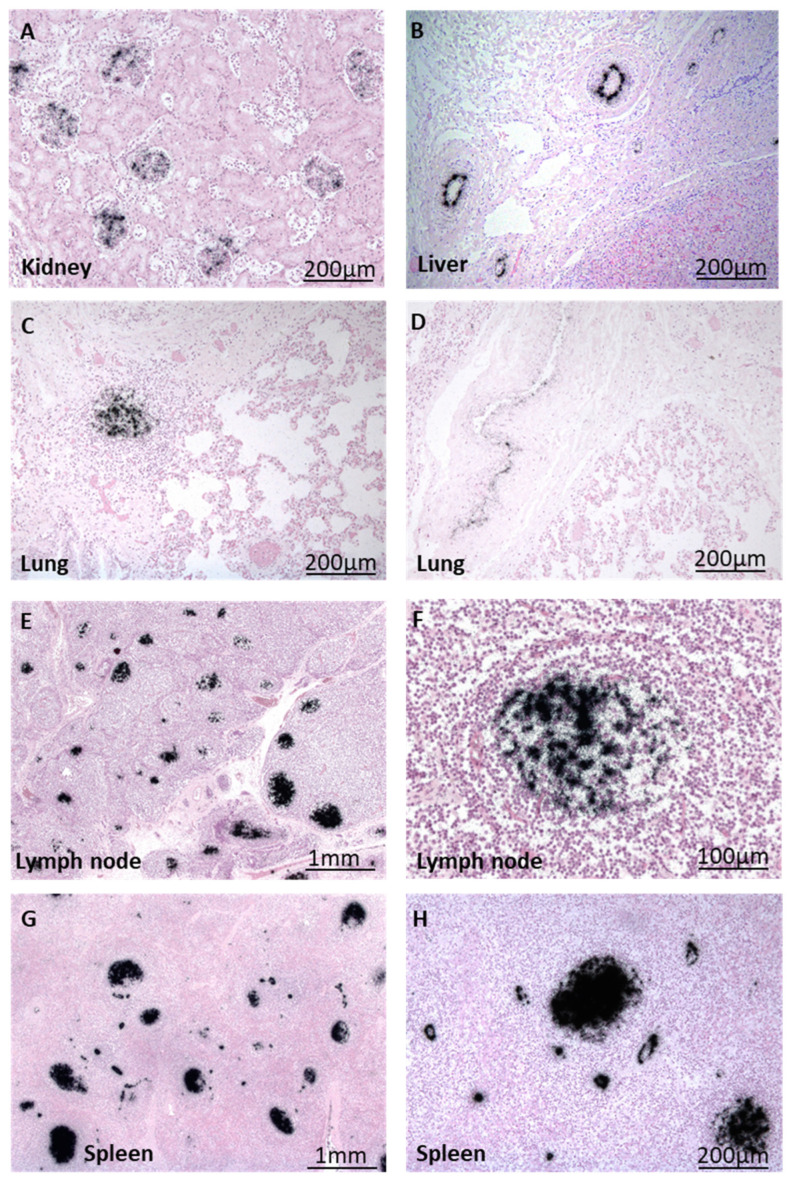
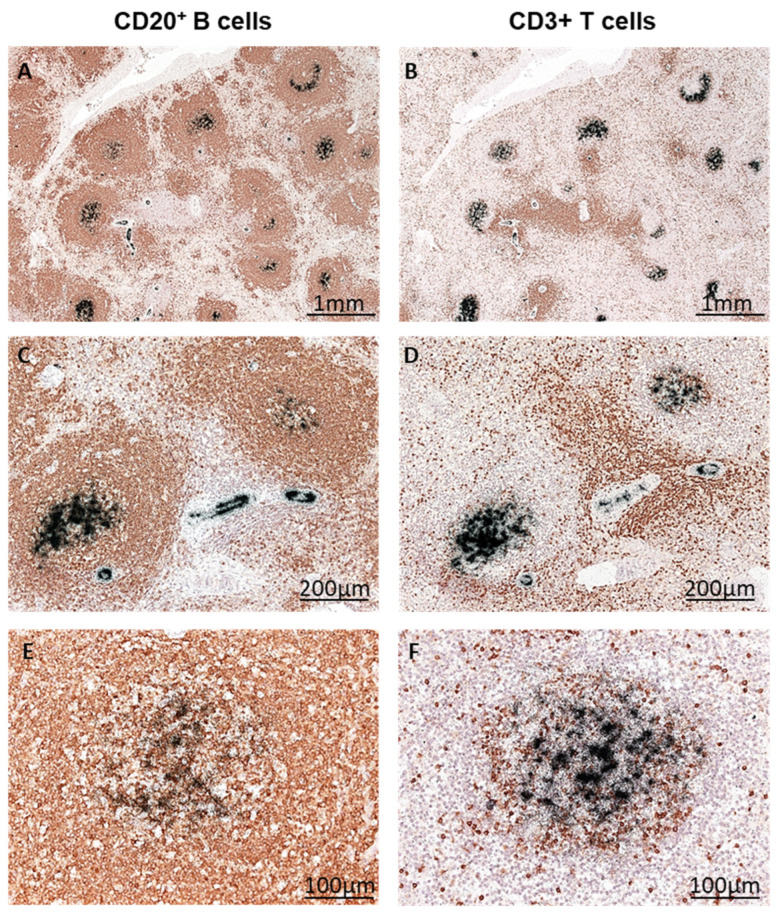
B19V infection was more frequent in acute myocarditis than in chronic myocarditis (43% vs. 14%), with higher viral loads in acute cases regardless of age. The most prominent cardiac CD3+ T cell infiltration was noted in children < 2 years, correlating with high cardiac B19V loads. In two male infants who died from B19V infection, B19V DNA was localized in the endothelial cells of multiple organs using in situ hybridization. Virus replication was found in the endothelial cells of small cardiac arterioles and venules but not in capillaries. B19V DNA/mRNA was also detected in immune cells, especially in the spleen and lymph nodes, revealing virus replication in B lymphocytes.
B19V can induce severe lymphocytic myocarditis, especially in young children. The simultaneous histopathological and molecular assessment of EMBs is important for early diagnosis of viral myocarditis, preventing severe disease, and ensuring appropriate therapy.
本研究旨在评估细小病毒B19(B19V)在儿科人群心肌炎发病机制中的作用,包括来自两名儿童的尸检样本。
2004年至2023年,对16岁以下儿童的心内膜心肌活检(EMB)进行组织学、免疫组织化学和分子病理学分析。共识别出306例急性心肌炎患儿和1060例慢性淋巴细胞性心肌炎患儿。
B19V感染在急性心肌炎中比在慢性心肌炎中更常见(43%对14%),无论年龄大小,急性病例中的病毒载量都更高。在2岁以下儿童中观察到最显著的心脏CD3 + T细胞浸润,这与高心脏B19V载量相关。在两名死于B19V感染的男婴中,使用原位杂交法发现B19V DNA定位于多个器官的内皮细胞中。在心脏小动脉和小静脉的内皮细胞中发现病毒复制,但在毛细血管中未发现。在免疫细胞中也检测到B19V DNA/mRNA,尤其是在脾脏和淋巴结中,揭示了B淋巴细胞中的病毒复制。
B19V可诱发严重的淋巴细胞性心肌炎,尤其是在幼儿中。对EMB进行同时的组织病理学和分子评估对于病毒性心肌炎的早期诊断、预防严重疾病和确保适当治疗很重要。