Harris Alexander W, Kurtovic Liriye, Nogueira Jeane, Bouzas Isabel, Opi D Herbert, Wines Bruce D, Lee Wen Shi, Hogarth P Mark, Poumbourios Pantelis, Drummer Heidi E, Valim Clarissa, Porto Luís Cristóvão, Beeson James G
Burnet Institute, Melbourne, Australia.
Department of Immunology, Monash University, Melbourne, Australia.
Commun Med (Lond). 2024 Dec 19;4(1):273. doi: 10.1038/s43856-024-00686-6.
SARS-CoV-2 transmission and COVID-19 disease severity is influenced by immunity from natural infection and/or vaccination. Population-level immunity is complicated by the emergence of viral variants. Antibody Fc-dependent effector functions are as important mediators in immunity. However, their induction in populations with diverse infection and/or vaccination histories and against variants remains poorly defined.
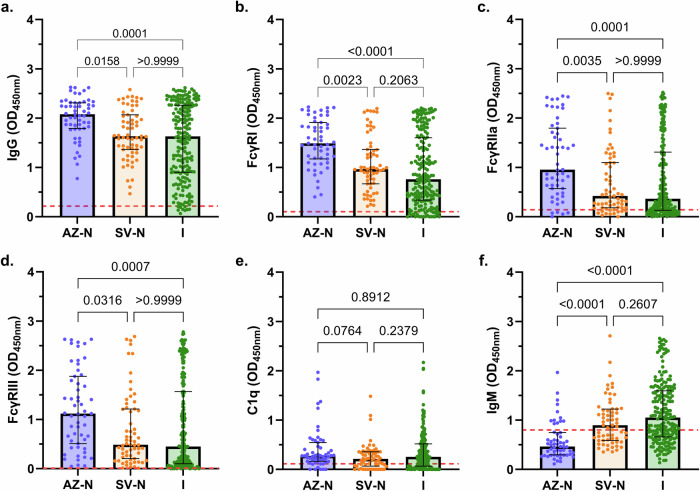
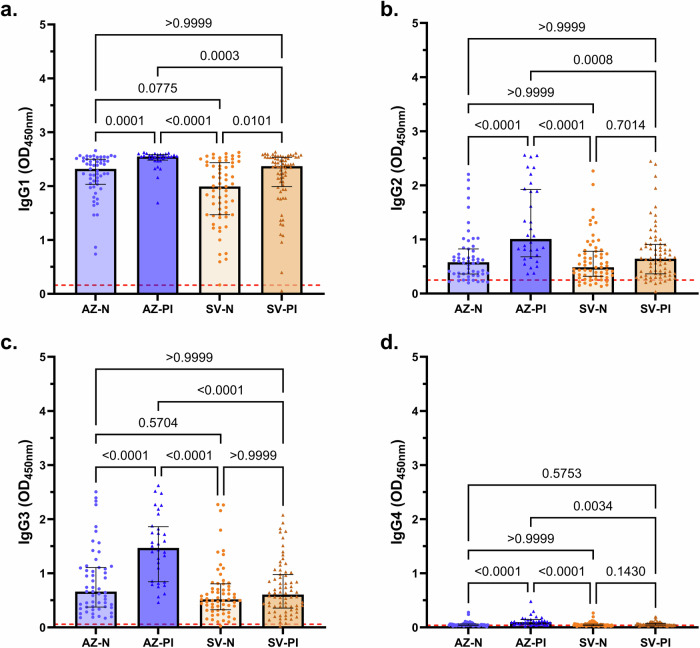
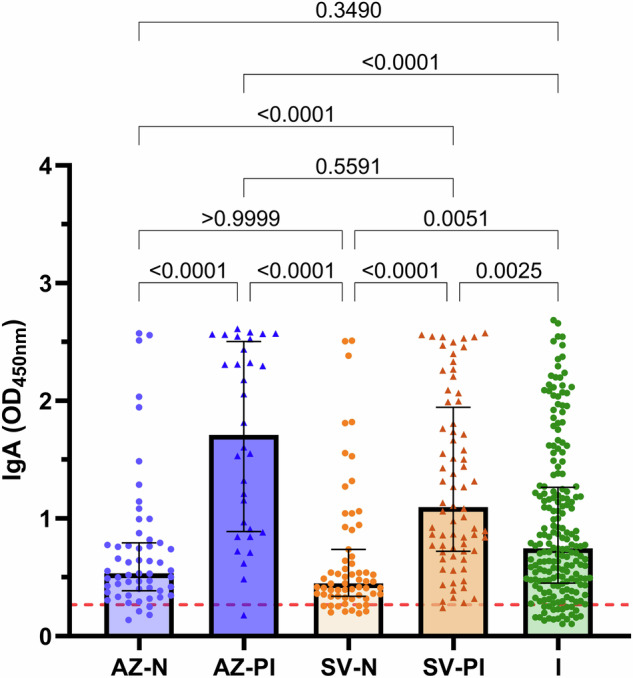
We evaluated Fc-dependent functional antibodies following vaccination with two widely used vaccines, AstraZeneca (AZ) and Sinovac (SV), including antibody binding of Fcγ-receptors and complement-fixation in vaccinated Brazilian adults (n = 222), some of who were previously infected with SARS-CoV-2, as well as adults with natural infection only (n = 200). IgG, IgM, IgA, and IgG subclasses were also quantified.
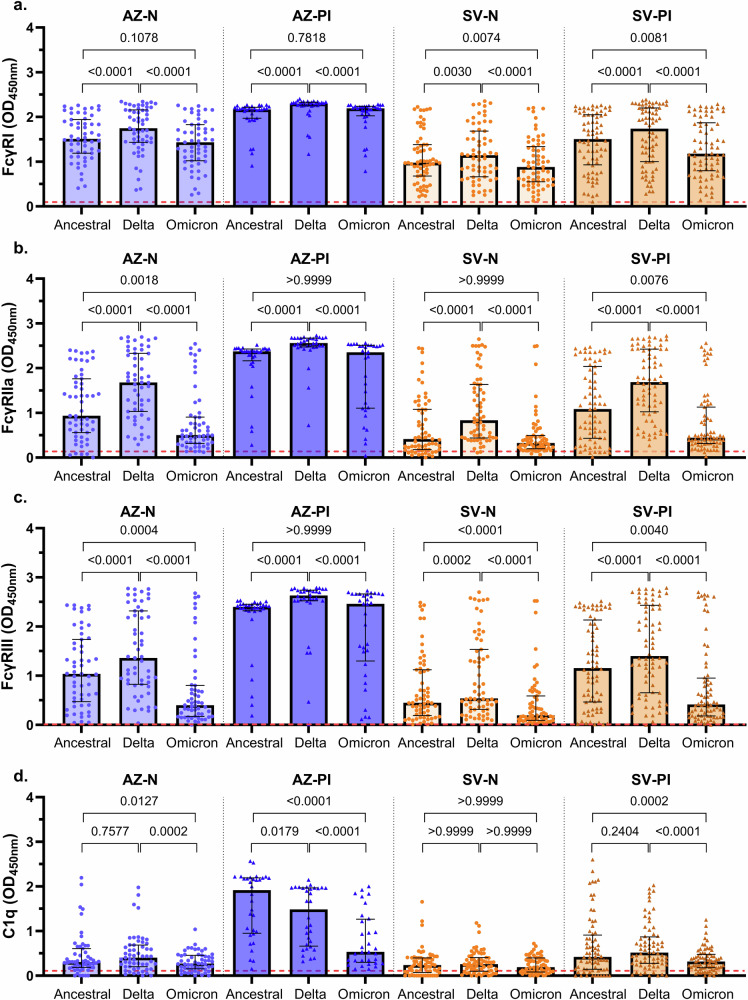
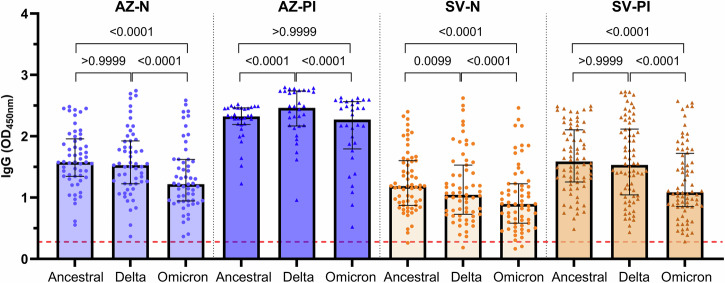
AZ induces greater Fcγ-receptor-binding (types I, IIa, and IIIa/b) antibodies than SV or natural infection. Previously infected individuals have significantly greater vaccine-induced responses compared to naïve counterparts. Fcγ-receptor-binding is highest among AZ vaccinated individuals with a prior infection, for all receptor types, and substantial complement-fixing activity is only seen among this group. SV induces higher IgM than AZ, but this does not drive better complement-fixing activity. Some SV responses are associated with subject age, whereas AZ responses are not. Importantly, functional antibody responses are well retained against the Omicron BA.1 S protein, being best retained for Fcγ-receptor-1 binding, and are higher for AZ than SV.
Hybrid immunity, from combined natural exposure and vaccination, generates strong Fc-mediated antibody functions which may contribute to immunity against evolving SARS-CoV-2 variants. Understanding determinants of Fc-mediated functions may enable future vaccines with greater efficacy against different variants.
严重急性呼吸综合征冠状病毒2(SARS-CoV-2)的传播以及冠状病毒病2019(COVID-19)的疾病严重程度受自然感染和/或疫苗接种所产生的免疫力影响。病毒变体的出现使群体水平的免疫力变得复杂。抗体Fc依赖性效应功能是免疫中的重要介质。然而,在具有不同感染和/或疫苗接种史的人群中以及针对变体的情况下,它们的诱导情况仍不清楚。
我们评估了接种两种广泛使用的疫苗(阿斯利康(AZ)和科兴(SV))后Fc依赖性功能性抗体,包括在接种疫苗的巴西成年人(n = 222)中Fcγ受体的抗体结合和补体固定情况,其中一些人先前感染过SARS-CoV-2,以及仅自然感染的成年人(n = 200)。还对IgG、IgM、IgA和IgG亚类进行了定量。
与科兴疫苗或自然感染相比,阿斯利康疫苗诱导产生更多的Fcγ受体结合(I型、IIa型和IIIa/b型)抗体。与未感染过的个体相比,先前感染过的个体疫苗诱导的反应明显更强。对于所有受体类型,在先前感染过的接种阿斯利康疫苗的个体中,Fcγ受体结合最高,并且仅在该组中观察到大量补体固定活性。科兴疫苗诱导产生的IgM高于阿斯利康疫苗,但这并未带来更好的补体固定活性。科兴疫苗的一些反应与受试者年龄有关,而阿斯利康疫苗的反应则与年龄无关。重要的是,功能性抗体反应对奥密克戎BA.1刺突蛋白保持良好,对Fcγ受体-1结合的保留效果最佳,并且阿斯利康疫苗诱导产生的功能性抗体反应高于科兴疫苗。
自然暴露和疫苗接种相结合产生的混合免疫会产生强大的Fc介导的抗体功能,这可能有助于抵抗不断演变的SARS-CoV-2变体。了解Fc介导功能的决定因素可能有助于未来研发出对不同变体更有效的疫苗。