Eixenberger Josh E, Anders Catherine B, Hermann Rebecca, Wada Katelyn, Reddy Kongara M, Montenegro-Brown Raquel J, Fologea Daniel, Wingett Denise G
Biomolecular Sciences Graduate Program, Boise State University Boise ID 83725 USA
Department of Physics, Boise State University Boise ID 83725 USA.
RSC Pharm. 2024 Nov 6;2(1):82-93. doi: 10.1039/d4pm00189c. eCollection 2025 Jan 21.
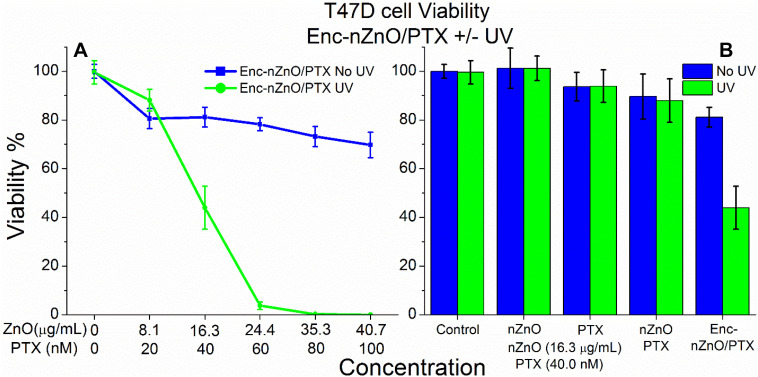
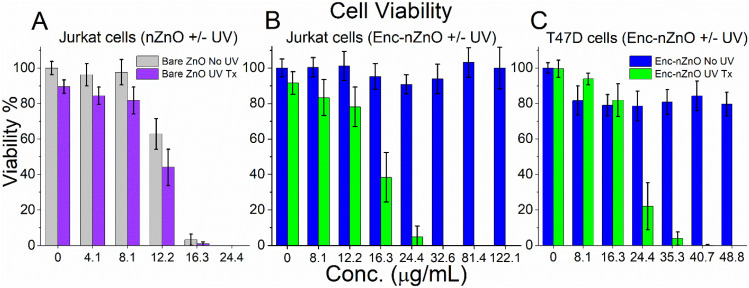
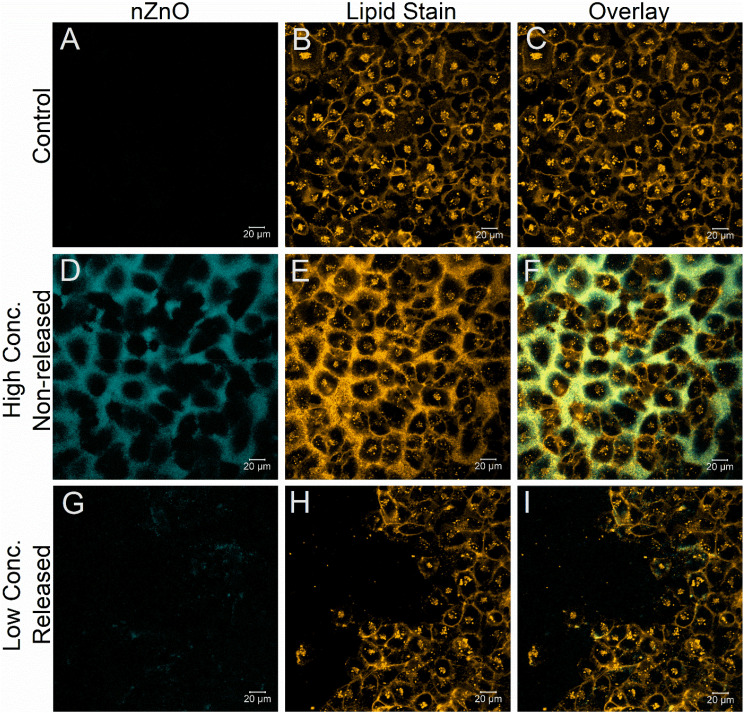
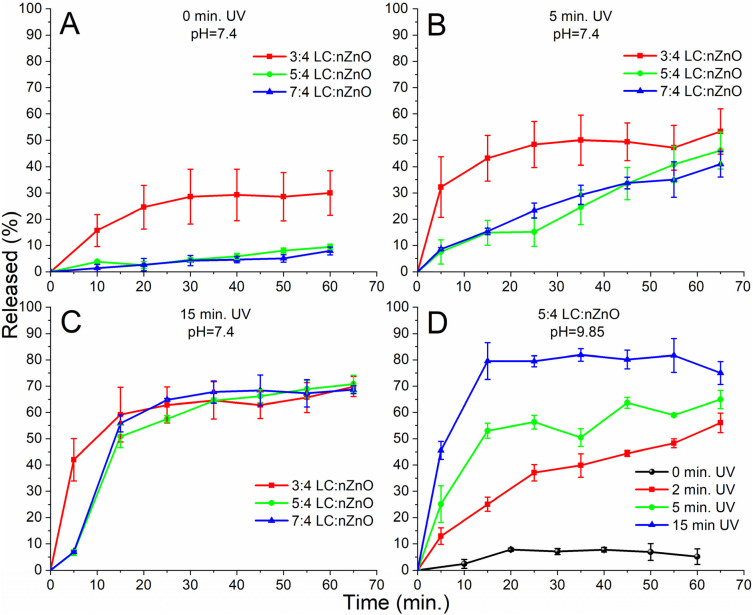
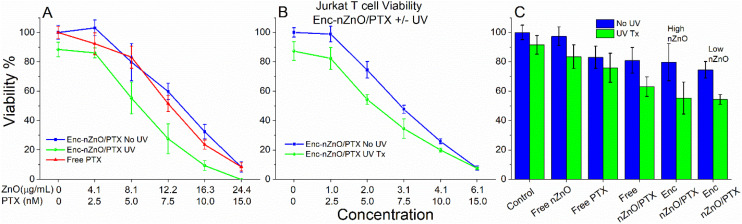
Nanomedicines offer high promise for the treatment of various diseases, and numerous novel approaches using nanomaterials have been developed over the years. In this report, we introduce a new strategy utilizing ZnO nanoparticles (nZnO) to trigger the rapid release of lipid-encapsulated therapeutics upon photo-irradiation with UV light (365 nm). studies demonstrate that encapsulation of nZnO effectively eliminates the cytotoxicity of nZnO, but this can be re-established upon release from the lipid coating. Using 5(6)-carboxyfluorescein as a model for hydrophilic drug loading, we show the ability to co-load drugs with nZnO into liposomes. Kinetic studies reveal the ability to release the majority of the dye within 60 minutes post-photo-irradiation and provide insights into factors that impact release kinetics. To further explore this, Jurkat T cell leukemia and T47D breast cancer cells were treated with co-encapsulated nZnO and the hydrophobic cancer drug paclitaxel. These studies revealed enhanced toxicity of the triggered release groups with an extreme difference noted in the viability profiles of the T47D breast cancer cell model. Taken together, these studies indicate that this system of co-encapsulating nZnO and chemotherapeutic drugs has the potential to minimize systemic toxicity, by controlling therapeutic release, while allowing for the localized selective destruction of cancer.
纳米药物在治疗各种疾病方面具有很高的前景,多年来已经开发出许多使用纳米材料的新方法。在本报告中,我们介绍了一种新策略,即利用氧化锌纳米颗粒(nZnO)在365nm紫外光照射下触发脂质包裹的治疗药物的快速释放。研究表明,nZnO的包封有效地消除了nZnO的细胞毒性,但从脂质涂层释放后这种毒性可以重新建立。以5(6)-羧基荧光素作为亲水性药物负载的模型,我们展示了将药物与nZnO共负载到脂质体中的能力。动力学研究揭示了在光照射后60分钟内释放大部分染料的能力,并提供了对影响释放动力学因素的见解。为了进一步探索这一点,用共包裹的nZnO和疏水性抗癌药物紫杉醇处理Jurkat T细胞白血病和T47D乳腺癌细胞。这些研究揭示了触发释放组的毒性增强,在T47D乳腺癌细胞模型的活力曲线中观察到了极大的差异。综上所述,这些研究表明,这种共包裹nZnO和化疗药物的系统有可能通过控制治疗药物的释放来最小化全身毒性,同时实现对癌症的局部选择性破坏。