Babu Devalla Venu, Ballullaya Srinidhi V, S Pushpa, Taufin Neha, Naveen Pilli Sai
Dept. Conservative Dentistry and Endodontics, St.Joseph Dental College, Duggirala, Eluru, Andra Pradesh, India.
J Dent (Shiraz). 2024 Dec 1;25(4):359-368. doi: 10.30476/dentjods.2024.98928.2117. eCollection 2024 Dec.
Dentin bonding with etch-and-rinse adhesives involves demineralizing the 5-8µm of the surface dentin to create micro space for resin infiltration. The presence of continuous fluid movement in dentin tubules and positive pulpal pressure prevents complete water replacement by resin monomers. This results in areas of demineralized dentin, which contain collagen fibers without resin infiltration. The exposed collage fibers are subjected to enzymatic degradation leading to less durable hybrid layer.
The aim of this study was to evaluate the remineralizing effect of the nanoparticles on the resin dentin bonding interface.
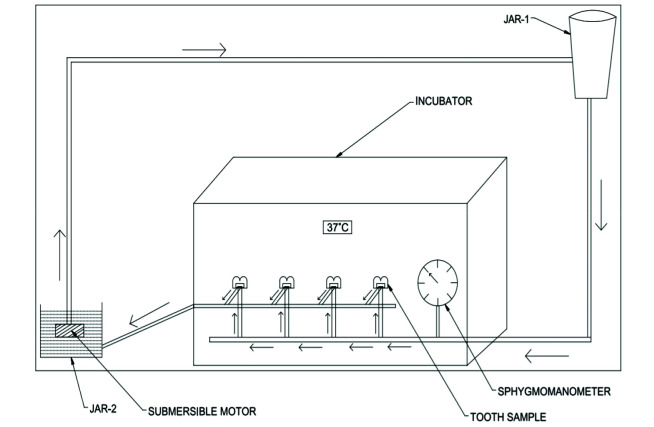
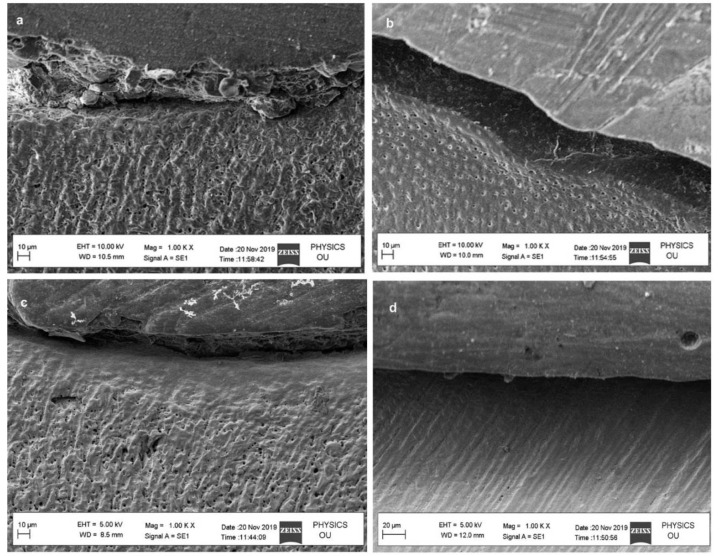
The three experimental remineralizing nanoparticles were characterized for their morphology, size, and composition. A total of 48 extracted non-carious human third molar teeth were sectioned at 2 mm below the cemento enamel junction. Class I cavity was prepared and the tooth samples were placed in an intra pulpal pressure simulation device. After etching of the prepared cavity, the samples were randomly divided into four groups (n=10) as follows: (1) control group(c) (n=10) (2) Nano-hydroxyapatite (nHAP) (n=10) (3) Chitosan-nanohydroxyapatite (Chi-nHAP) (n=10) (4) Mesoporous silica-hydrox-yapatite (MS-nHAP) (n=10). After 30 days remineralization period, the samples were evaluated for micro tensile bond strength, hybrid layer morphology, and mineral composition of the hybrid layer. The results were analyzed statistically by one-way ANOVA and Tukey's multiple post hoc tests.
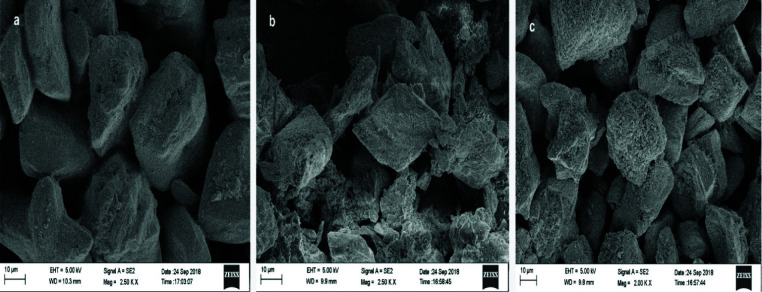
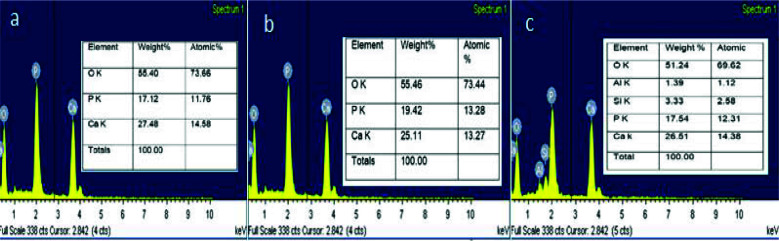
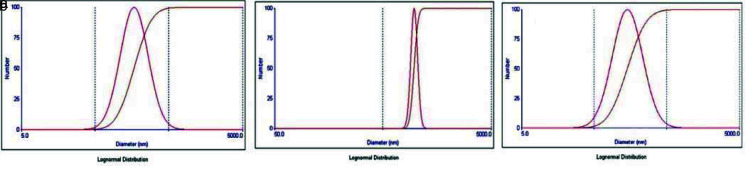
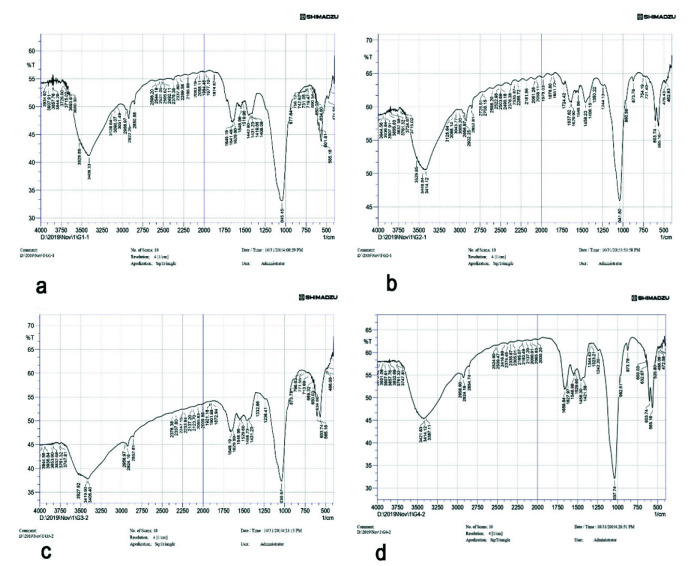
Scanning electron microscopic observation of nanoparticles revealed irregular particle shapes with calcium phosphate ratio of 1.60. The zeta analyzer showed a mean diameter of 161.0 nm, 323.0nm, 185.0nm for nHAP, Chi-nHAP, and MS-nHAP respectively. Post hoc Bonferroni test revealed significantly higher bond strength for nHAP, Chi-nHAP, and MS-nHAP when compared to control group. MS-nHAP resulted in the uniform deposition of apatite crystal on the surface without any evidence of dentinal tubules openings and had higher mineral to matrix ratio compared to other groups.
MS-nHAP nanoparticles can be considered as a reliable source of calcium and phosphate for biomimetic remineralization of hybrid layer. Application of nanoparticle remineralization precursors before application of dentin bonding agents results in remeralization of exposed collagen fibers thereby improving the clinical longevity of hybrid layer.
使用酸蚀冲洗粘结剂进行牙本质粘结时,需使表层5-8微米厚的牙本质脱矿,以形成树脂渗入的微空间。牙本质小管中持续的液体流动和牙髓内的正压,使得树脂单体无法完全取代水分。这导致脱矿牙本质区域存在未被树脂渗入的胶原纤维。暴露的胶原纤维会发生酶降解,致使混合层耐久性降低。
本研究旨在评估纳米颗粒对树脂-牙本质粘结界面的再矿化作用。
对三种用于实验的再矿化纳米颗粒的形态、尺寸和成分进行了表征。选取48颗拔除的无龋人类第三磨牙,在牙骨质-釉质界下方2毫米处进行切片。制备I类洞型,并将牙齿样本置于牙髓内压力模拟装置中。对制备好的洞型进行酸蚀后,将样本随机分为四组(每组n = 10):(1)对照组(c)(n = 10);(2)纳米羟基磷灰石(nHAP)(n = 10);(3)壳聚糖-纳米羟基磷灰石(Chi-nHAP)(n = 10);(4)介孔二氧化硅-羟基磷灰石(MS-nHAP)(n = 10)。经过30天的再矿化期后,对样本进行微拉伸粘结强度、混合层形态以及混合层矿物成分的评估。结果采用单因素方差分析和Tukey多重事后检验进行统计学分析。
纳米颗粒的扫描电子显微镜观察显示,颗粒形状不规则,磷酸钙比例为1.60。zeta分析仪显示,nHAP、Chi-nHAP和MS-nHAP的平均直径分别为161.0纳米、323.0纳米和185.0纳米。事后Bonferroni检验显示,与对照组相比,nHAP、Chi-nHAP和MS-nHAP的粘结强度显著更高。MS-nHAP使磷灰石晶体均匀沉积在表面,未发现牙本质小管开口的迹象,且与其他组相比,其矿物与基质的比例更高。
MS-nHAP纳米颗粒可被视为混合层仿生再矿化的可靠钙磷来源。在应用牙本质粘结剂之前使用纳米颗粒再矿化前驱体,可使暴露的胶原纤维再矿化,从而提高混合层的临床耐久性。