Moghib Khaled, Ghanm Thoria I, Abunamoos Abdallah, Rajabi Munia, Moawad Shehab M, Mohsen Ahmed, Kasem Said, Elsayed Khalid, Sayed Moaaz, Dawoud Ali I, Salomon Izere, Elmaghreby Alaaeldin, Ismail Mohamed, Amer Ahmed
Faculty of Medicine, Cairo University, Cairo, Egypt.
Medical Research Group of Egypt, Negida Academy, Arlington, MA, USA.
BMC Pregnancy Childbirth. 2024 Dec 23;24(1):852. doi: 10.1186/s12884-024-07081-y.
Preeclampsia is a severe pregnancy complication affecting 2-8% of pregnancies globally, contributing to substantial maternal and fetal morbidity and mortality. Vitamin D deficiency has been associated with an increased risk of preeclampsia, yet the efficacy of its supplementation during pregnancy in reducing preeclampsia incidence remains uncertain.
This systematic review and meta-analysis aimed to evaluate the impact of vitamin D supplementation on the incidence of preeclampsia and related maternal and neonatal outcomes.
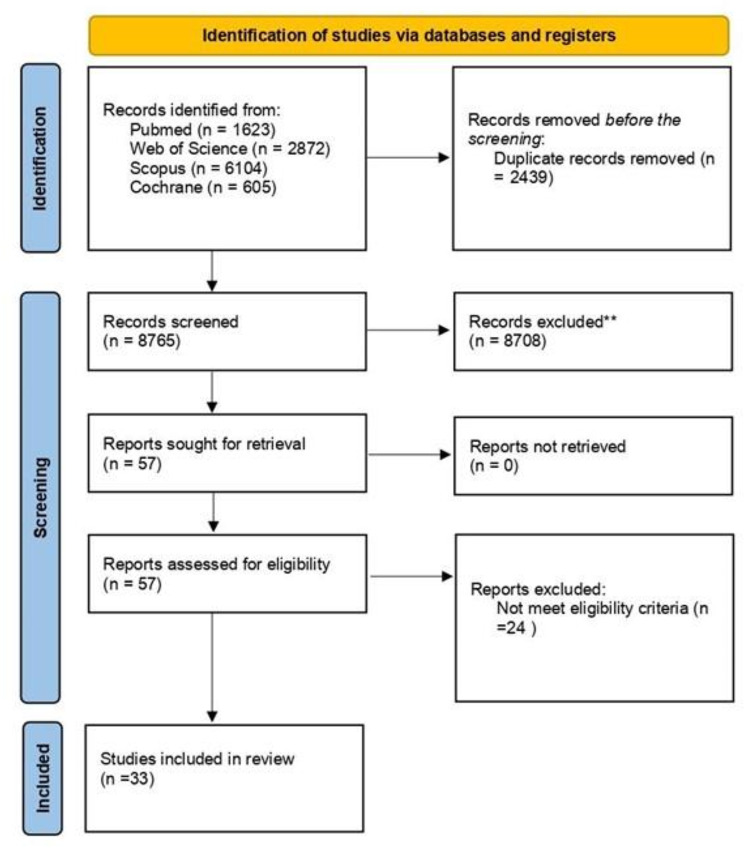
We systematically searched PubMed, Scopus, Cochrane Library, and Web of Science until August 2024 for randomized controlled trials (RCTs) examining the effects of vitamin D supplementation on preeclampsia. Eligible studies included pregnant women with varying doses of vitamin D supplementation compared to placebo or standard care. Primary outcomes were the incidence of pre-eclampsia and preterm labor; secondary outcomes included serum 25-hydroxyvitamin D levels, low birth weight, and APGAR scores. Data were synthesized using R statistical software, with effect measures reported as relative risk (RR) and mean difference (MD) with a 95% confidence interval (CI).
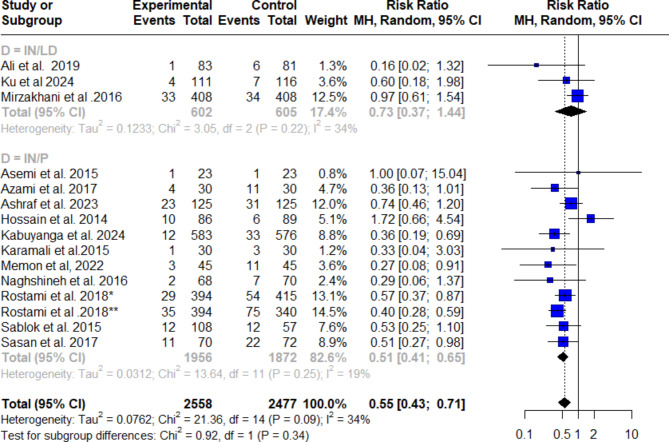
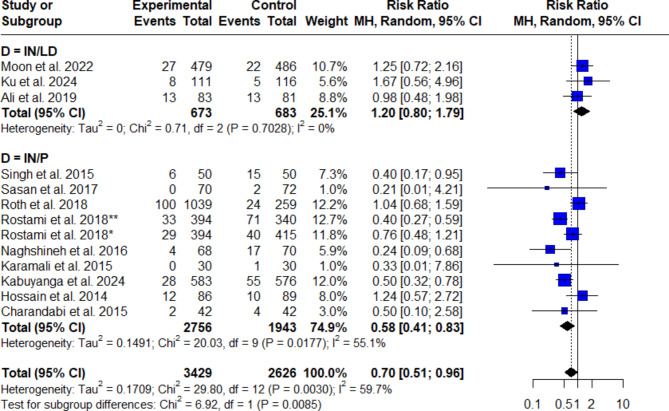
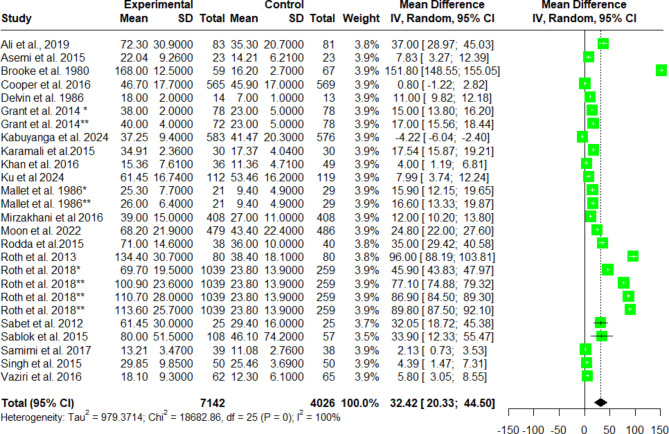
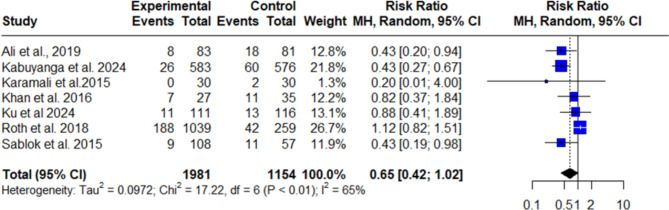
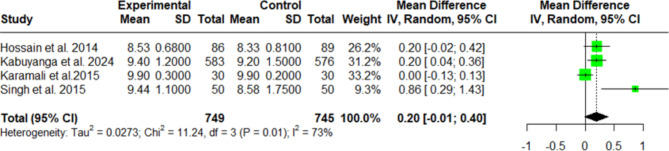
A total of 33 RCTs involving 10,613 participants were included. Vitamin D supplementation significantly reduced the risk of preeclampsia by 44.8% (RR = 0.55, 95% CI [0.43, 0.71], P < 0.0001) and preterm labor by 30% (RR = 0.70, 95% CI [0.51, 0.96], P = 0.0286). Subgroup analyses indicated that the benefits were more pronounced when the control group received a placebo rather than low-dose vitamin D. Serum 25-hydroxyvitamin D levels significantly increased in the supplementation group (MD = 32.42 nmol/L, 95% CI [20.33, 44.50], P < 0.0001). However, no significant differences were observed in the incidence of low birth weight (RR = 0.65, 95% CI [0.42, 1.02], P = 0.057) or Apgar scores at 5 min (MD = 0.20, 95% CI [-0.01, 0.40], P = 0.057).
Vitamin D supplementation during pregnancy significantly reduces the risk of preeclampsia and preterm labor, though its impact on neonatal outcomes remains unclear. These findings underscore the potential value of vitamin D supplementation in prenatal care for improving maternal outcomes. Further research is needed to clarify its effects on neonatal health.
子痫前期是一种严重的妊娠并发症,全球2%-8%的妊娠会受到影响,导致大量孕产妇和胎儿发病及死亡。维生素D缺乏与子痫前期风险增加有关,但其孕期补充在降低子痫前期发病率方面的疗效仍不确定。
本系统评价和荟萃分析旨在评估维生素D补充对子痫前期发病率及相关孕产妇和新生儿结局的影响。
我们系统检索了PubMed、Scopus、Cochrane图书馆和Web of Science直至2024年8月,以查找研究维生素D补充对子痫前期影响的随机对照试验(RCT)。符合条件的研究包括与安慰剂或标准护理相比接受不同剂量维生素D补充的孕妇。主要结局是子痫前期和早产的发病率;次要结局包括血清25-羟维生素D水平、低出生体重和阿氏评分。使用R统计软件进行数据合成,效应量报告为相对风险(RR)和平均差(MD)以及95%置信区间(CI)。
共纳入33项RCT,涉及10613名参与者。维生素D补充显著降低子痫前期风险44.8%(RR = 0.55,95%CI [0.43, 0.71],P < 0.0001)和早产风险30%(RR = 0.70,95%CI [0.51, 0.96],P = 0.0286)。亚组分析表明,当对照组接受安慰剂而非低剂量维生素D时,益处更明显。补充组血清25-羟维生素D水平显著升高(MD = 32.42 nmol/L,95%CI [20.33, 44.50],P < 0.0001)。然而,低出生体重发病率(RR = 0.65,95%CI [0.42, 1.02],P = 0.057)或5分钟时的阿氏评分(MD = 0.20,95%CI [-0.01, 0.40],P = 0.057)未观察到显著差异。
孕期补充维生素D显著降低子痫前期和早产风险,但其对新生儿结局的影响仍不明确。这些发现强调了维生素D补充在产前护理中改善孕产妇结局的潜在价值。需要进一步研究以阐明其对新生儿健康的影响。