Farzam Sana, Poursalehi Donya, Mirzaei Saeideh, Asadi Ali, Akhlaghi Masoumeh, Saneei Parvane
Department of Community Nutrition, School of Nutrition and Food Science, Nutrition and Food Security Research Center, Isfahan University of Medical Sciences, Isfahan, Iran.
Students' Research Committee, Isfahan University of Medical Sciences, Isfahan, Iran.
Nutr Metab (Lond). 2024 Dec 23;21(1):111. doi: 10.1186/s12986-024-00886-w.
Many studies have explored the association between food intake and metabolic health. However, research on the association of consuming ultra-processed foods (UPFs) and metabolic health in children and adolescents remains unclear. The objective of our study was to investigate the relation between UPFs consumption and metabolic health status in Iranian adolescents with overweight/obesity.
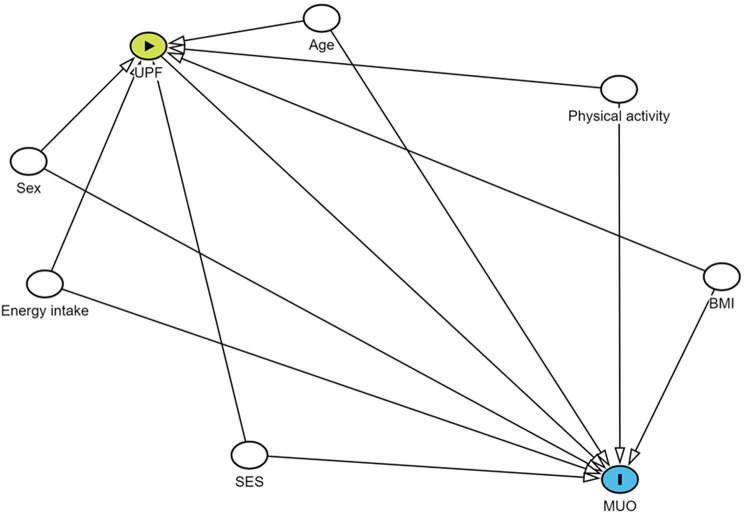
For this cross-sectional study, we selected a sample of 203 adolescents (101 boys and 102 girls) with a mean age of 13.98 ± 1.61 who were chosen using a multistage cluster random sampling method. We collected data on their dietary patterns using a validated 147-item semi-quantitative food frequency questionnaire. Additionally, we measured anthropometric indices, blood pressure, fasting glucose, insulin, and lipid profiles. Participants were categorized to either metabolically healthy or unhealthy overweight/obesity (MHO and MUO) based on the International Diabetes Federation (IDF) and IDF/ Homeostasis Model Assessment Insulin Resistance (HOMA-IR) criteria.
Our findings revealed that every 10 g/d increase in UPFs consumption was related to an elevated odds of MUO as defined by the IDF (OR = 1.14; 95%CI: 1.08-1.19) and IDF/HOMA-IR (OR = 1.14; 95%CI; 1.08-1.19) criteria, after controlling all confounders. The severity of this association varied among girls and boys and also among those with overweight and obesity according to the applied definitions. Moreover, each 10 g/d increase in daily UPFs intake was associated with increased odds of metabolic factors including hyperglycemia, hypertriglyceridemia, hypo-HDL-cholesterolemia, hypertension, and high insulin resistance levels.
These findings highlighted a direct association between higher UPFs consumption and MUO status among adolescents.
许多研究探讨了食物摄入与代谢健康之间的关联。然而,关于儿童和青少年食用超加工食品(UPF)与代谢健康之间关联的研究仍不明确。我们研究的目的是调查伊朗超重/肥胖青少年食用UPF与代谢健康状况之间的关系。
在这项横断面研究中,我们采用多阶段整群随机抽样方法选取了203名青少年(101名男孩和102名女孩)作为样本,其平均年龄为13.98±1.61岁。我们使用经过验证的147项半定量食物频率问卷收集他们的饮食模式数据。此外,我们测量了人体测量指标、血压、空腹血糖、胰岛素和血脂谱。根据国际糖尿病联盟(IDF)以及IDF/稳态模型评估胰岛素抵抗(HOMA-IR)标准,将参与者分为代谢健康或不健康超重/肥胖(MHO和MUO)两类。
我们的研究结果显示,在控制所有混杂因素后,UPF摄入量每增加10克/天,根据IDF(比值比[OR]=1.14;95%置信区间[CI]:1.08-1.19)和IDF/HOMA-IR(OR=1.14;95%CI:1.08-1.19)标准,MUO的发生几率就会升高。根据应用的定义,这种关联的严重程度在男孩和女孩之间以及超重和肥胖者之间有所不同。此外,每日UPF摄入量每增加10克/天,与代谢因素发生几率增加相关,这些代谢因素包括高血糖、高甘油三酯血症、低高密度脂蛋白胆固醇血症、高血压和高胰岛素抵抗水平。
这些研究结果突出了青少年中较高的UPF摄入量与MUO状态之间的直接关联。