Department of Food Science and Human Nutrition, College of Agriculture and Veterinary Medicine, Qassim University, Buraydah 51452, Saudi Arabia.
Department of Food Technology, Faculty of Agriculture, Benha University, Moshtohor 13736, Egypt.
Nutrients. 2022 Jun 7;14(12):2366. doi: 10.3390/nu14122366.
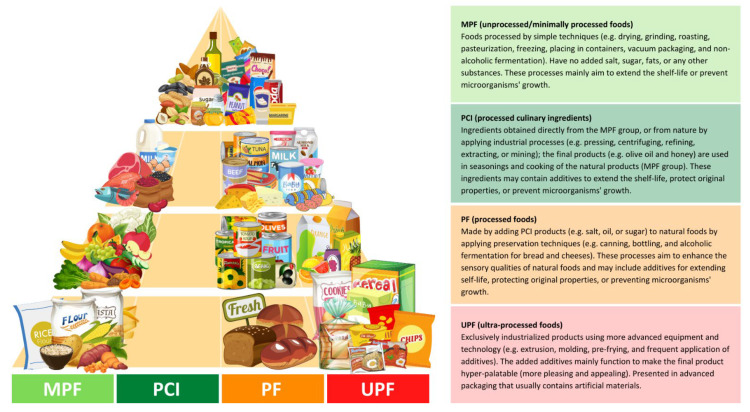
Studying the factors that cause diabetes and conducting clinical trials has become a priority, particularly raising awareness of the dangers of the disease and how to overcome it. Diet habits are one of the most important risks that must be understood and carefully applied to reduce the risk of diabetes. Nowadays, consuming enough home-cooked food has become a challenge, particularly with modern life performance, pushing people to use processed foods. Ultra-processed food (UPF) consumption has grown dramatically over the last few decades worldwide. This growth is accompanied by the increasing prevalence of non-communicable diseases (NCDs) such as cardiovascular diseases, hypertension, and type 2 diabetes. UPFs represent three main health concerns: (i) they are generally high in non-nutritive compounds such as sugars, sodium, and fat and low in nutritional compounds such as proteins and fibers, (ii) they contain different types of additives that may cause severe health issues, and (iii) they are presented in packages made of synthetic materials that may also cause undesirable health side-effects. The association between the consumption of UPF and the risk of developing diabetes was discussed in this review. The high consumption of UPF, almost more than 10% of the diet proportion, could increase the risk of developing type 2 diabetes in adult individuals. In addition, UPF may slightly increase the risk of developing gestational diabetes. Further efforts are needed to confirm this association; studies such as randomized clinical trials and prospective cohorts in different populations and settings are highly recommended. Moreover, massive improvement in foods' dietary guidelines to increase the awareness of UPF and their health concerns is highly recommended.
研究导致糖尿病的因素并开展临床试验已成为当务之急,特别是要提高对该疾病危害以及如何克服该疾病的认识。饮食习惯是必须了解并谨慎应用以降低糖尿病风险的最重要因素之一。如今,食用足够的家常饭菜已成为一种挑战,尤其是在现代生活节奏下,人们更倾向于食用加工食品。在过去几十年中,超加工食品(UPF)在全球范围内的消费急剧增长。这种增长伴随着非传染性疾病(NCD)的患病率不断上升,如心血管疾病、高血压和 2 型糖尿病。UPF 主要存在三个健康隐患:(i)它们通常富含非营养化合物,如糖、钠和脂肪,而蛋白质和纤维等营养化合物含量较低;(ii)它们含有不同类型的添加剂,可能会引起严重的健康问题;(iii)它们的包装由合成材料制成,也可能会带来不良的健康副作用。本综述讨论了 UPF 的消费与糖尿病风险之间的关联。高 UPF 消费,几乎占饮食比例的 10%以上,可能会增加成年人患 2 型糖尿病的风险。此外,UPF 可能会略微增加妊娠期糖尿病的发病风险。需要进一步努力来证实这种关联;强烈建议在不同人群和环境中开展随机临床试验和前瞻性队列研究。此外,还强烈建议大规模改进食品饮食指南,以提高对 UPF 及其健康问题的认识。