
一种协同双原子位点纳米酶增强免疫原性细胞死亡以实现高效免疫治疗。
A Synergistic Dual-Atom Sites Nanozyme Augments Immunogenic Cell Death for Efficient Immunotherapy.
作者信息
Ning Shipeng, Zhang Zeyuan, Ren Yujing, Hou Yaxin, Li Dan, Chen Jingqi, Zhai Yujie, Fan Kelong, Zhang Weiqing
机构信息
Department of Breast Surgery, The Second Affiliated Hospital of Guangxi Medical University, Nanning, 530000, China.
Department of Research, Guangxi Medical University Cancer Hospital, Guangxi Medical University, Nanning, 530021, China.
出版信息
Adv Sci (Weinh). 2025 Feb;12(7):e2414734. doi: 10.1002/advs.202414734. Epub 2024 Dec 24.
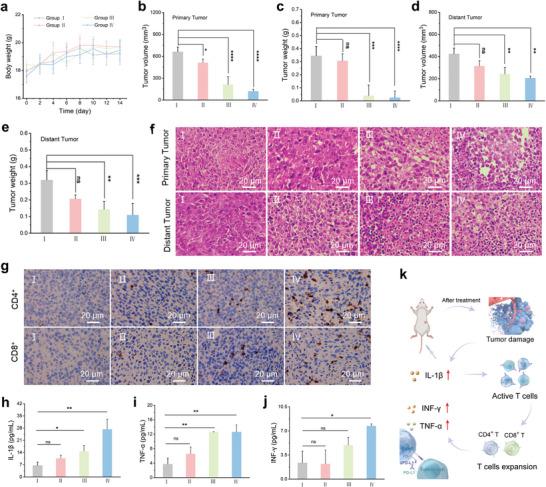
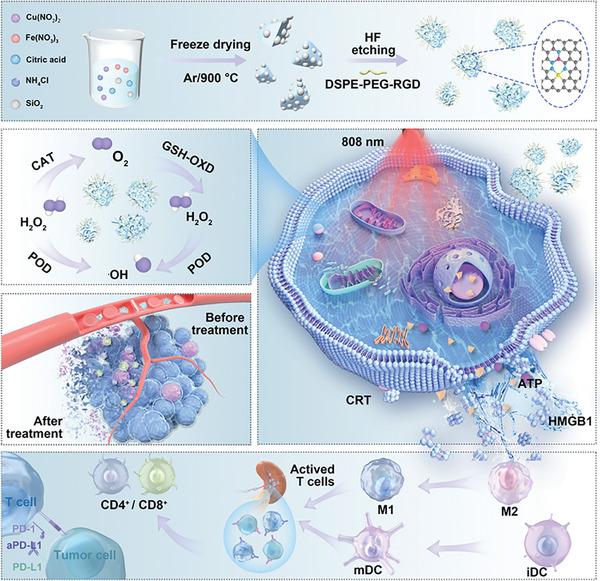
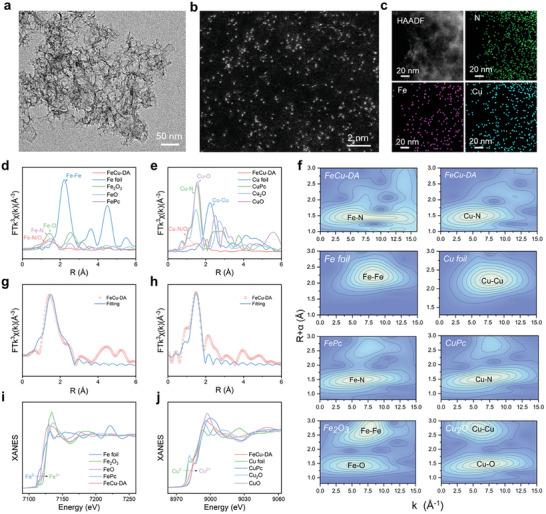
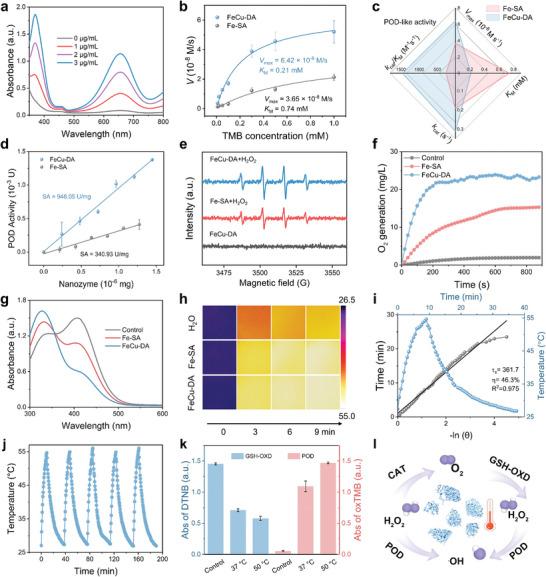
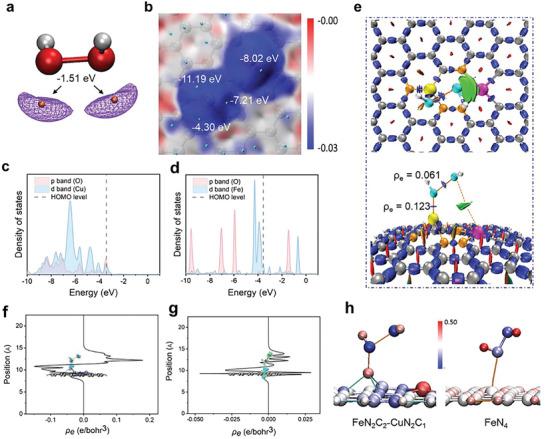
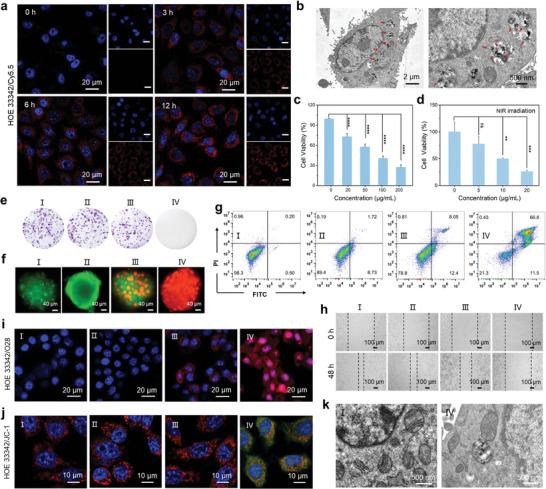
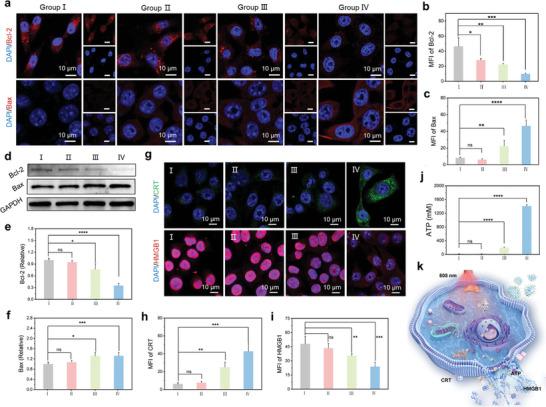
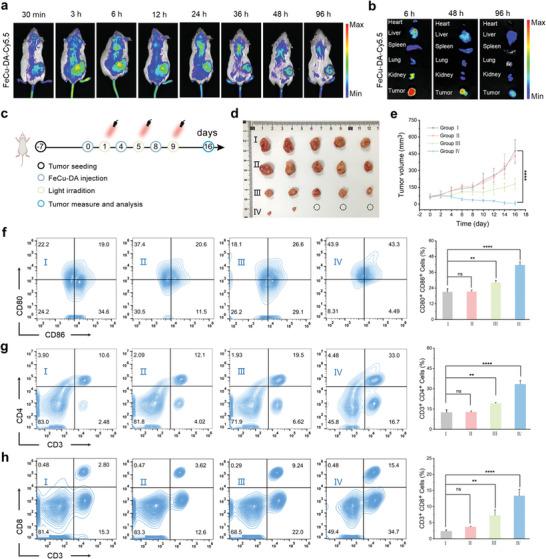
Inducing immunogenic cell death (ICD) is a promising approach to elicit enduring antitumor immune responses. Hence, extensive efforts are being made to develop ICD inducers. Herein, a cascaded dual-atom nanozyme with Fe and Cu sites (FeCu-DA) as an efficient ICD inducer is presented. The Fe and Cu dual-atom sites synergistically enhance peroxidase (POD) and catalase activities, effectively converting intratumoral hydrogen peroxide (HO) to hydroxyl radicals (·OH) and oxygen (O). Moreover, FeCu-DA exhibits superior glutathione-oxidase (GSH-OXD) activity, catalyzing GSH oxidation to generate HO, enabling cascaded catalysis for sustainable ∙OH generation and reducing reactive oxygen species (ROS) resistance by consuming GSH. Steady-state kinetic analysis and density functional theory calculations indicate that FeCu-DA exhibits a higher catalytic rate and efficiency than Fe single-atom nanozymes (Fe-SA) because of its stronger interactions with HO. Its POD activity is 948.05 U mg, which is 2.8-fold greater than that of Fe-SA. Furthermore, FeCu-DA exhibits impressive photothermal effects and photothermal-enhanced cascaded catalysis kinetics for ROS generation, thereby inducing potent ICD. Combined with anti-PD-L1 antibody (αPD-L1) blockade, FeCu-DA shows synergistic enhancement in treatment under near-infrared irradiation. This study provides insights for designing efficient dual-atom nanozymes and demonstrates their potential in ICD-induced cancer immunotherapy.
诱导免疫原性细胞死亡(ICD)是引发持久抗肿瘤免疫反应的一种有前景的方法。因此,人们正在广泛努力开发ICD诱导剂。在此,提出了一种具有铁和铜位点的级联双原子纳米酶(FeCu-DA)作为一种有效的ICD诱导剂。铁和铜双原子位点协同增强过氧化物酶(POD)和过氧化氢酶活性,有效地将肿瘤内的过氧化氢(HO)转化为羟基自由基(·OH)和氧气(O)。此外,FeCu-DA表现出优异的谷胱甘肽氧化酶(GSH-OXD)活性,催化GSH氧化生成HO,实现级联催化以持续产生·OH,并通过消耗GSH降低活性氧(ROS)抗性。稳态动力学分析和密度泛函理论计算表明,由于FeCu-DA与HO的相互作用更强,其催化速率和效率高于铁单原子纳米酶(Fe-SA)。其POD活性为948.05 U mg,比Fe-SA高2.8倍。此外,FeCu-DA表现出令人印象深刻的光热效应和光热增强的ROS产生级联催化动力学,从而诱导强烈的ICD。与抗PD-L1抗体(αPD-L1)阻断相结合,FeCu-DA在近红外照射下的治疗中显示出协同增强作用。这项研究为设计高效双原子纳米酶提供了见解,并证明了它们在ICD诱导的癌症免疫治疗中的潜力。
 Zotero 插件