Kawasaki Hideya, Osaka Issey, Arakawa Ryuichi
Department of Chemistry and Materials Engineering, Kansai University, 3-3-35 Yamate-cho, Suita, Osaka 564-8680, Japan.
Department of Pharmaceutical Engineering, Faculty of Engineering, Toyama Prefectural University, 5180 Kurokawa, Imizu-City, Toyama 939-0398, Japan.
Mass Spectrom (Tokyo). 2024;13(1):A0162. doi: 10.5702/massspectrometry.A0162. Epub 2024 Dec 17.
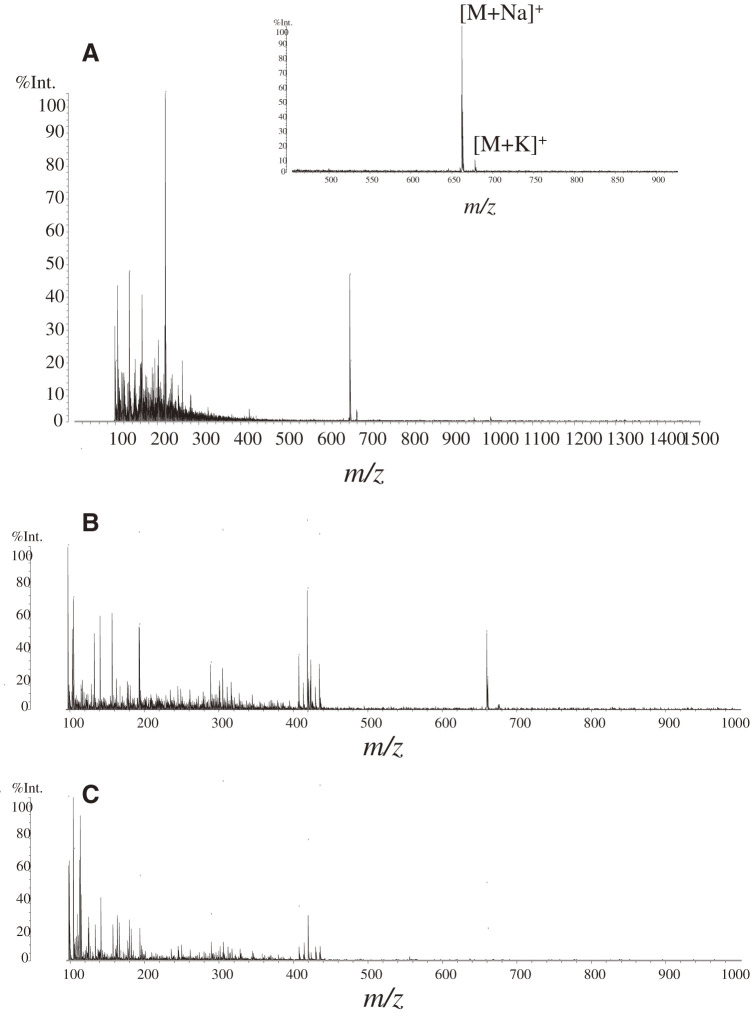
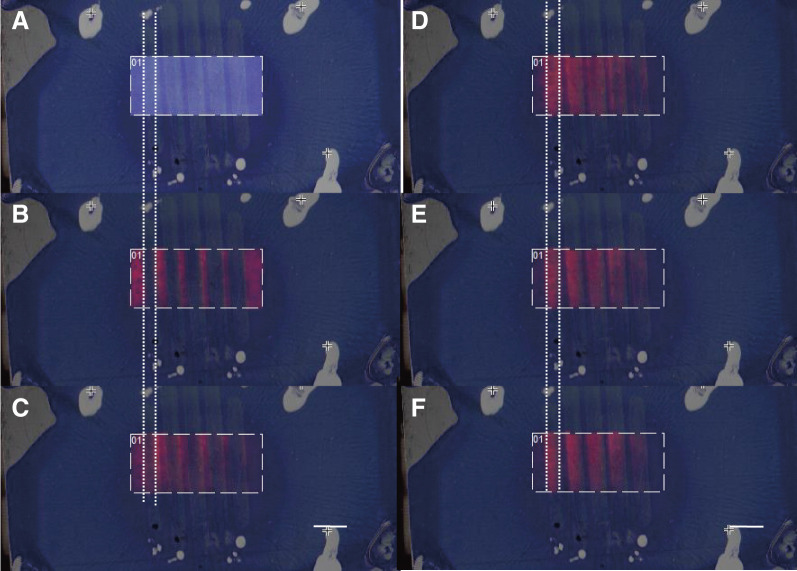
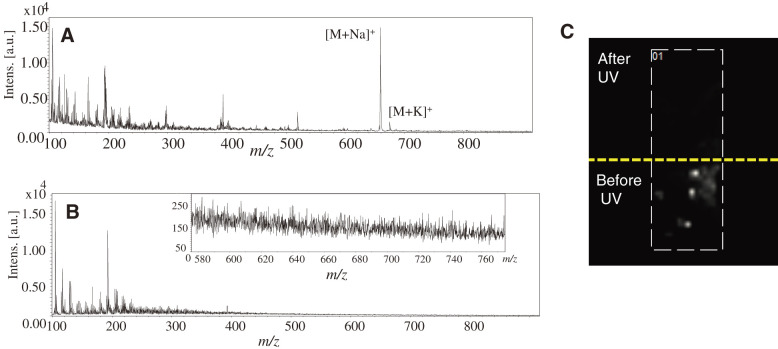
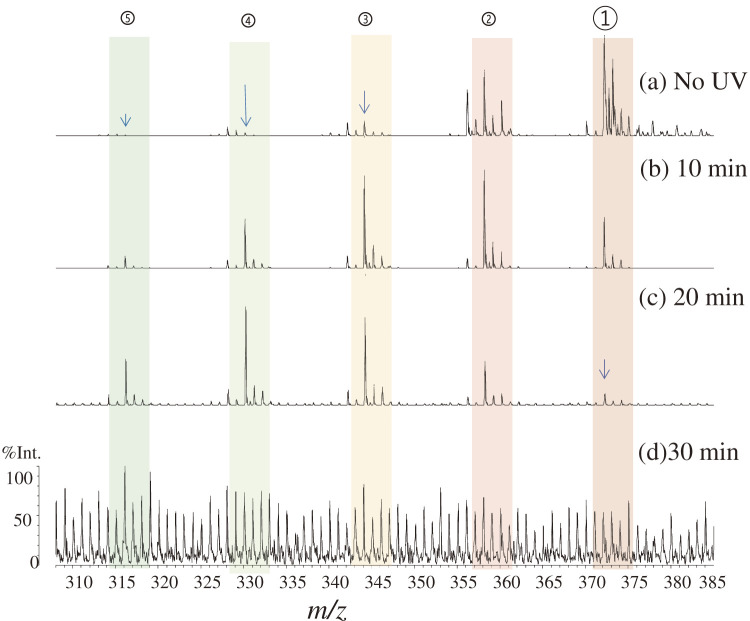
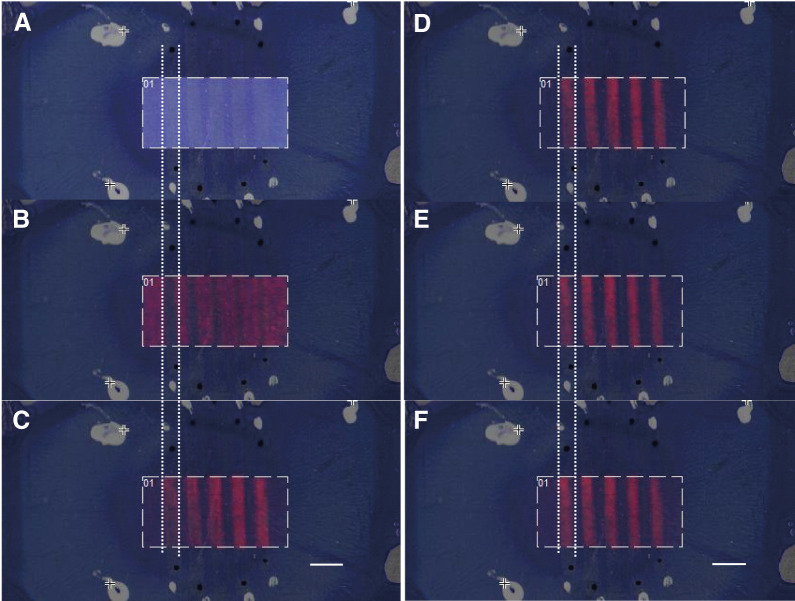
In this study, we employed platinum-assisted surface-assisted laser desorption/ionization mass spectrometry imaging (MSI) (Pt-SALDI-MSI) to detect and visualize the spatial distribution of antioxidant additives and organic dyes in polystyrene films undergoing photodegradation. In traditional matrix-assisted laser desorption/ionization mass spectrometry (MALDI-MS), matrix-derived ion peaks often obscure signals from low-molecular-weight analytes. Pt-SALDI-MSI, which utilizes inorganic nanoparticles instead of an organic matrix, enables the interference-free analysis of low-molecular-weight compounds, thereby addressing the limitation of traditional MALDI-MS. Using Pt-SALDI-MSI, we observed the degradation and distribution of Irganox 1098 (an antioxidant) and crystal violet (an organic dye) following ultraviolet irradiation. This method effectively captures the photodegradation process, providing valuable insights into the environmental breakdown of plastics and the formation of microplastics.
在本研究中,我们采用铂辅助表面辅助激光解吸/电离质谱成像(MSI)(Pt-SALDI-MSI)来检测和可视化光降解聚苯乙烯薄膜中抗氧化添加剂和有机染料的空间分布。在传统的基质辅助激光解吸/电离质谱(MALDI-MS)中,基质衍生的离子峰常常掩盖低分子量分析物的信号。Pt-SALDI-MSI利用无机纳米颗粒而非有机基质,能够对低分子量化合物进行无干扰分析,从而解决了传统MALDI-MS的局限性。使用Pt-SALDI-MSI,我们观察了紫外线照射后抗氧剂1098(一种抗氧化剂)和结晶紫(一种有机染料)的降解和分布情况。该方法有效地捕捉了光降解过程,为塑料的环境分解和微塑料的形成提供了有价值的见解。