Niu Tengfei, Cao Shiwei, Cheng Jingyu, Zhang Yu, Zhang Zitong, Xue Ruiling, Ma Jingxi, Ran Qian, Xian Xiaobing
Department of Basic Courses, Chongqing Medical and Pharmaceutical College, Chongqing, China.
The Second Clinical College, Chongqing Medical University, Chongqing, China.
Front Psychiatry. 2024 Dec 10;15:1451703. doi: 10.3389/fpsyt.2024.1451703. eCollection 2024.
Early detection of anxiety symptoms can support early intervention and may help reduce the burden of disease in later life in the elderly with abdominal obesity, thereby increasing the chances of healthy aging. The objective of this research is to formulate and validate a predictive model that forecasts the probability of developing anxiety symptoms in elderly Chinese individuals with abdominal obesity.
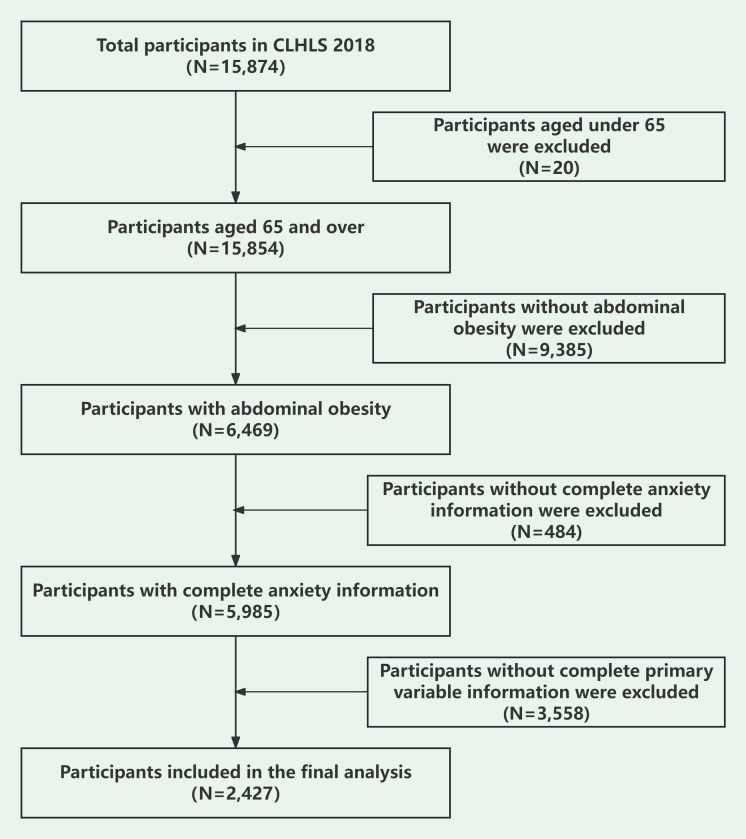
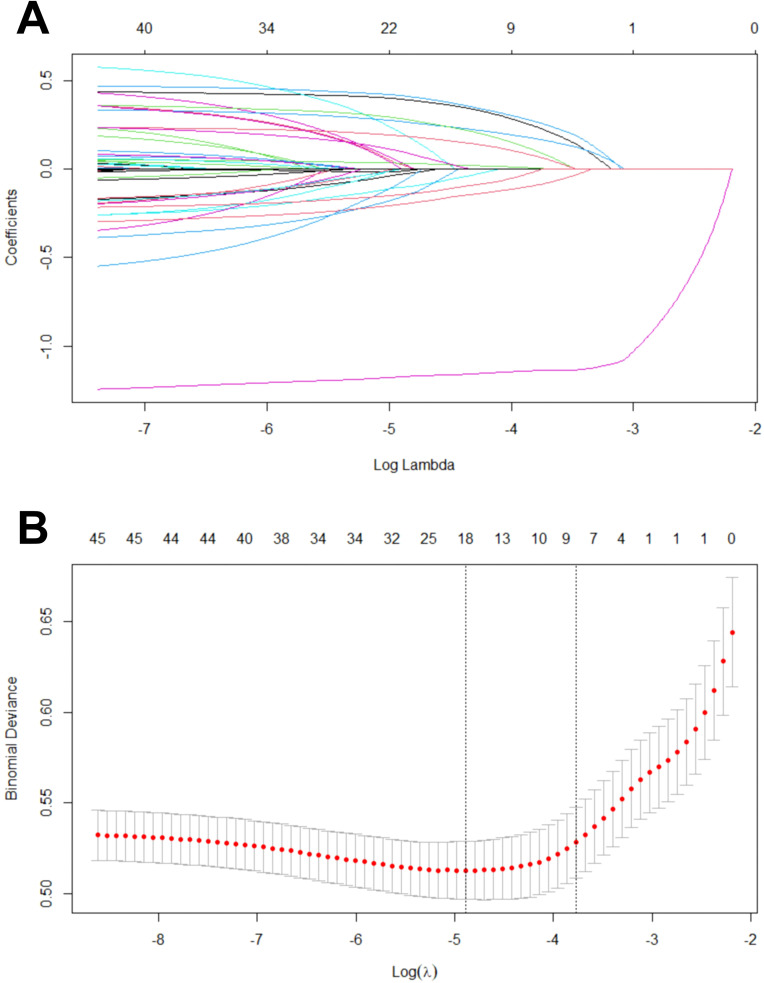
This research's model development and internal validation encompassed 2,427 participants from the 2017-2018 Study of the Chinese Longitudinal Healthy Longevity Survey (CLHLS). Forty-six variables were defined based on the Health Ecology Model (HEM) theoretical framework. Key variables were screened using LASSO regression, and the XGBoost (Extreme Gradient Boosting) model was further introduced to forecast the risk of developing anxiety symptoms in the elderly with abdominal obesity. SHapley Additive exPlanations (SHAP) was adopted to further interpret and show how the eigenvalues contributed to the model predictions.
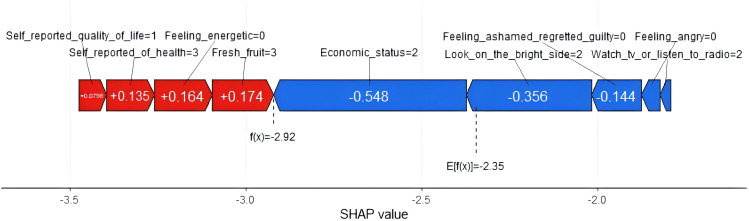
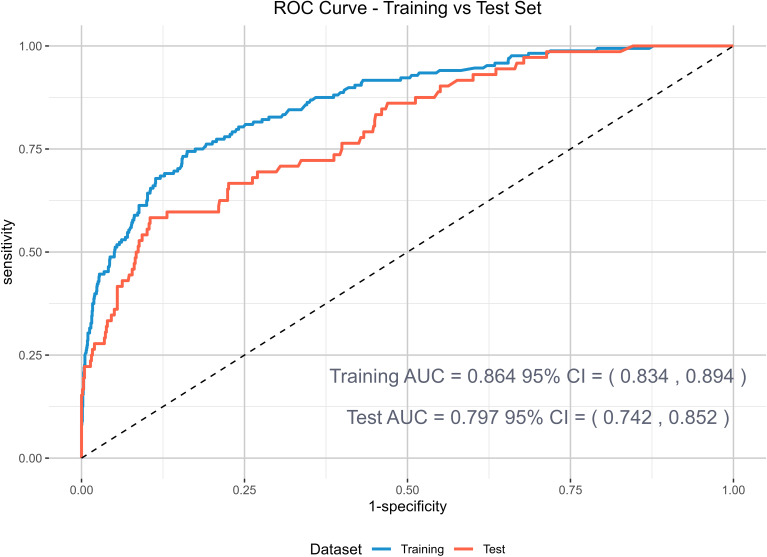
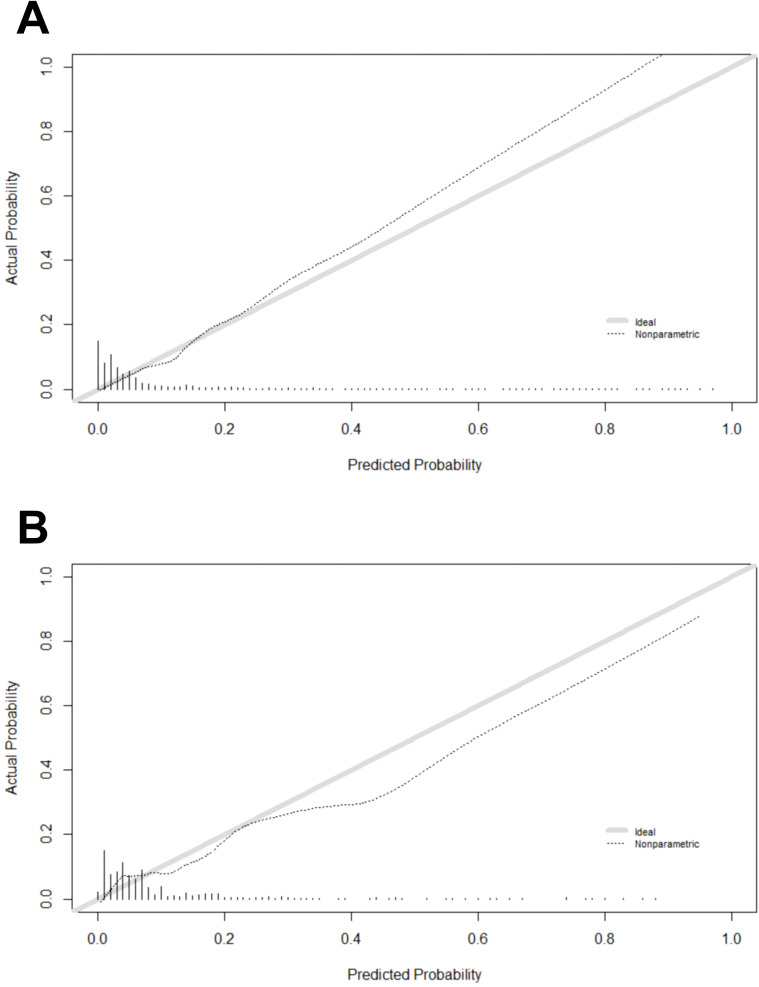
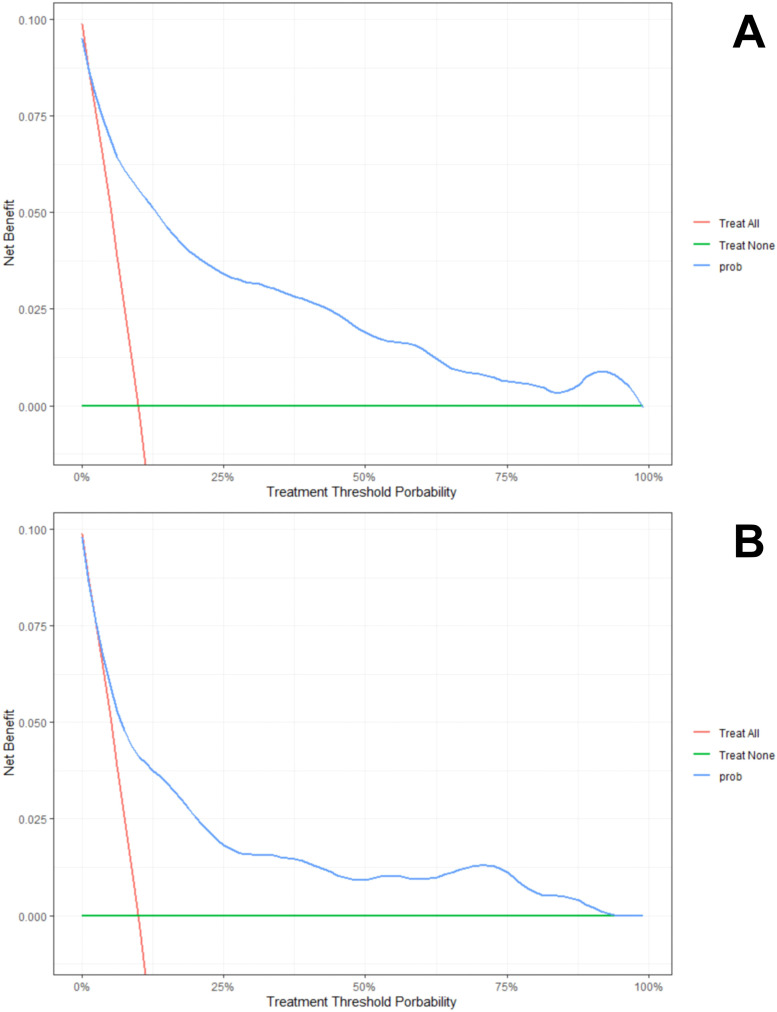
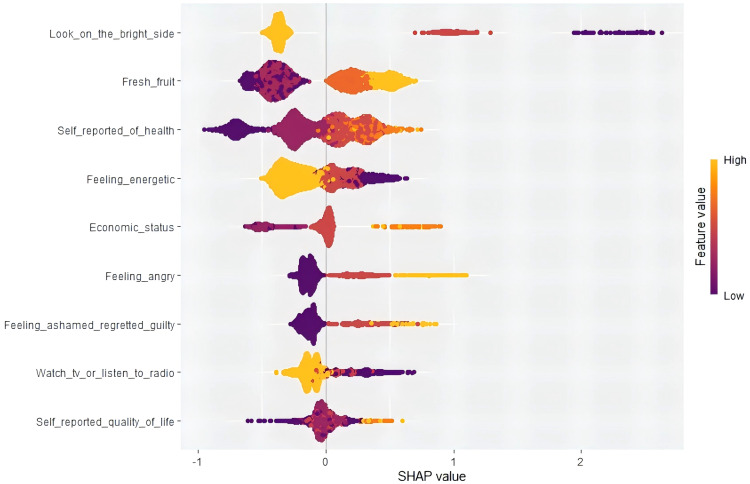
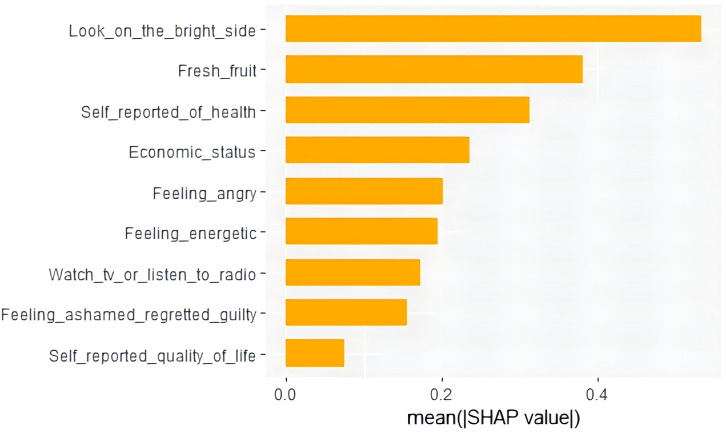
A total of 240 participants (9.89%) with anxiety symptoms out of 2,427 participants were included. LASSO regression identified nine key variables: looking on the bright side, self-reported economic status, self-reported quality of life, self-reported health status, watching TV or listening to the radio, feeling energetic, feeling ashamed/regretful/guilty, feeling angry, and fresh fruits. All the evaluation indicators of the XGBoost model showed good predictive efficacy. Based on the significance of the features identified by SHAP (Model Interpretation Methodology), the feature 'looking on the bright side' was the most important, and the feature 'self-reported quality of life' was the least important. The SHAP beeswarm plot illustrated the impacts of features affected by XGBoost.
Utilizing machine learning techniques, our predictive model can precisely evaluate the risk of anxiety symptoms among elderly individuals with abdominal obesity, facilitating the timely adoption of targeted intervention measures. The integration of XGBoost and SHAP offers transparent interpretations for customized risk forecasts.
焦虑症状的早期检测有助于早期干预,并可能有助于减轻老年腹型肥胖患者晚年的疾病负担,从而增加健康老龄化的机会。本研究的目的是构建并验证一个预测模型,以预测中国老年腹型肥胖个体出现焦虑症状的概率。
本研究的模型开发和内部验证纳入了2017 - 2018年中国老年健康长寿纵向调查(CLHLS)的2427名参与者。基于健康生态模型(HEM)理论框架定义了46个变量。使用LASSO回归筛选关键变量,并进一步引入XGBoost(极端梯度提升)模型来预测老年腹型肥胖患者出现焦虑症状的风险。采用SHapley加法解释(SHAP)进一步解释并展示特征值如何对模型预测产生影响。
2427名参与者中共有240名(9.89%)有焦虑症状。LASSO回归确定了9个关键变量:看积极面、自我报告的经济状况、自我报告的生活质量、自我报告的健康状况、看电视或听广播、精力充沛、感到羞愧/后悔/内疚、感到愤怒和新鲜水果。XGBoost模型的所有评估指标均显示出良好的预测效果。基于SHAP(模型解释方法)确定的特征重要性,“看积极面”这一特征最重要,“自我报告的生活质量”这一特征最不重要。SHAP蜂群图展示了XGBoost影响特征的情况。
利用机器学习技术,我们的预测模型可以精确评估老年腹型肥胖个体出现焦虑症状的风险,便于及时采取针对性的干预措施。XGBoost和SHAP的结合为定制化风险预测提供了透明的解释。