Koura Kobto G, Harries Anthony D
International Union Against Tuberculosis and Lung Disease, 75001 Paris, France.
MERIT Research Unit (UMR261 MERIT), University of Paris Cité (UPCité), Research Institute for Development (IRD), 75006 Paris, France.
Trop Med Infect Dis. 2024 Dec 2;9(12):294. doi: 10.3390/tropicalmed9120294.
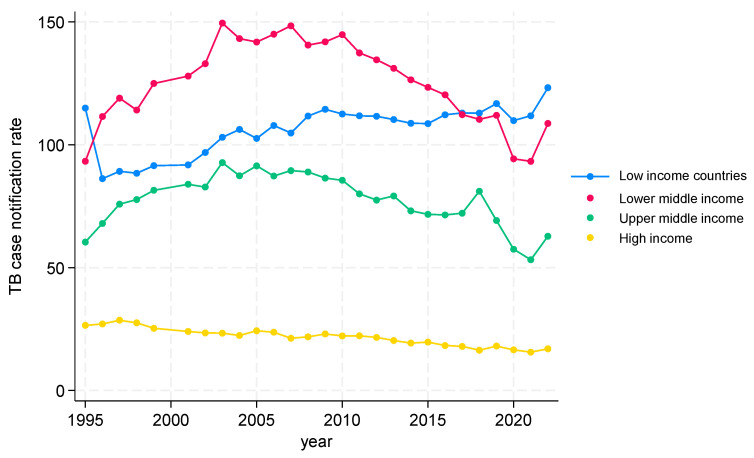
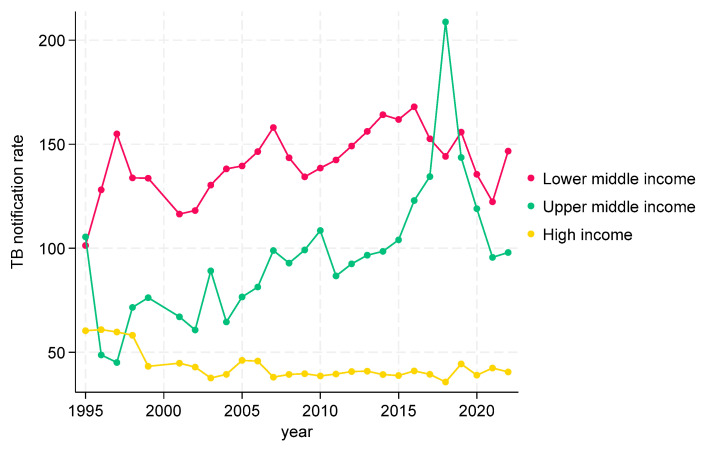
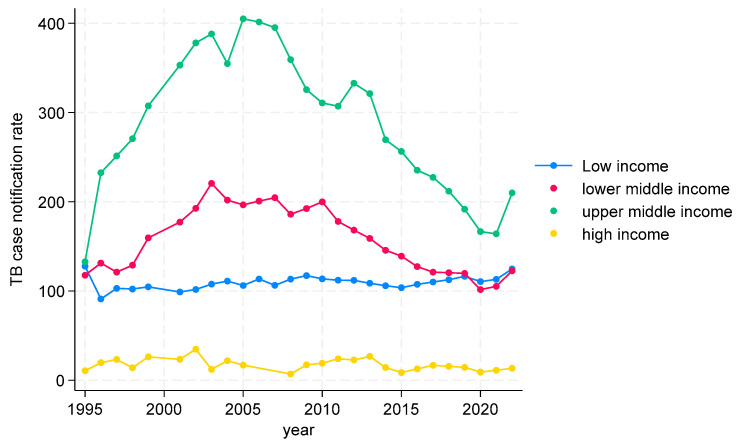
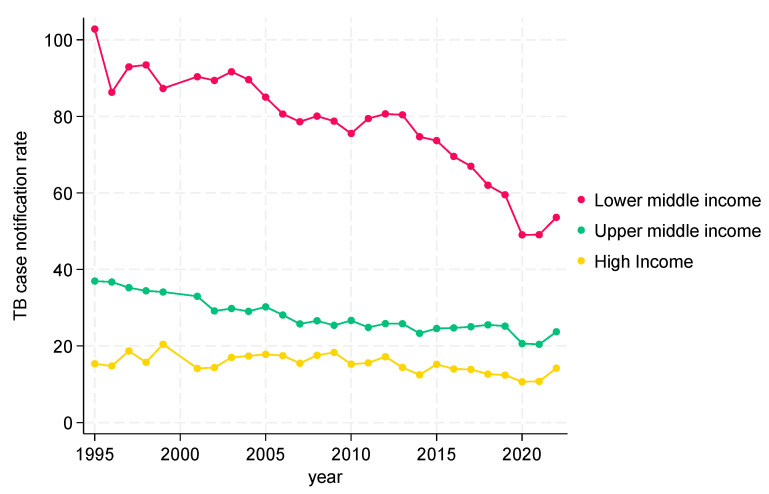
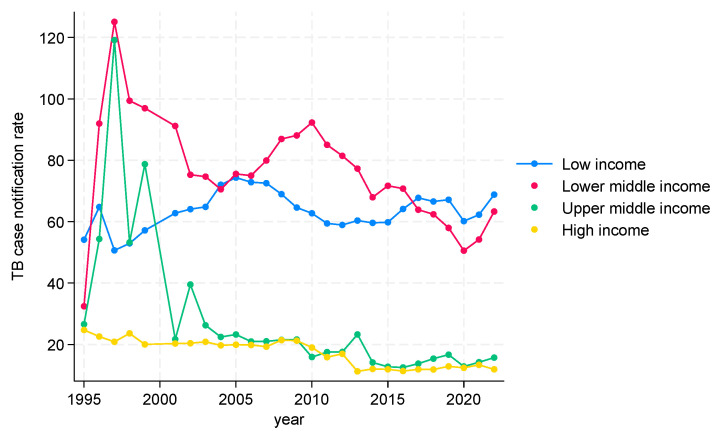
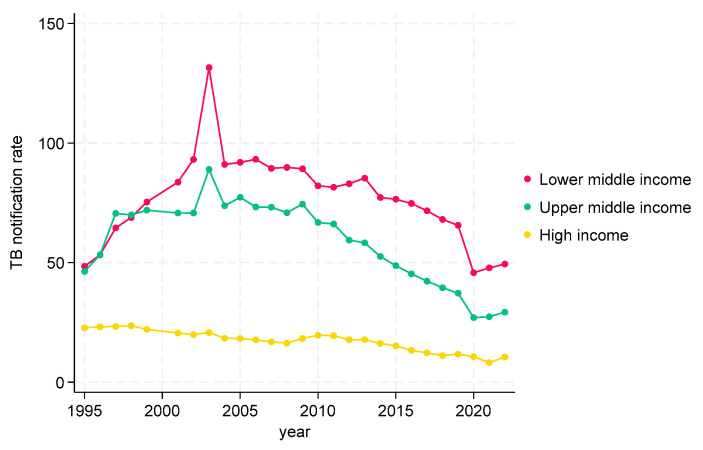
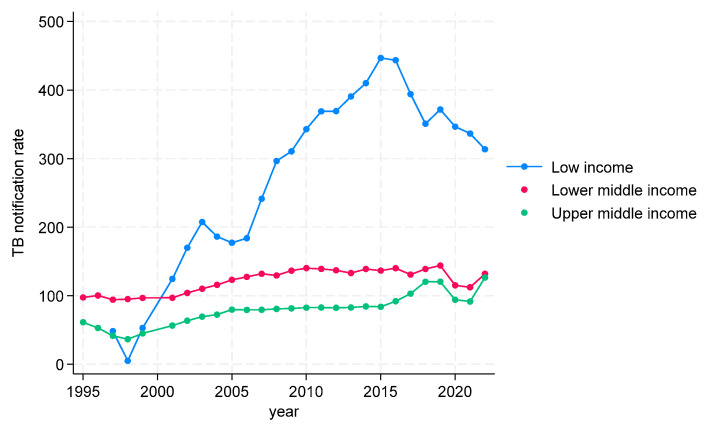
Over the past 27 years, three major global TB control strategies have been implemented, and it is important at this stage to evaluate their impact on tuberculosis (TB) case notification rates (CNRs). This study, therefore, analyzed TB CNR trends from 1995 to 2022 across 208 countries and islands, using data from the WHO Global TB Programme database. Countries were classified by income level and population size based on World Bank criteria. The analysis revealed significant disparities in TB CNRs across income groups: Low-income, lower-middle-income, and upper-middle-income countries consistently reported higher CNRs compared to high-income countries. Regional analysis further demonstrated notable variations influenced by both economic and geographical factors. These findings reaffirm the strong link between TB and poverty, underscoring the need for a holistic approach to combat the disease. Efforts must extend beyond enhancing health care access and delivery to addressing the social determinants that drive TB transmission and progression.
在过去27年里,全球实施了三项主要的结核病控制策略,在现阶段评估它们对结核病病例通报率的影响非常重要。因此,本研究利用世界卫生组织全球结核病规划数据库的数据,分析了1995年至2022年期间208个国家和岛屿的结核病病例通报率趋势。根据世界银行的标准,各国按收入水平和人口规模进行分类。分析显示,不同收入群体的结核病病例通报率存在显著差异:与高收入国家相比,低收入、中低收入和中高收入国家的病例通报率一直较高。区域分析进一步表明,经济和地理因素都对其产生了显著影响。这些发现再次证实了结核病与贫困之间的紧密联系,强调了采取整体方法抗击该疾病的必要性。努力必须超越加强医疗服务的可及性和提供,还要解决推动结核病传播和进展的社会决定因素。