Santos Clara Lucato Dos, Barreto Indyanara Inacio, Silva Ana Carolina Furian da, Soriano Juliana Firmino Batista, Castro Jeferson de Lima Silva, Tristão Luca Schiliró, Bernardo Wanderley Marques
Department of Evidence-Based Medicine, Faculdade de Ciências Médicas de Santos (UNILUS), Santos, SP, Brazil.
Center for Evidence-Based Medicine, Unimed Campinas, SP, Brazil; Evidence-Based Medicine Committee at Federação das Unimeds do Estado de São Paulo (FESP), São Paulo, SP, Brazil.
Clinics (Sao Paulo). 2024 Dec 26;80:100566. doi: 10.1016/j.clinsp.2024.100566. eCollection 2025.
Autism Spectrum Disorder (ASD) is a neurodevelopment spectrum characterized by persistent deficits in social communication and interpersonal interaction, along with restricted and repetitive patterns of behavior, interest, or activities. The appropriate screening and diagnosis must be realized to improve the children's prognosis. Moreover, appropriate treatments are necessary to promote better social integration and development. In this scenario, this systematic review aims to evaluate the impacts of behavioral therapies applied in healthcare settings for patients with ASD.
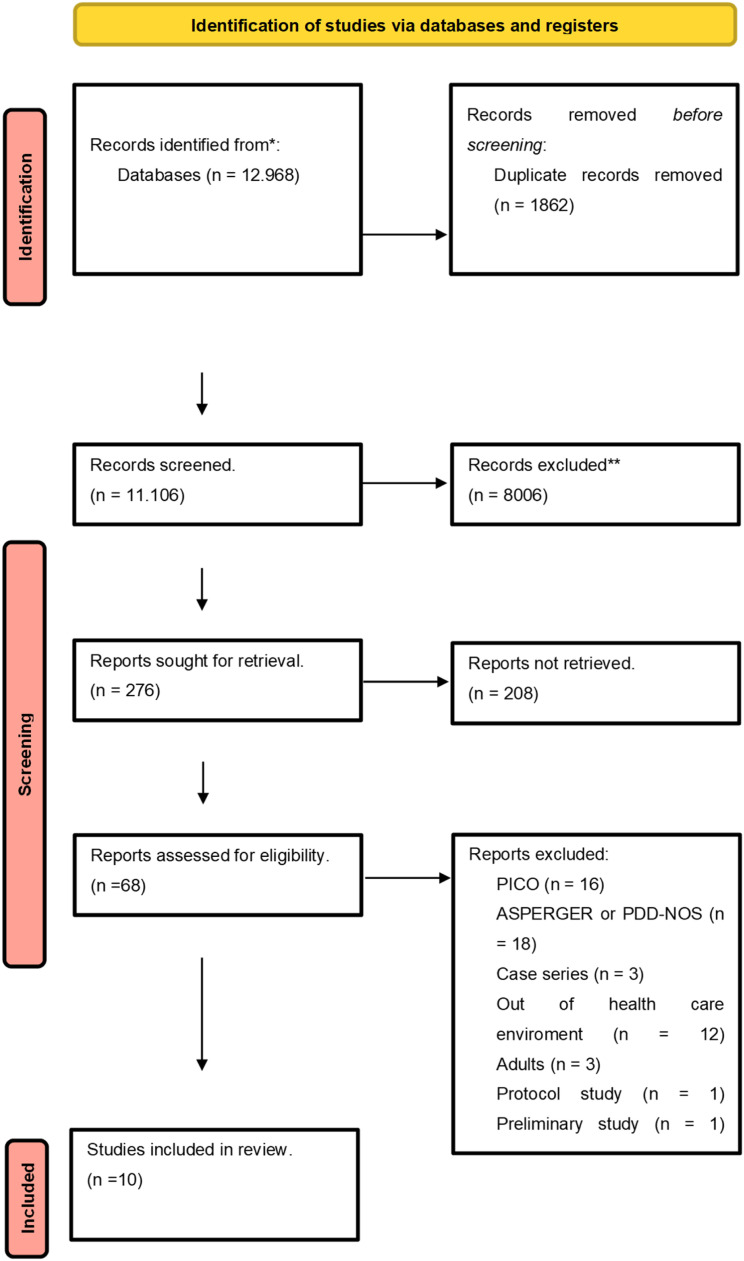
This systematic review followed the PRISMA guidelines. The databases MEDLINE, Embase, CENTRAL (Cochrane), and Lilacs were accessed, and gray and manual searches were performed. The search strategy was created with terms referring to autism and behavioral therapy. The studies were assessed qualitatively.
Randomized clinical trials and observational studies demonstrated improvements in cognitive and verbal components of patients who received behavioral therapies in therapeutic settings. These results indicate a positive impact of both cognitive-behavioral therapy and ESDM on the development of patients' skills. Among the cognitive-behavioral therapies, the one based on the MASSI protocol did not impact the reduction of anxious symptoms. As for cognitive-behavioral therapy, one study demonstrated that the Behavioral Intervention for Anxiety in Children with Autism (BIACA), when compared to the Coping Cat protocol, improves cognition and reduces anxiety symptoms. Despite these results, further randomized clinical trials comparing behavioral therapies with one another are needed.
In the context of behavioral therapy within a healthcare setting, the Early Start Denver Model (ESDM) showed improvements in the cognitive, verbal, and social aspects of the evaluated patients. Improvement in scores sometimes is achieved independently of the group and related to the time of interventions.
自闭症谱系障碍(ASD)是一种神经发育谱系障碍,其特征是社交沟通和人际互动持续存在缺陷,以及行为、兴趣或活动模式受限且重复。必须进行适当的筛查和诊断以改善儿童的预后。此外,需要适当的治疗来促进更好的社会融合和发展。在这种情况下,本系统评价旨在评估在医疗环境中对ASD患者应用行为疗法的影响。
本系统评价遵循PRISMA指南。检索了MEDLINE、Embase、CENTRAL(Cochrane)和Lilacs数据库,并进行了灰色文献和手工检索。使用与自闭症和行为疗法相关的术语制定了检索策略。对研究进行了定性评估。
随机临床试验和观察性研究表明,在治疗环境中接受行为疗法的患者在认知和语言方面有改善。这些结果表明认知行为疗法和早期丹佛模式(ESDM)对患者技能发展均有积极影响。在认知行为疗法中,基于MASSI方案的疗法对减轻焦虑症状没有影响。至于认知行为疗法,一项研究表明,与应对猫方案相比,自闭症儿童焦虑行为干预(BIACA)可改善认知并减轻焦虑症状。尽管有这些结果,但仍需要进一步进行相互比较行为疗法的随机临床试验。
在医疗环境中的行为疗法背景下,早期丹佛模式(ESDM)在评估患者的认知、语言和社交方面显示出改善。有时得分的提高与干预时间有关,与分组无关。