Mazzarella Teresa, Chialva Matteo, de Souza Leonardo Perez, Wang Jian You, Votta Cristina, Tiozon Rhowell, Vaccino Patrizia, Salvioli di Fossalunga Alessandra, Sreenivasulu Nese, Asami Tadao, Fernie Alisdair R, Al-Babili Salim, Lanfranco Luisa, Fiorilli Valentina
Department of Life Sciences and Systems Biology, University of Turin, Viale Mattioli 25, Turin, 10125, Turin, Italy.
Max-Planck-Institute of Molecular Plant Physiology, Am Mühlenberg 1, 14476, Potsdam-Golm, Germany.
Sci Rep. 2024 Dec 28;14(1):31374. doi: 10.1038/s41598-024-82833-6.
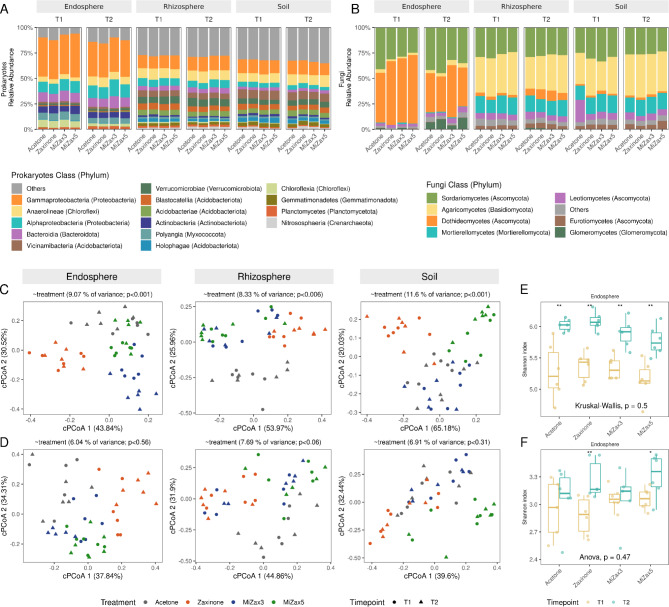
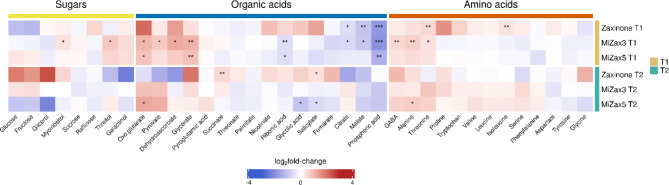
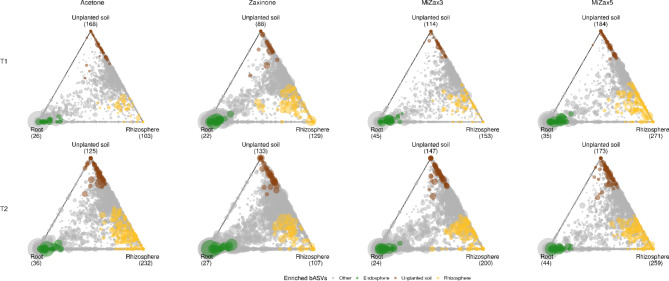
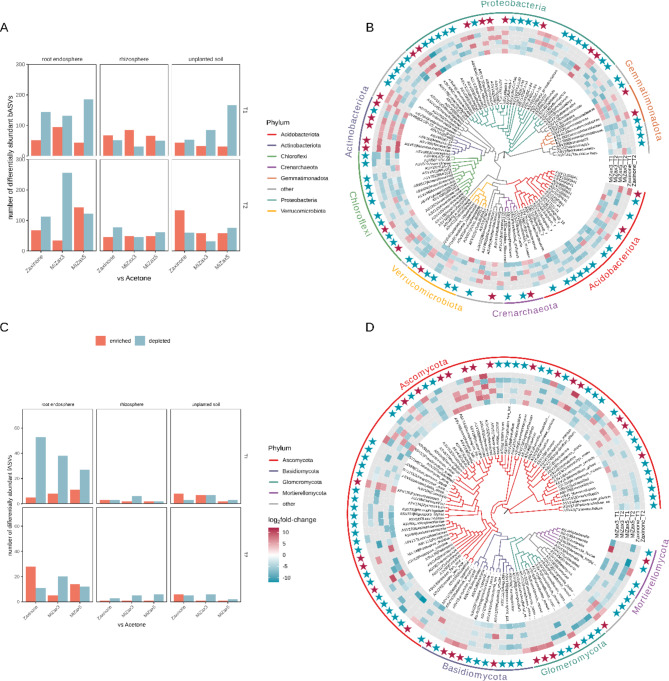
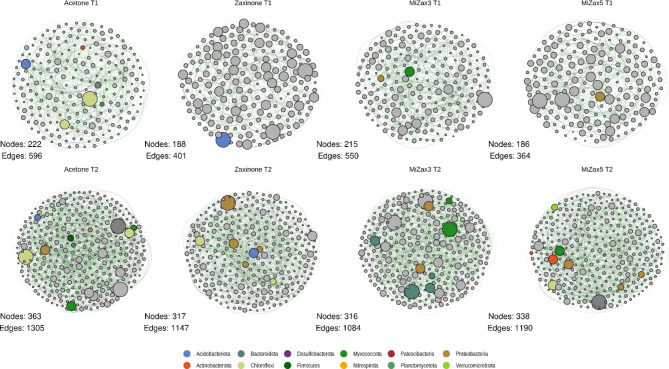
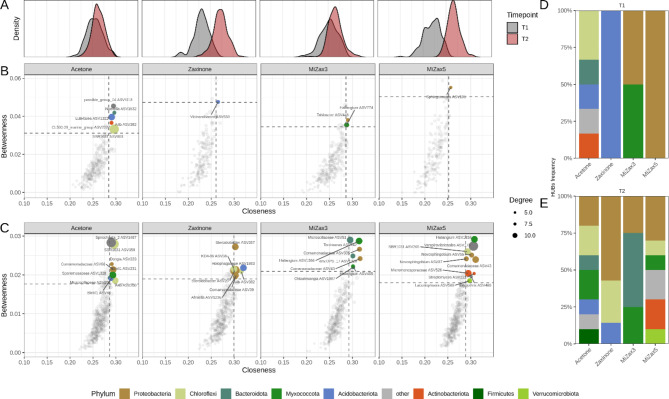
Enhancing crops productivity to ensure food security is one of the major challenges encountering agriculture today. A promising solution is the use of biostimulants, which encompass molecules that enhance plant fitness, growth, and productivity. The regulatory metabolite zaxinone and its mimics (MiZax3 and MiZax5) showed promising results in improving the growth and yield of several crops. Here, the impact of their exogenous application on soil and rice root microbiota was investigated. Plants grown in native paddy soil were treated with zaxinone, MiZax3, and MiZax5 and the composition of bacterial and fungal communities in soil, rhizosphere, and endosphere at the tillering and the milky stage was assessed. Furthermore, shoot metabolome profile and nutrient content of the seeds were evaluated. Results show that treatment with zaxinone and its mimics predominantly influenced the root endosphere prokaryotic community, causing a partial depletion of plant-beneficial microbes at the tillering stage, followed by a recovery of the prokaryotic community structure during the milky stage. Our study provides new insights into the role of zaxinone and MiZax in the interplay between rice and its root-associated microbiota and paves the way for their practical application in the field as ecologically friendly biostimulants to enhance crop productivity.
提高作物生产力以确保粮食安全是当今农业面临的主要挑战之一。一个有前景的解决方案是使用生物刺激剂,它包含能增强植物健康、生长和生产力的分子。调控代谢物札昔酮及其类似物(MiZax3和MiZax5)在提高几种作物的生长和产量方面显示出了有前景的结果。在此,研究了它们的外源施用对土壤和水稻根际微生物群的影响。在原生稻田土壤中生长的植物用札昔酮、MiZax3和MiZax5进行处理,并评估了分蘖期和乳熟期土壤、根际和内生菌中细菌和真菌群落的组成。此外,还评估了地上部代谢组谱和种子的养分含量。结果表明,用札昔酮及其类似物处理主要影响根内生原核生物群落,在分蘖期导致对植物有益微生物的部分消耗,随后在乳熟期原核生物群落结构恢复。我们的研究为札昔酮和MiZax在水稻与其根际相关微生物群相互作用中的作用提供了新的见解,并为它们作为生态友好型生物刺激剂在田间实际应用以提高作物生产力铺平了道路。