Liu Hongbin, Huang Ruo, Shen Binhai, Huang Chongyang, Zhou Qian, Xu Jiahui, Chen Shengbo, Lin Xinlong, Wang Jun, Zhao Xinmei, Guo Yandong, Ai Xiuyun, Liu Yangyang, Wang Ye, Zhang Wendi, Zhi Fachao
Department of Gastroenterology, Guangdong Provincial Key Laboratory of Gastroenterology, Institute of Gastroenterology of Guangdong Province, Nanfang Hospital, Southern Medical University, Guangzhou, China.
Department of Gastroenterology, The Second Affiliated Hospital of Guangzhou University of Chinese Medicine, Guangzhou, China.
Microbiome. 2024 Dec 30;12(1):275. doi: 10.1186/s40168-024-01995-7.
The interplay between gut microbiota and immune responses is crucial in ulcerative colitis (UC). Though Akkermansia muciniphila (Akk) shows therapeutic potential, the mechanisms remain unclear. This study sought to investigate differences in therapeutic efficacy among different forms or strains of Akk and elucidate the underlying mechanisms.
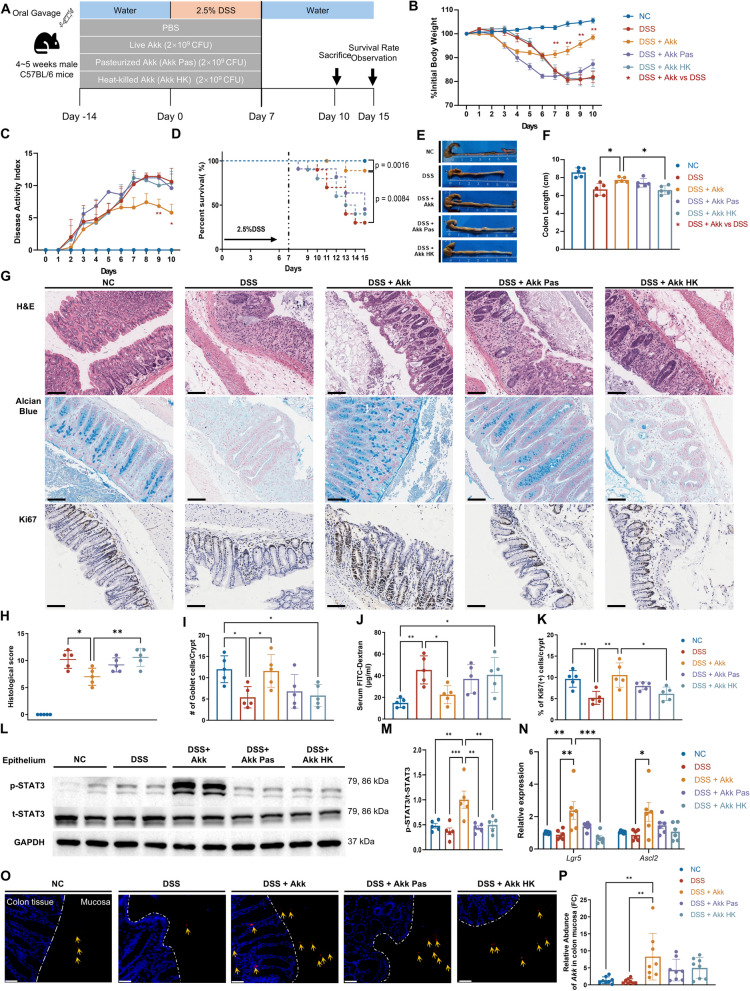
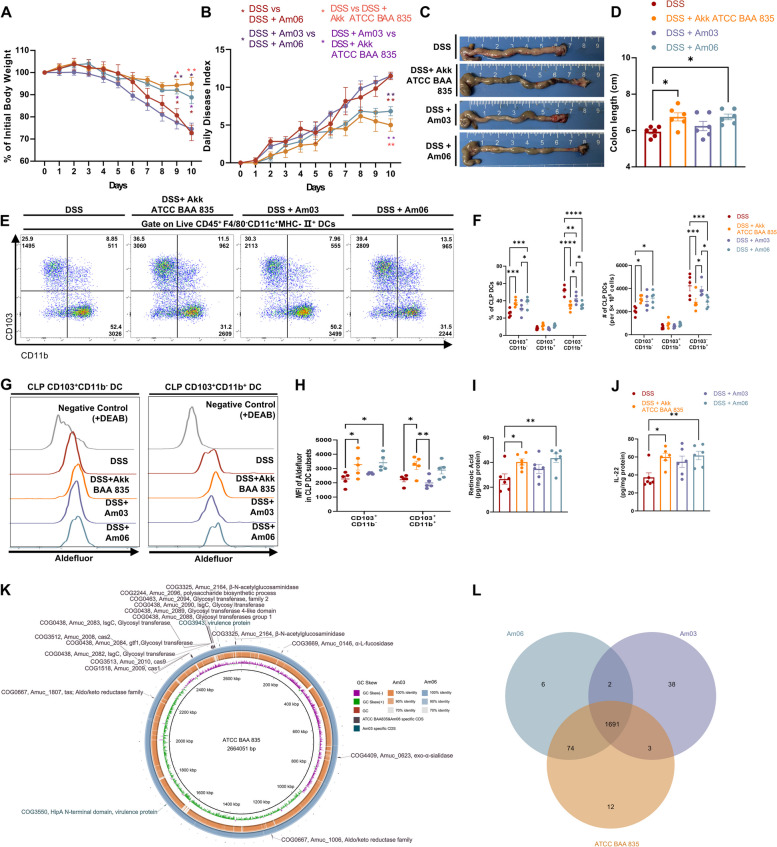
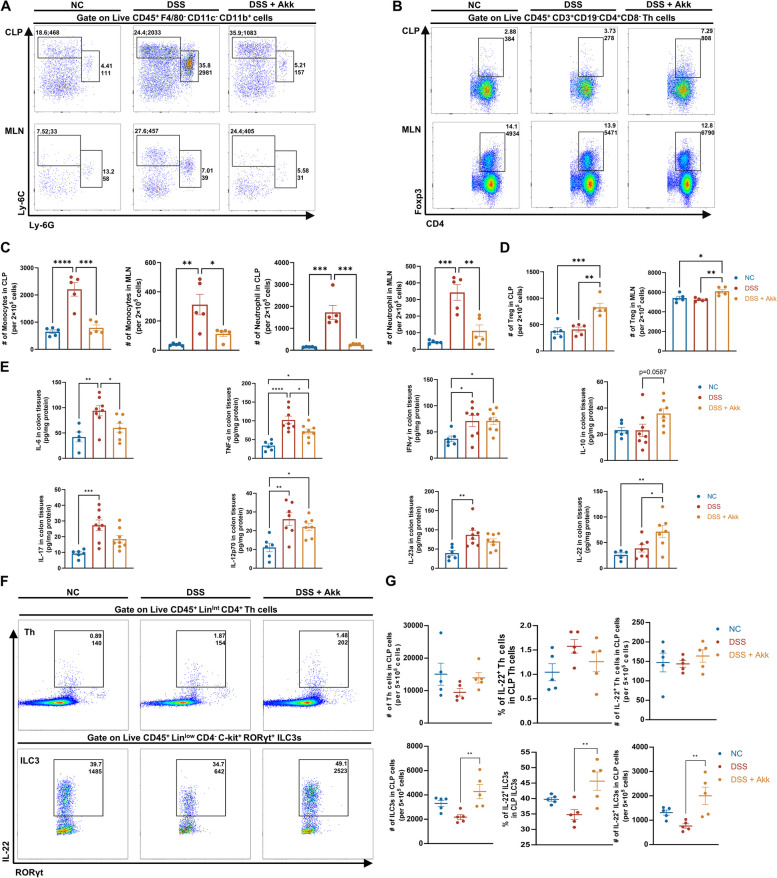
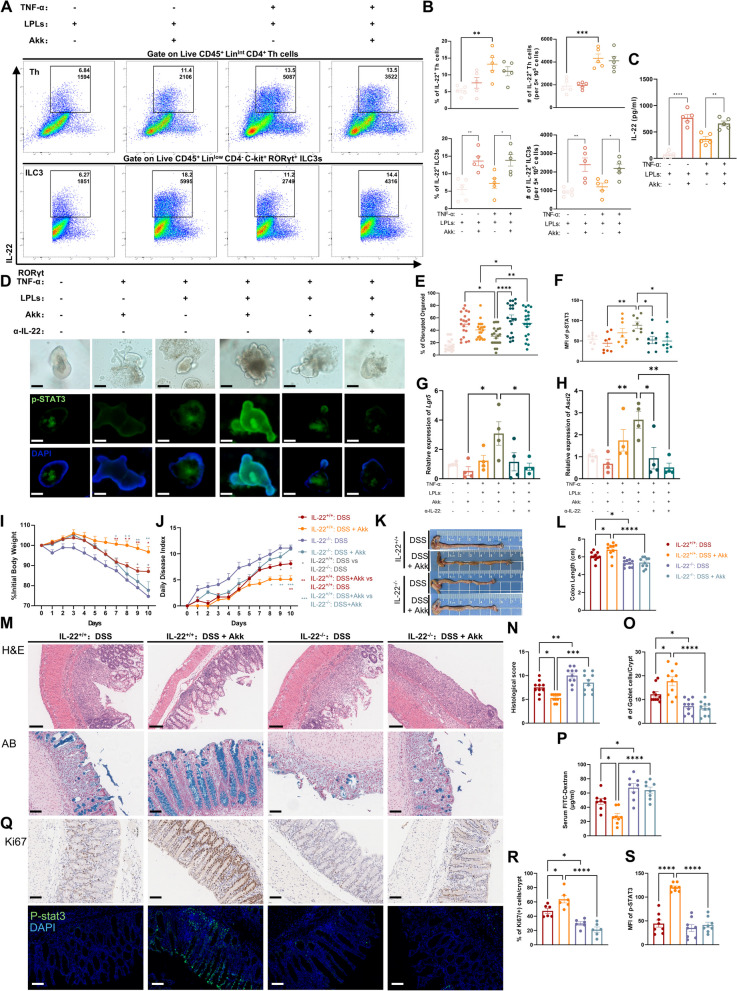
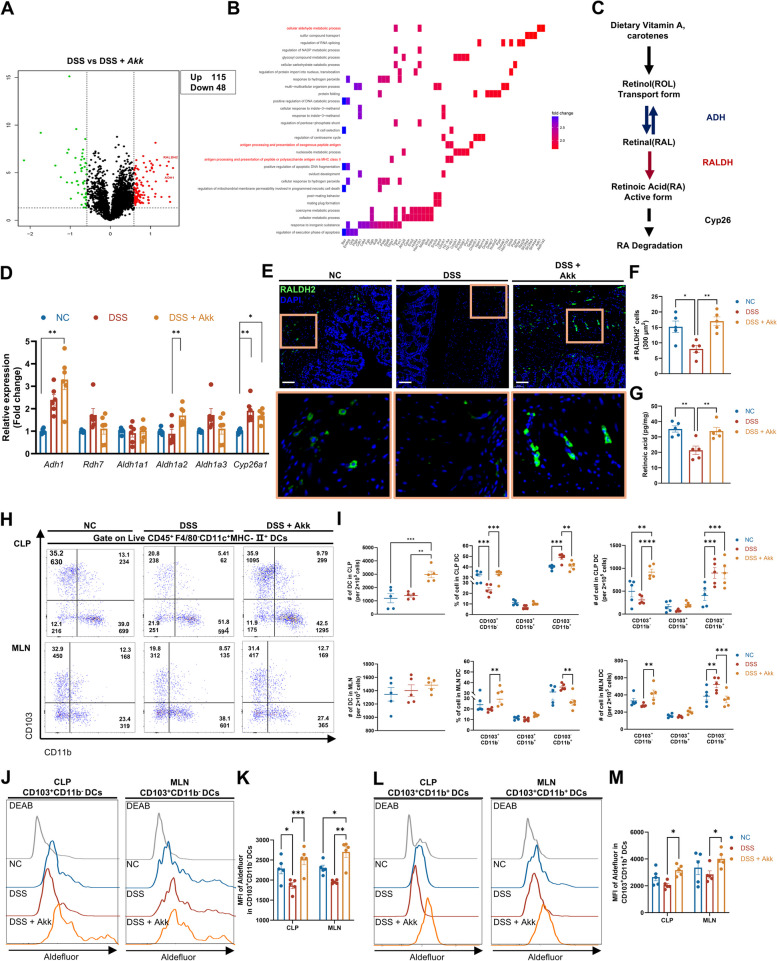
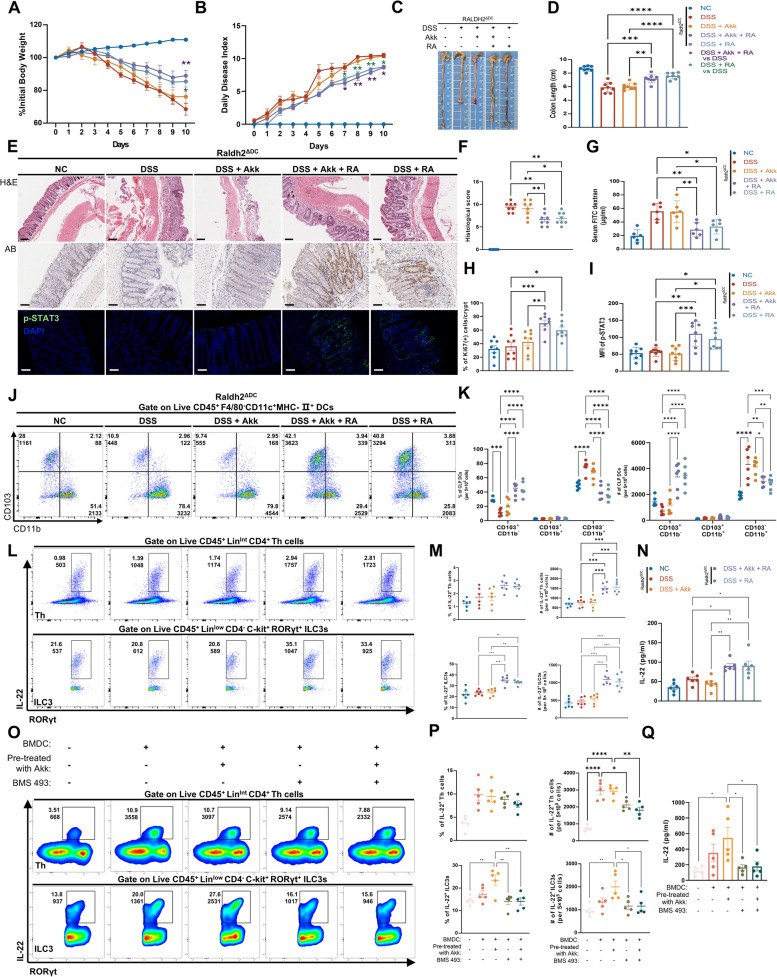
Employing a dextran sulfate sodium (DSS)-induced colitis mouse model, we assessed Akk's impact on colitis using cellular cytokine analysis, immune phenotyping, proteomics, and biochemical methods. Our results suggest that treatment with live Akk effectively reduced colitis in the DSS-induced model, whereas heat-inactivated Akk did not yield the same results. Notably, Akk exhibited protective properties by promoting the secretion of IL-22 by Group 3 innate lymphoid cells (ILC3s), as evidenced by the absence of protection in IL-22 knockout mice. Additionally, Akk augmented the population of CD103CD11b dendritic cells (DCs) and enhanced their retinoic acid (RA) synthesis through the modulation of RALDH2, a crucial enzyme in RA metabolism. The depletion of RALDH2 in DCs diminished Akk's protective properties and impaired IL-22-mediated mucosal healing. Mechanistically, Akk activated RA production in DCs by enhancing the JAK2-STAT3 signaling pathway. Additionally, various strains of Akk may exhibit differing abilities to alleviate colitis, with the novel strain Am06 derived from breast milk showing consistent efficacy similar to the reference strain.
In summary, our findings indicate that certain strains of Akk may mitigate colitis through the promotion of RA synthesis and IL-22 secretion, underscoring the potential efficacy of Akk as a therapeutic intervention for the management of UC. Video Abstract.
肠道微生物群与免疫反应之间的相互作用在溃疡性结肠炎(UC)中至关重要。尽管嗜黏蛋白阿克曼氏菌(Akk)显示出治疗潜力,但其机制仍不清楚。本研究旨在探究不同形式或菌株的Akk在治疗效果上的差异,并阐明其潜在机制。
利用葡聚糖硫酸钠(DSS)诱导的结肠炎小鼠模型,我们通过细胞因子分析、免疫表型分析、蛋白质组学和生化方法评估了Akk对结肠炎的影响。我们的结果表明,用活的Akk治疗可有效减轻DSS诱导模型中的结肠炎,而热灭活的Akk则未产生相同效果。值得注意的是,Akk通过促进3型天然淋巴细胞(ILC3s)分泌IL-22而表现出保护特性,IL-22基因敲除小鼠缺乏保护作用证明了这一点。此外,Akk增加了CD103⁺CD11b⁺树突状细胞(DCs)的数量,并通过调节视黄醛脱氢酶2(RALDH2,RA代谢中的关键酶)增强了它们的视黄酸(RA)合成。DCs中RALDH2的缺失削弱了Akk的保护特性,并损害了IL-22介导的黏膜愈合。从机制上讲,Akk通过增强JAK2-STAT3信号通路激活DCs中的RA产生。此外,不同菌株的Akk在减轻结肠炎方面可能表现出不同的能力,源自母乳的新型菌株Am06显示出与参考菌株相似的一致疗效。
总之,我们的研究结果表明,某些Akk菌株可能通过促进RA合成和IL-22分泌来减轻结肠炎,强调了Akk作为UC治疗干预措施的潜在疗效。视频摘要。