Desouky Omar, Lawes Natasha, Hunter Tom, Zafar Nowera, Whitehead Wendy
Department of Undergraduate Education, Royal Blackburn Hospital, Blackburn, GBR.
Cureus. 2024 Nov 27;16(11):e74555. doi: 10.7759/cureus.74555. eCollection 2024 Nov.
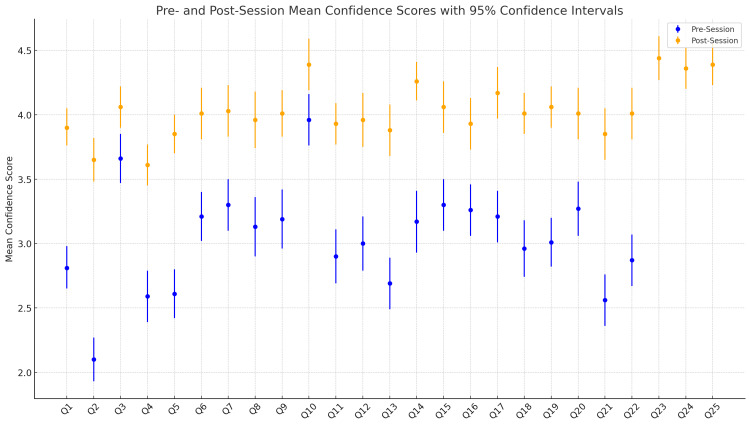
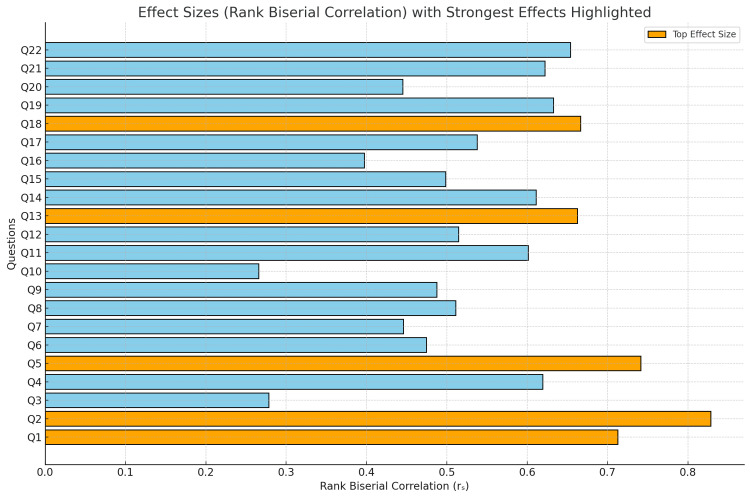
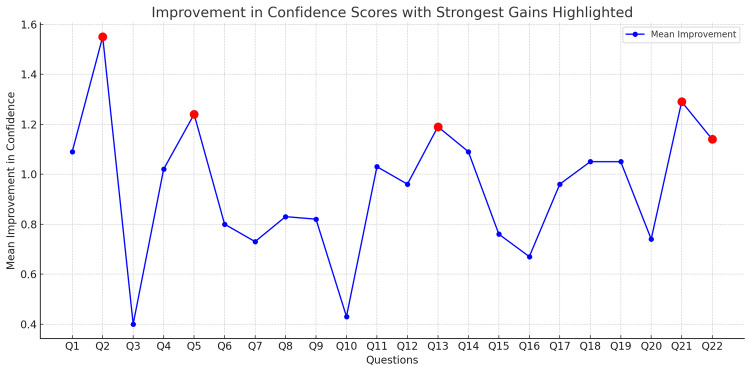
Introduction Transitioning from a medical student to a foundation doctor presents numerous challenges, particularly in managing on-call duties that require quick decision-making, clinical skills, and prioritisation under pressure. The Simulation On-Call (SOC) program was developed as a one-day, immersive simulation event to equip final-year medical students with the skills and confidence needed for these responsibilities. Methods The SOC program is an annual event held for final-year medical students at the Royal Blackburn Hospital, Blackburn, UK. It is conducted over five days, with 80 final-year medical students rotating through nine stations that replicated common on-call scenarios. Each station required students to address critical medical situations, such as managing an acutely unwell patient, electrolyte abnormalities, and referring and communicating with colleagues, while managing realistic interruptions through a "bleep" system. Pre- and post-event questionnaires, featuring 25 Likert-scale items, were disseminated to assess student feedback and self-reported confidence across competencies, including communication, clinical decision-making, and task prioritisation. A retrospective review and analysis of the feedback was performed to assess the impact of the SOC program by assessing the pre- and post-session questionnaires. Results Of the 80 participants, 70 completed the pre-event questionnaire, and 72 completed the post-event questionnaire. Statistical analysis revealed a significant increase in students' self-reported confidence across all 25 Likert-scale items, with marked improvements in task prioritisation (rₛ = 0.74, p < 0.001), managing acutely unwell patients (rₛ = 0.60, p < 0.001), and escalation skills (rₛ = 0.49, p < 0.001). Effect sizes ranged from moderate to large, underscoring the practical impact of the Simulation On-Call program in enhancing preparedness and confidence for on-call responsibilities. Conclusion The SOC program provided a valuable, realistic, and supportive environment for final-year medical students to practice on-call responsibilities. The significant improvement in student confidence highlights the effectiveness of this program as a preparatory tool for foundation doctors. Future iterations will incorporate feedback to continually refine the simulation experience, ensuring its alignment with clinical demands.
引言
从医学生转变为住院医师面临着诸多挑战,尤其是在处理需要快速决策、临床技能以及在压力下进行优先级排序的值班职责时。模拟值班(SOC)项目是作为一项为期一天的沉浸式模拟活动而开发的,旨在让医学专业最后一年的学生具备履行这些职责所需的技能和信心。
方法
SOC项目是英国布莱克本皇家布莱克本医院为医学专业最后一年的学生举办的年度活动。该活动为期五天,80名医学专业最后一年的学生轮流在九个模拟常见值班场景的站点进行演练。每个站点要求学生应对危急医疗情况,如处理急性不适患者、电解质异常,以及与同事进行转诊和沟通,同时通过“传呼”系统应对实际的干扰情况。活动前后分别发放了包含25个李克特量表项目的问卷,以评估学生的反馈以及他们在沟通、临床决策和任务优先级排序等能力方面的自我报告信心。通过评估活动前后的问卷对反馈进行回顾性审查和分析,以评估SOC项目的影响。
结果
80名参与者中,70人完成了活动前问卷,72人完成了活动后问卷。统计分析显示,在所有25个李克特量表项目上,学生自我报告的信心均有显著提高,在任务优先级排序(rₛ = 0.74,p < 0.001)、处理急性不适患者(rₛ = 0.60,p < 0.001)和病情升级处理技能(rₛ = 0.49,p < 0.001)方面有明显改善。效应大小从中度到高度不等,突出了模拟值班项目在增强应对值班职责的准备程度和信心方面的实际影响。
结论
SOC项目为医学专业最后一年的学生提供了一个宝贵、真实且具有支持性的环境来练习值班职责。学生信心的显著提高凸显了该项目作为住院医师预备工具的有效性。未来的迭代将纳入反馈意见,以不断完善模拟体验,确保其与临床需求保持一致。