Li Tingting, Lyu Ruimin, Xie Zhenping
School of Artificial Intelligence and Computer Science, Jiangnan University, Wuxi, 214122, China.
Jiangsu Key University Laboratory of Software and Media Technology under Human-Computer Cooperation, Jiangnan University, Wuxi, 214122, China.
Sci Rep. 2024 Dec 30;14(1):31649. doi: 10.1038/s41598-024-80647-0.
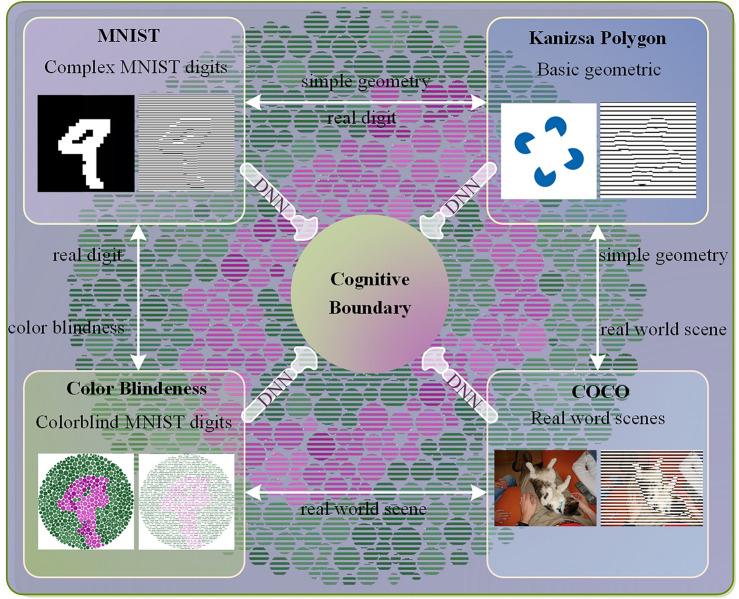
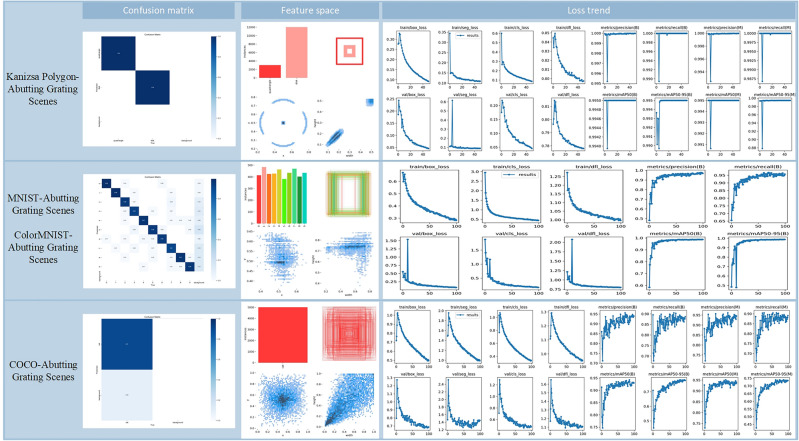
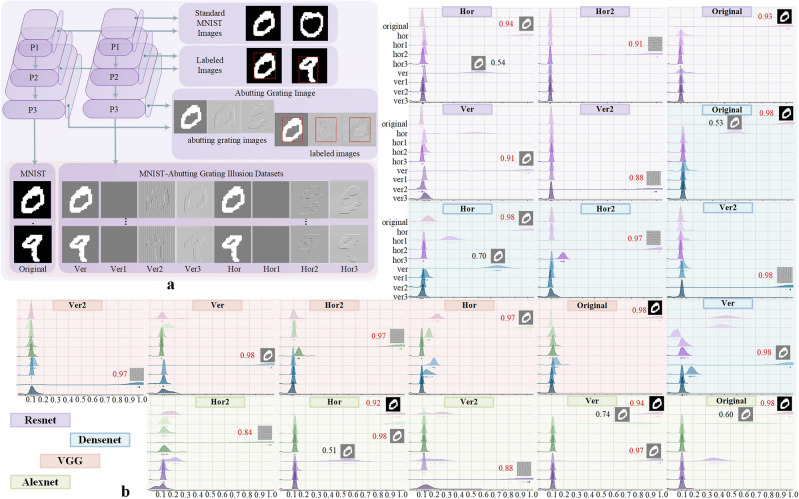
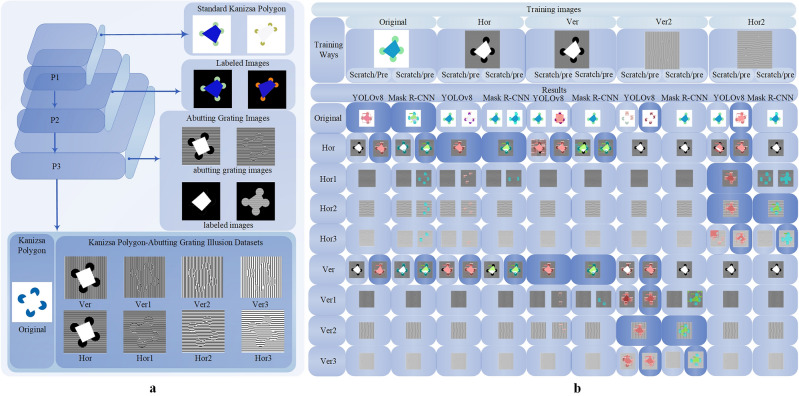
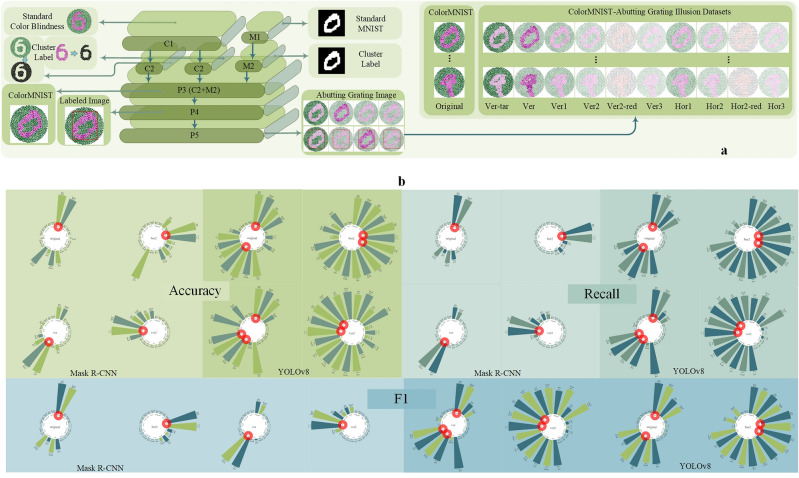
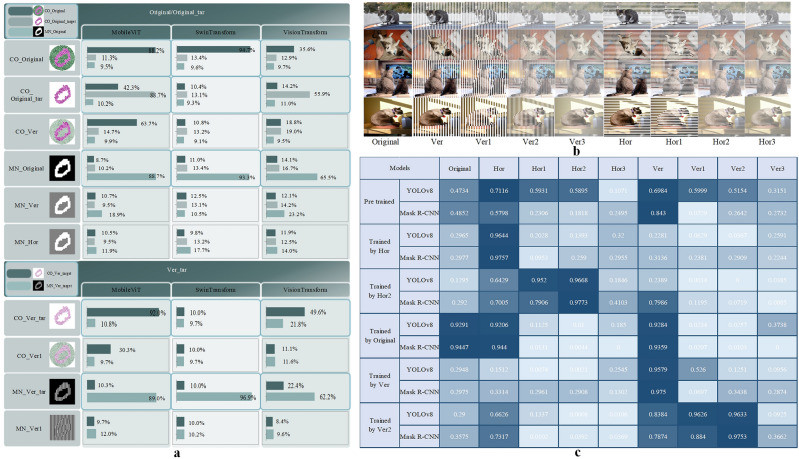
The unknown boundary issue, between superior computational capability of deep neural networks (DNNs) and human cognitive ability, has becoming crucial and foundational theoretical problem in AI evolution. Undoubtedly, DNN-empowered AI capability is increasingly surpassing human intelligence in handling general intelligent tasks. However, the absence of DNN's interpretability and recurrent erratic behavior remain incontrovertible facts. Inspired by perceptual characteristics of human vision on optical illusions, we propose a novel working capability analysis framework for DNNs through innovative cognitive response characteristics on visual illusion images, accompanied with fine adjustable sample image construction strategy. Our findings indicate that, although DNNs can infinitely approximate human-provided empirical standards in pattern classification, object detection and semantic segmentation, they are still unable to truly realize independent pattern memorization. All super cognitive abilities of DNNs purely come from their powerful sample classification performance on similar known scenes. Above discovery establishes a new foundation for advancing artificial general intelligence.
深度神经网络(DNN)卓越的计算能力与人类认知能力之间的未知边界问题,已成为人工智能发展中至关重要的基础理论问题。毫无疑问,在处理一般智能任务时,受DNN驱动的人工智能能力正日益超越人类智能。然而,DNN缺乏可解释性以及反复无常的行为仍是不争的事实。受人类视觉对视觉错觉的感知特性启发,我们通过对视觉错觉图像的创新认知响应特性,提出了一种新颖的DNN工作能力分析框架,并伴有精细可调的样本图像构建策略。我们的研究结果表明,尽管DNN在模式分类、目标检测和语义分割方面能够无限接近人类提供的经验标准,但它们仍无法真正实现独立的模式记忆。DNN的所有超认知能力纯粹源于其在相似已知场景上强大的样本分类性能。上述发现为推进通用人工智能奠定了新基础。