Beigiazaraghbelagh Parvin, Rostamizadeh Shahnaz, Poursattar Marjani Ahmad, Bahrami Aidin, Ghiasvand Arezu, Arabi Zahra
Department of Chemistry, Faculty of Science, K. N. Toosi University of Technology, P.O. Box 15875-4416, Tehran, Iran.
Department of Organic Chemistry, Faculty of Chemistry, Urmia University, Urmia, Iran.
Sci Rep. 2024 Dec 30;14(1):31737. doi: 10.1038/s41598-024-82347-1.
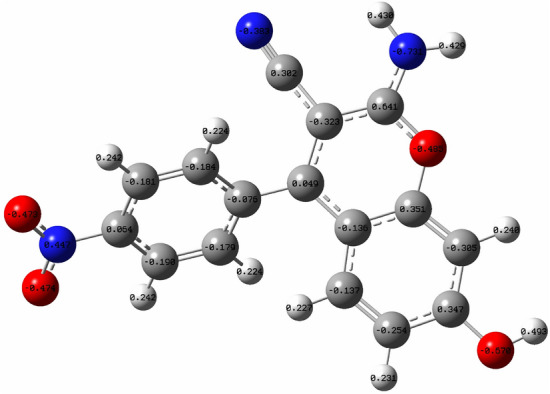
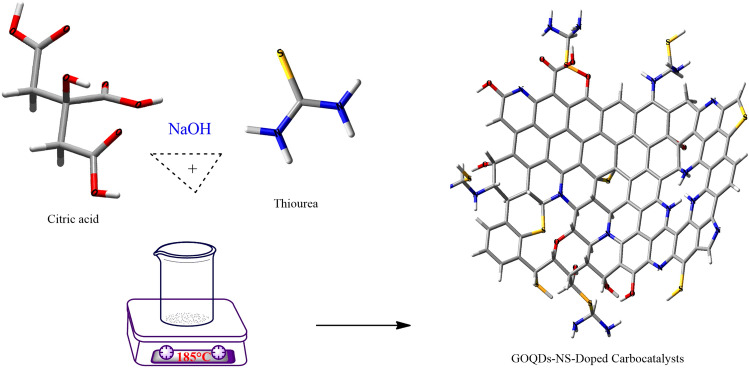
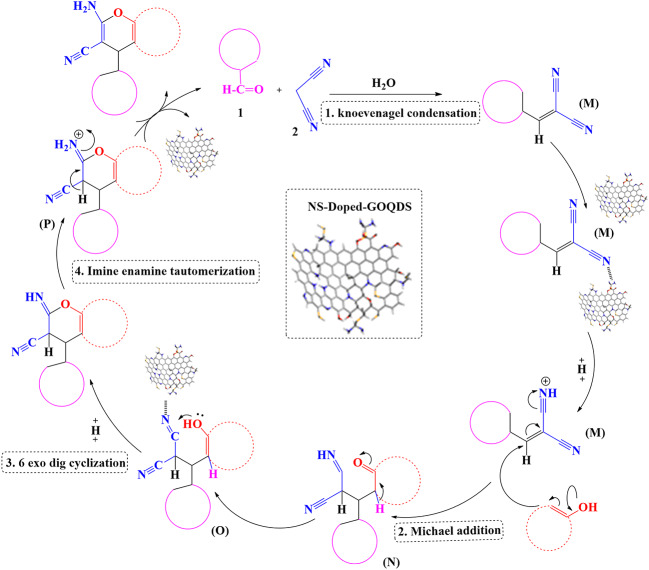
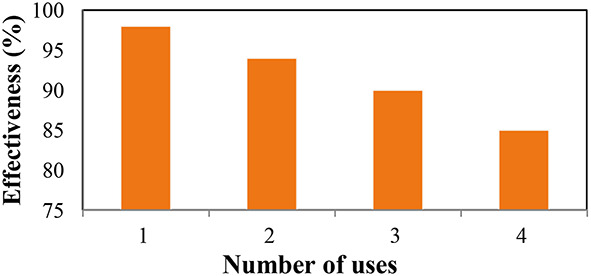
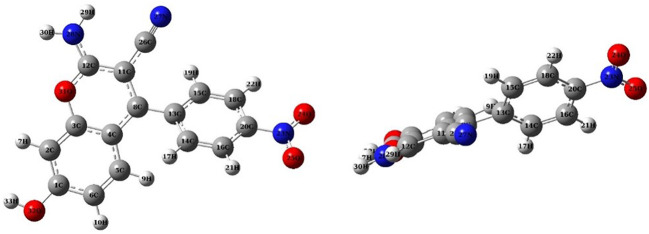
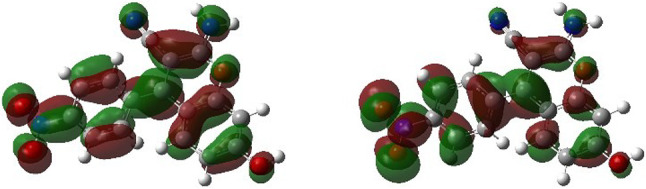
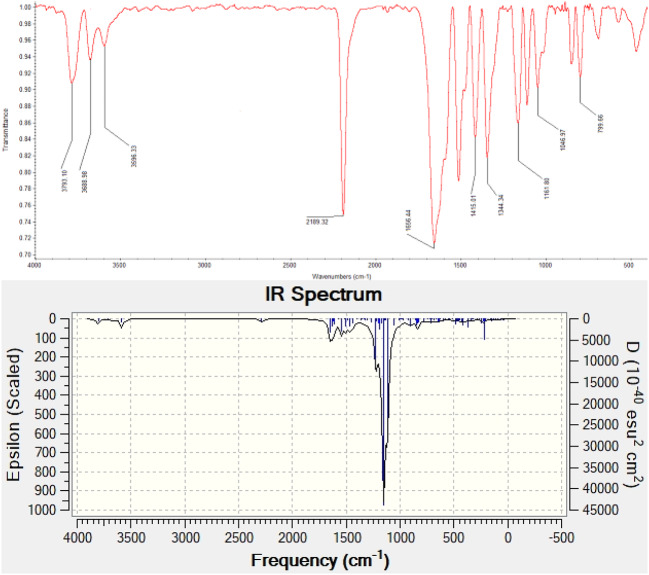
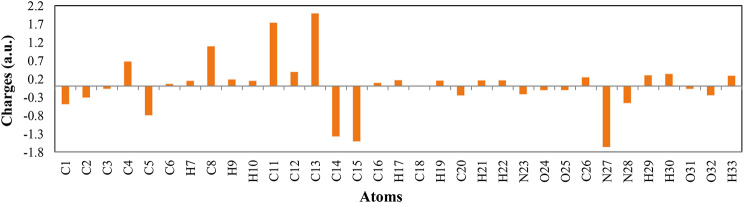
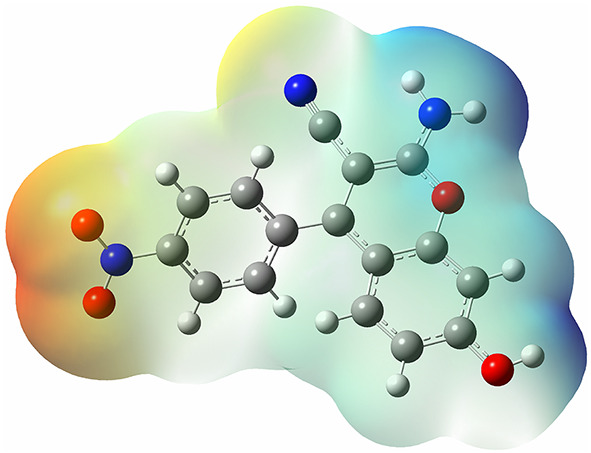
This research presents an innovative approach for synthesizing 2-amino-4H-chromene derivatives, utilizing 30 mg of NS-doped graphene oxide quantum dots (GOQDs) as a catalyst in a one-pot, three-component reaction conducted in ethanol. The NS-doped GOQDs were synthesized using a cost-effective bottom-up method through the condensation of citric acid (CA) with thiourea and the reaction was carried out at 185 C, resulting in the elimination of water. The catalytic performance of the synthesized NS-doped GOQDs resulted in high product yields, achieving up to 98% for the 2-amino-4H-chromene derivatives from aromatic aldehydes, malononitrile, resorcinol, -naphthol, and dimedone. The reaction showcased rapid completion time (typically < 2 h), low-cost reagents, and easy work-up procedures. In addition, the study integrates experimental and theoretical analyses, including density functional theory (DFT) calculations, to investigate the electronic properties of the synthesized compounds. Calculated HOMO and LUMO energies indicate efficient charge transfer within the molecular structure. The FT-IR spectra of compound 4c were recorded in the range of 4000-500 cm , and vibrational frequencies were computed at the B3LYP/6-311+G(d,p) level, correlating well with experimental data. Detailed analyses, including Mep surfaces, Mulliken population analysis, and Natural Bond Orbital (NBO) analysis, provide further insights into the electronic distribution and reactivity of the compounds. Furthermore, comparative H and C NMR analyses of compound 4c reveal strong agreement between computational and experimental findings. This research not only validates the synthetic method but also emphasizes the dual experimental and computational approach in understanding the structural and electronic characteristics of the 4c compound.
本研究提出了一种合成2-氨基-4H-色烯衍生物的创新方法,在乙醇中进行的一锅三组分反应中,使用30 mg的氮硫共掺杂氧化石墨烯量子点(GOQDs)作为催化剂。氮硫共掺杂的GOQDs采用具有成本效益的自下而上方法,通过柠檬酸(CA)与硫脲缩合合成,反应在185℃下进行,导致水的消除。合成的氮硫共掺杂GOQDs的催化性能使产物产率很高,对于由芳香醛、丙二腈、间苯二酚、β-萘酚和达米酮合成的2-氨基-4H-色烯衍生物,产率高达98%。该反应具有反应时间短(通常<2 h)、试剂成本低和后处理程序简单的特点。此外,该研究整合了实验和理论分析,包括密度泛函理论(DFT)计算,以研究合成化合物的电子性质。计算得到的最高占据分子轨道(HOMO)和最低未占据分子轨道(LUMO)能量表明分子结构内有有效的电荷转移。化合物4c的傅里叶变换红外光谱(FT-IR)在4000 - 500 cm⁻¹范围内记录,振动频率在B3LYP/6-311+G(d,p)水平计算,与实验数据相关性良好。详细分析,包括分子静电势(Mep)表面、布居分析和自然键轨道(NBO)分析,为化合物的电子分布和反应性提供了进一步的见解。此外,化合物4c的¹H和¹³C核磁共振(NMR)对比分析表明计算结果与实验结果高度一致。本研究不仅验证了合成方法,还强调了在理解4c化合物的结构和电子特性方面实验和计算相结合的方法。