Liang Fanqi, Zheng Man, Lu Jingjiu, Liu Peng, Chen Xinyu
The First Affiliated Hospital of Hunan University of Traditional Chinese Medicine, Changsha, 410007, Hunan Province, China.
Dongying People's Hospital (Dongying Hospital of Shandong Provincial Hospital Group), Dongying, 257091, Shandong, China.
Sci Rep. 2025 Jan 2;15(1):353. doi: 10.1038/s41598-024-82998-0.
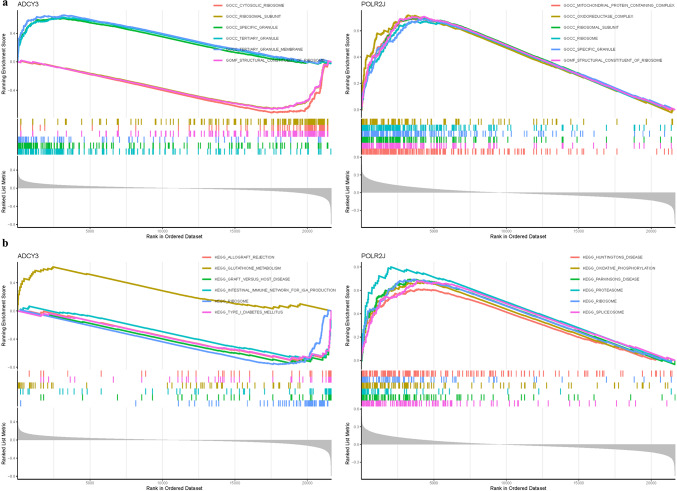
Sepsis, characterized as a systemic inflammatory response triggered by pathogen invasion, represents a continuum that may progress from mild systemic infection to severe sepsis, potentially culminating in septic shock and multiple organ dysfunction syndrome. A pivotal element in the pathogenesis and progression of sepsis involves the significant disruption of oncological metabolic networks, where cells within the pathological milieu exhibit metabolic functions that diverge from their healthy counterparts. Among these, purine metabolism plays a crucial role in nucleic acid synthesis. However, the contribution of Purine Metabolism Genes (PMGs) to the defense mechanisms against sepsis remains inadequately explored. Leveraging bioinformatics, this study aimed to identify and substantiate potential PMGs implicated in sepsis. The approach encompassed a differential expression analysis across a pool of 75 candidate PMGs. Gene Set Enrichment Analysis (GSEA) and Gene Set Variation Analysis (GSVA) were employed to assess the biological significance and pathways associated with these genes. Additionally, Lasso regression and Support Vector Machine-Recursive Feature Elimination (SVM-RFE) methodologies were implemented to identify key hub genes and evaluate the diagnostic potential of nine selected PMGs in sepsis identification. The study also examined the correlation between these hub PMGs and related genes, with validation conducted through expression level analysis using the GSE13904 and GSE65682 datasets. The study identified twelve PMGs correlated with sepsis, namely AK9, ENTPD3, NUDT16, GMPR2, PKM, RRM2B, POLR2J, POLE3, ADCY3, ADCY4, ADSSL1, and AMPD1. Functional analysis revealed their involvement in critical processes such as purine nucleotide and ribose phosphate metabolism. The diagnostic capability of these PMGs to effectively differentiate sepsis cases underscored their potential as biomarkers. This research elucidates twelve PMGs associated with sepsis, providing valuable insights into novel biomarkers for this condition and facilitating the monitoring of its progression. These findings highlight the significance of purine metabolism in sepsis pathogenesis and open avenues for further investigation into therapeutic targets.
脓毒症是由病原体入侵引发的全身性炎症反应,它呈现出一个连续过程,可能从轻度全身感染发展为严重脓毒症,最终可能导致感染性休克和多器官功能障碍综合征。脓毒症发病机制和进展中的一个关键因素涉及肿瘤代谢网络的显著破坏,在病理环境中的细胞表现出与其健康对应细胞不同的代谢功能。其中,嘌呤代谢在核酸合成中起关键作用。然而,嘌呤代谢基因(PMGs)对脓毒症防御机制的贡献仍未得到充分探索。本研究利用生物信息学来识别和证实与脓毒症相关的潜在PMGs。该方法包括对75个候选PMGs进行差异表达分析。基因集富集分析(GSEA)和基因集变异分析(GSVA)用于评估与这些基因相关的生物学意义和途径。此外,采用套索回归和支持向量机递归特征消除(SVM-RFE)方法来识别关键枢纽基因,并评估9个选定的PMGs在脓毒症识别中的诊断潜力。该研究还检查了这些枢纽PMGs与相关基因之间的相关性,并通过使用GSE13904和GSE65682数据集进行表达水平分析来进行验证。该研究确定了12个与脓毒症相关的PMGs,即AK9、ENTPD3、NUDT16、GMPR2、PKM、RRM2B、POLR2J、POLE3、ADCY3、ADCY4、ADSSL1和AMPD1。功能分析表明它们参与了嘌呤核苷酸和磷酸核糖代谢等关键过程。这些PMGs有效区分脓毒症病例的诊断能力突出了它们作为生物标志物的潜力。本研究阐明了12个与脓毒症相关的PMGs,为这种疾病的新型生物标志物提供了有价值的见解,并有助于监测其进展。这些发现突出了嘌呤代谢在脓毒症发病机制中的重要性,并为进一步研究治疗靶点开辟了道路。