Shang Panpan, Bi Lei, Li Wenwen, Zhou Xiaoli, Feng Yanlong, Wu Jiahai, Zeng Bing
College of Animal Science and Technology, Southwest University, Chongqing, China.
Guizhou Academy of Agricultural Sciences, Guizhou, China.
BMC Plant Biol. 2025 Jan 2;25(1):4. doi: 10.1186/s12870-024-05804-z.
Submergence stress is a prevalent abiotic stress affecting plant growth and development and can restrict plant cultivation in areas prone to flooding. Research on plant submergence stress tolerance has been essential in managing plant production under excessive rainfall. Red clover (Trifolium pratense L.), a high-quality legume forage, exhibits low tolerance to submergence, and long-term submergence can lead to root rot and death.
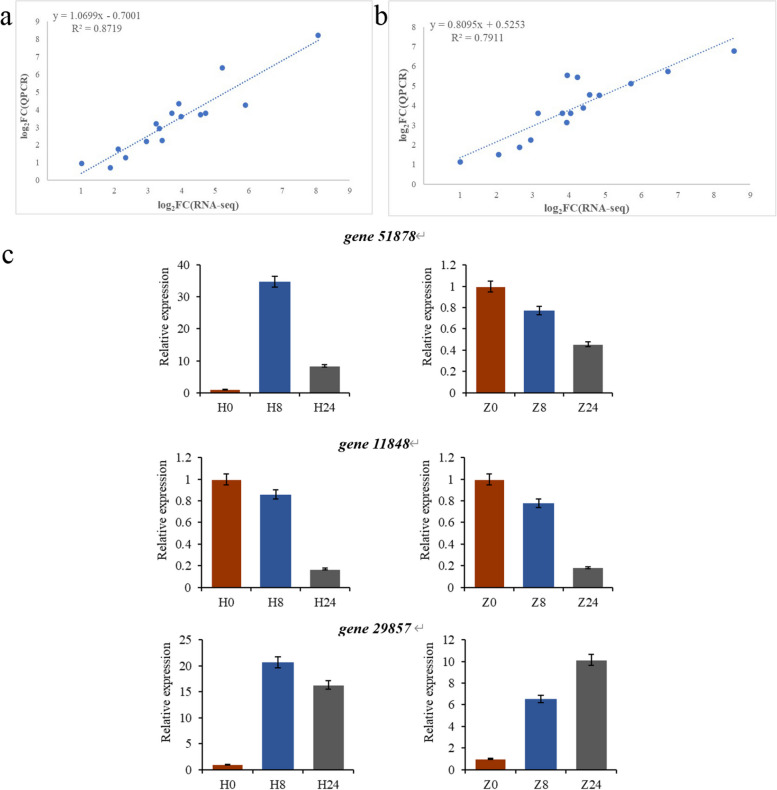
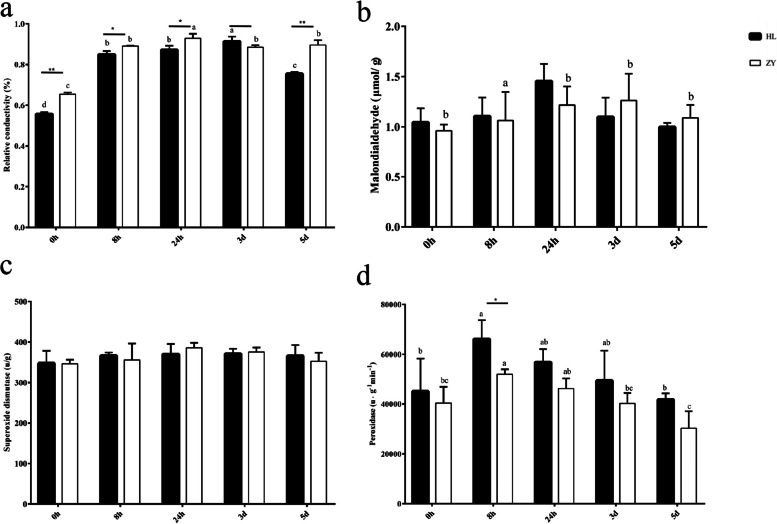
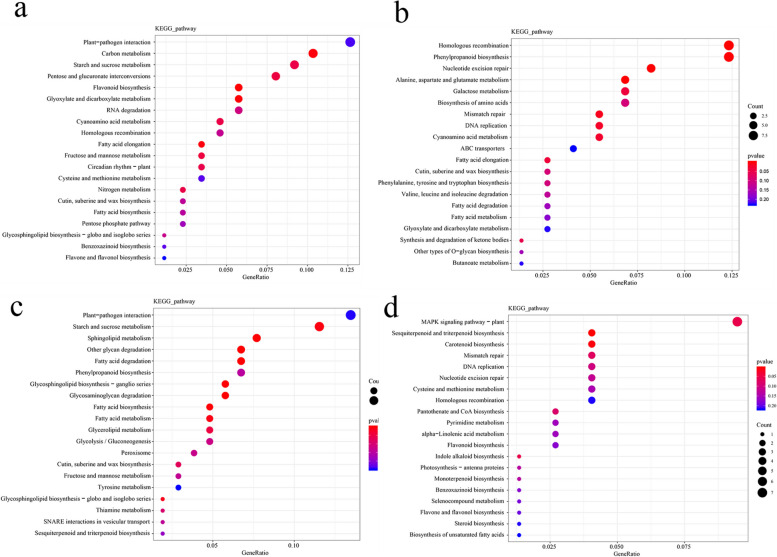
This study assessed the microstructure, physiological indicators, and the key genes and metabolic pathways under submergence stress in the root system of red clover HL(Hong Long) and ZY(Zi You) varieties under submergence stress at 0 h, 8 h, 24 h, 3 d, and 5 d. Based on 7740 transcripts identified in the leaves at 0 h, 8 h, and 24 h submergence stress, Weighted Gene Co-expression Network Analysis (WGCNA) was performed on the differentially expressed genes (DEGs) at 8 h and 24 h. Functional annotation of the DEGs in the four key modules was obtained. Based on the results, the red clover root system exhibited epidermal cell rupture, enlargement and rupture of cortical thin-walled cells, thickening of the mid-column, and a significant increase in the number of air cavities and air cavity area of aeration tissue with the prolongation of submergence stress. The malondialdehyde content, relative conductivity, peroxidase, and superoxide dismutase initially increased and decreased as submergence stress duration increased. Four specific modules (cyan, purple, light cyan, and ivory) closely correlated with each stress were identified by WGCNA. The 14 obtained Hub genes were functionally annotated, among which six genes, including gene51878, gene11315, and gene11848, were involved in glyoxylate and dicarboxylic acid metabolism, carbon fixation in photosynthetic organisms, carbon metabolism, biosynthesis of pantothenic acid and CoA, flavonoid biosynthesis.
In this study, using WGCNA, the molecular response mechanisms of red clover to submergence stress was proposed, and the core genes and metabolic pathways in response to submergence stress were obtained, providing a valuable data resource at the physiological and molecular levels for subsequent studies of submergence stress tolerance in plants.
淹水胁迫是一种普遍存在的非生物胁迫,影响植物的生长发育,并限制易发生洪水地区的植物种植。研究植物的淹水胁迫耐受性对于在降雨过多的情况下管理植物生产至关重要。红三叶(Trifolium pratense L.)是一种优质豆科牧草,对淹水胁迫的耐受性较低,长期淹水会导致根腐病和死亡。
本研究评估了红三叶HL(红笼)和ZY(紫优)品种在淹水胁迫0 h、8 h、24 h、3 d和5 d时根系的微观结构、生理指标以及关键基因和代谢途径。基于在淹水胁迫0 h、8 h和24 h时叶片中鉴定出的7740个转录本,对8 h和24 h时的差异表达基因(DEGs)进行了加权基因共表达网络分析(WGCNA)。获得了四个关键模块中DEGs的功能注释。结果表明,随着淹水胁迫时间的延长,红三叶根系表现出表皮细胞破裂、皮层薄壁细胞膨大破裂、中柱增厚,通气组织的气腔数量和气腔面积显著增加。丙二醛含量、相对电导率、过氧化物酶和超氧化物歧化酶随着淹水胁迫时间的延长先升高后降低。通过WGCNA鉴定出四个与每种胁迫密切相关的特定模块(青色、紫色、浅青色和象牙色)。对获得的14个中心基因进行了功能注释,其中包括基因51878、基因11315和基因11848在内的6个基因参与乙醛酸和二羧酸代谢、光合生物中的碳固定、碳代谢、泛酸和辅酶A的生物合成、类黄酮生物合成。
本研究利用WGCNA提出了红三叶对淹水胁迫的分子响应机制,获得了响应淹水胁迫的核心基因和代谢途径,为后续植物淹水胁迫耐受性研究提供了生理和分子水平上有价值的数据资源。