Westphal Manfred, Drexler Richard, Maire Cecile, Ricklefs Franz, Lamszus Katrin
Institute for Tumorbiology, University Hospital Hamburg Eppendorf, W29 - R34, Hamburg, 20246, Germany.
Department of Neurology and Neurological Sciences, Stanford University, Stanford, CA, USA.
Acta Neurochir (Wien). 2025 Jan 3;167(1):2. doi: 10.1007/s00701-024-06406-2.
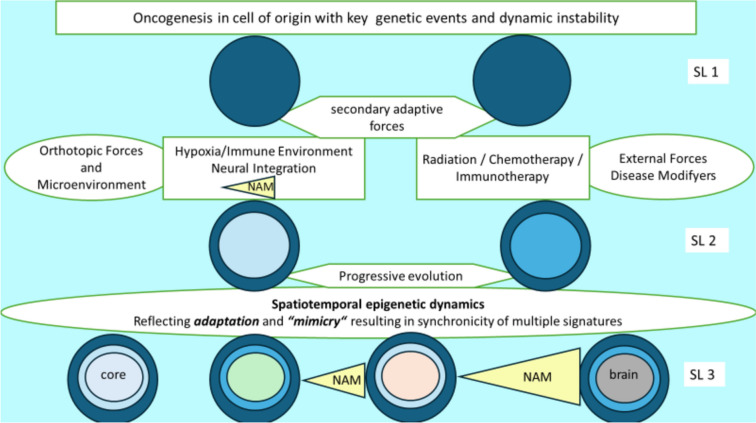
In recent years, it has been increasingly recognized that tumor growth relies not only on support from the surrounding microenvironment but also on the tumors capacity to adapt to - and actively manipulate - its niche. While targeting angiogenesis and modulating the local immune environment have been explored as therapeutic approaches, these strategies have yet to yield effective treatments for brain tumors and remain under refinement. More recently, the nervous system itself has been explored as a critical environmental support for cancer, with extensive neuro-tumoral interactions observed both intracranially and in extracranial sites containing neural components. In the brain, interactions between glioma cells as well as metastatic lesions with neural components have clinical implications for diagnostics, risk assessments, neurological sequelae, and the development of innovative therapeutics. Here, we review these neuro-tumoral dynamics, emphasizing aspects relevant to neurosurgical practice.
近年来,人们越来越认识到肿瘤生长不仅依赖于周围微环境的支持,还依赖于肿瘤适应并积极操纵其生态位的能力。虽然靶向血管生成和调节局部免疫环境已作为治疗方法进行了探索,但这些策略尚未产生有效的脑肿瘤治疗方法,仍在不断完善中。最近,神经系统本身已被探索为癌症的关键环境支持,在颅内和含有神经成分的颅外部位都观察到广泛的神经-肿瘤相互作用。在大脑中,胶质瘤细胞以及转移灶与神经成分之间的相互作用对诊断、风险评估、神经后遗症和创新治疗方法的开发具有临床意义。在此,我们回顾这些神经-肿瘤动态,强调与神经外科实践相关的方面。