Baum Mitchell E, Sawyer John E, Nafziger Emerson D, Castellano Michael J, McDaniel Marshall D, Licht Mark A, Hayes Dermot J, Helmers Matthew J, Archontoulis Sotirios V
Department of Agronomy, Iowa State University, Ames, IA, USA.
Department of Crop Sciences, College of Agricultural, Consumer, and Environmental Sciences, University of Illinois at Urbana-Champaign, Urbana, IL, USA.
Nat Commun. 2025 Jan 5;16(1):404. doi: 10.1038/s41467-024-55314-7.
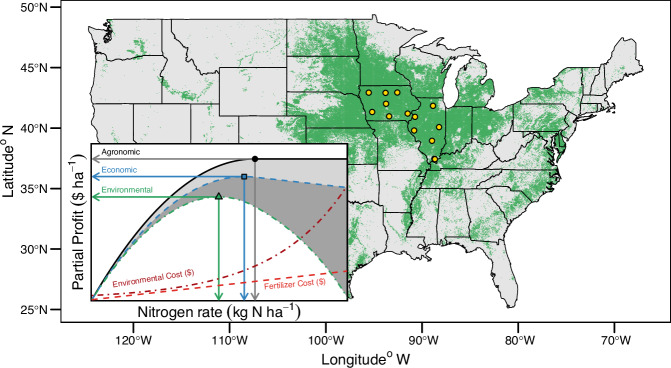
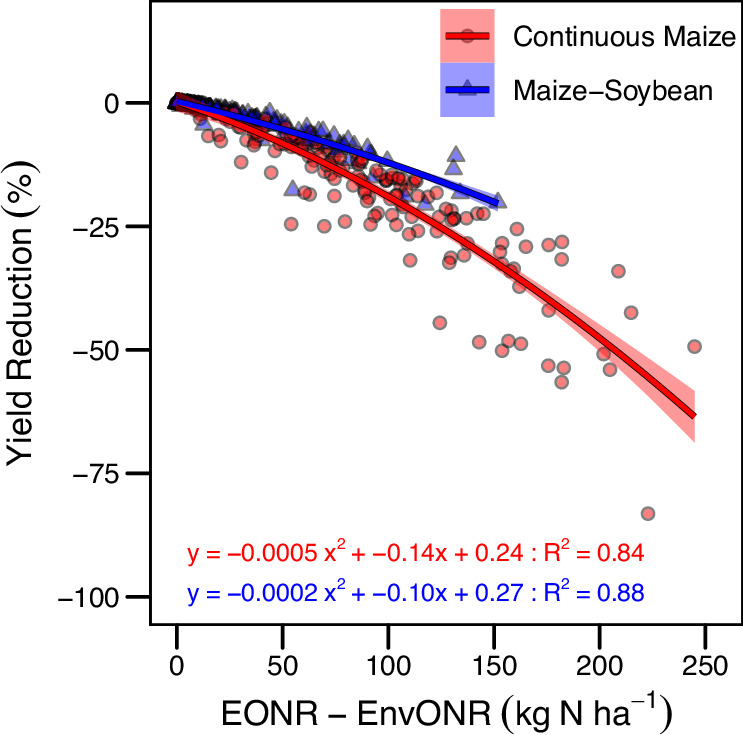
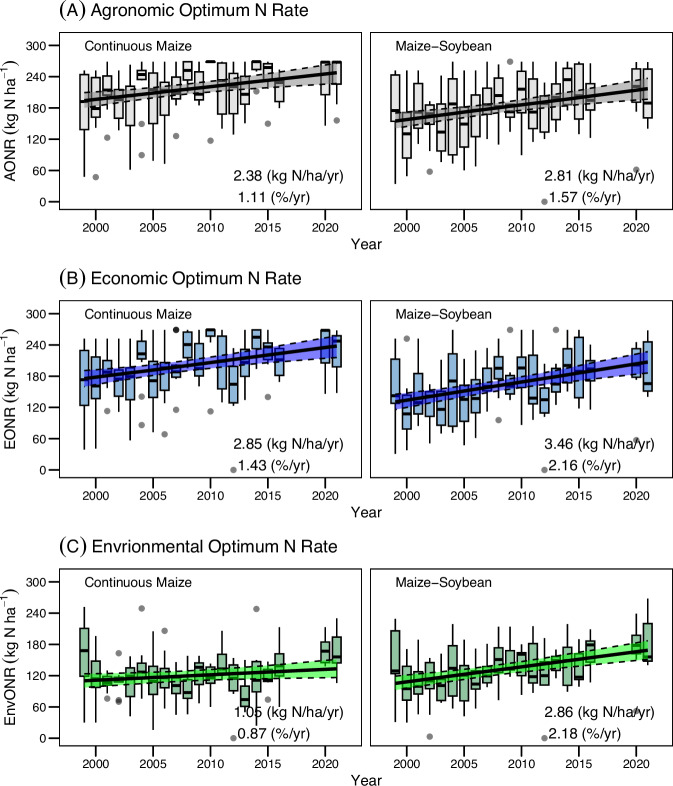
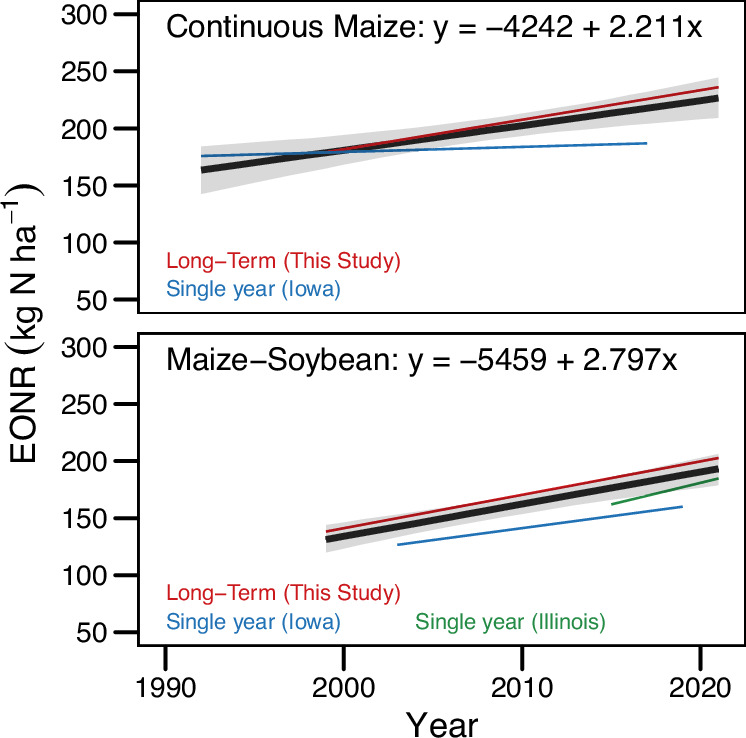
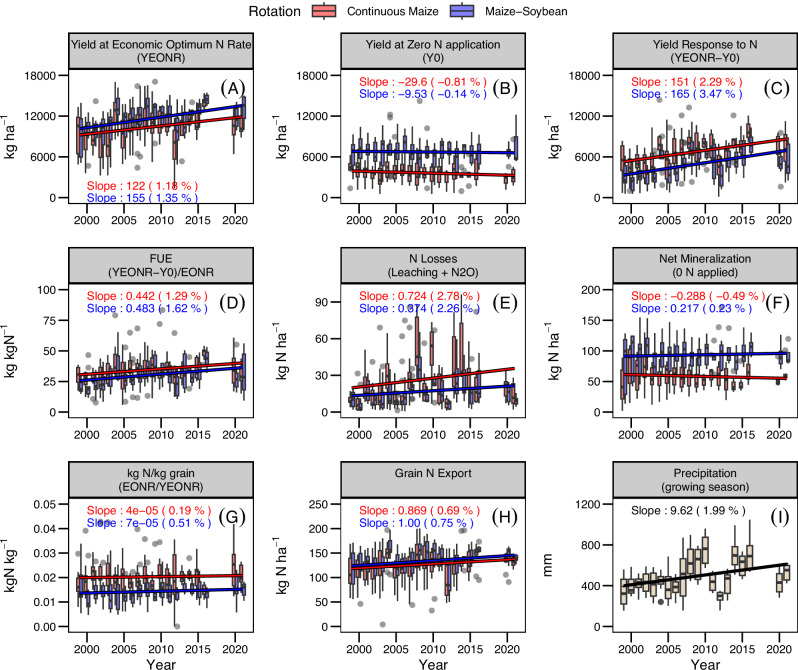
Fertilizing maize at an optimum nitrogen rate is imperative to maximize productivity and sustainability. Using a combination of long-term (n = 379) and short-term (n = 176) experiments, we show that the economic optimum nitrogen rate for US maize production has increased by 2.7 kg N ha yr from 1991 to 2021 (1.2% per year) simultaneously with grain yields and nitrogen losses. By accounting for societal cost estimates for nitrogen losses, we estimate an environmental optimum rate, which has also increased over time but at a lower rate than the economic optimum nitrogen rate. Furthermore, we provide evidence that reducing rates from the economic to environmental optimum nitrogen rate could reduce US maize productivity by 6% while slightly reducing nitrogen losses. We call for enhanced assessments and predictability of the economic and environmental optimum nitrogen rate to meet rising maize production while avoiding unnecessary nitrogen losses.
以最佳施氮量为玉米施肥对于实现产量最大化和可持续性至关重要。通过长期(n = 379)和短期(n = 176)实验相结合,我们发现,从1991年到2021年,美国玉米生产的经济最佳施氮量增加了2.7千克氮/公顷·年(每年1.2%),同时谷物产量和氮损失也有所增加。通过考虑氮损失的社会成本估算,我们估算了环境最佳施氮量,该施氮量也随时间增加,但增速低于经济最佳施氮量。此外,我们有证据表明,将施氮量从经济最佳水平降至环境最佳水平会使美国玉米产量降低6%,同时略微减少氮损失。我们呼吁加强对经济和环境最佳施氮量的评估和预测,以满足不断增长的玉米产量需求,同时避免不必要的氮损失。