Şahin Enes, Tatar Ozan Can, Ulutaş Mehmet Eşref, Güler Sertaç Ata, Şimşek Turgay, Turgay Nihat Zafer, Cantürk Nuh Zafer
Department of General Surgery, Kocaeli University Faculty of Medicine, Kocaeli, Türkiye.
Kocaeli University, Faculty of Technology, Information Systems Engineering, Kocaeli, Türkiye.
Turk J Gastroenterol. 2024 Dec 30;36(2):124-130. doi: 10.5152/tjg.2024.24538.
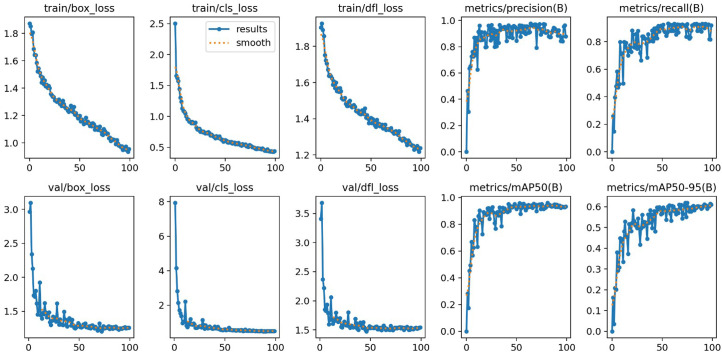
Hepatocellular carcinoma (HCC) is a prevalent cancer that significantly contributes to mortality globally, primarily due to its late diagnosis. Early detection is crucial yet challenging. This study leverages the potential of deep learning (DL) technologies, employing the You Only Look Once (YOLO) architecture, to enhance the detection of HCC in computed tomography (CT) images, aiming to improve early diagnosis and thereby patient outcomes. We used a dataset of 1290 CT images from 122 patients, segmented according to a standard 70:20:10 split for training, validation, and testing phases. The YOLO-based DL model was trained on these images, with subsequent phases for validation and testing to assess the model's diagnostic capabilities comprehensively. The model exhibited exceptional diagnostic accuracy, with a precision of 0.97216, recall of 0.919, and an overall accuracy of 95.35%, significantly surpassing traditional diagnostic approaches. It achieved a specificity of 95.83% and a sensitivity of 94.74%, evidencing its effectiveness in clinical settings and its potential to reduce the rate of missed diagnoses and unnecessary interventions. The implementation of the YOLO architecture for detecting HCC in CT scans has shown substantial promise, indicating that DL models could soon become a standard tool in oncological diagnostics. As artificial intelligence technology continues to evolve, its integration into healthcare systems is expected to advance the accuracy and efficiency of diagnostics in oncology, enhancing early detection and treatment strategies and potentially improving patient survival rates.
肝细胞癌(HCC)是一种常见的癌症,在全球范围内对死亡率有重大影响,主要原因是其诊断较晚。早期检测至关重要但具有挑战性。本研究利用深度学习(DL)技术的潜力,采用“你只看一次”(YOLO)架构,以增强在计算机断层扫描(CT)图像中对HCC的检测,旨在改善早期诊断,从而改善患者预后。我们使用了来自122名患者的1290张CT图像数据集,按照70:20:10的标准划分进行训练、验证和测试阶段。基于YOLO的DL模型在这些图像上进行训练,随后进行验证和测试阶段,以全面评估模型的诊断能力。该模型表现出卓越的诊断准确性,精确率为0.97216,召回率为0.919,总体准确率为95.35%,显著超过传统诊断方法。它的特异性为95.83%,敏感性为94.74%,证明了其在临床环境中的有效性以及降低漏诊率和不必要干预的潜力。在CT扫描中使用YOLO架构检测HCC已显示出巨大的前景,表明DL模型可能很快成为肿瘤诊断的标准工具。随着人工智能技术的不断发展,其融入医疗系统有望提高肿瘤诊断的准确性和效率,加强早期检测和治疗策略,并有可能提高患者生存率。